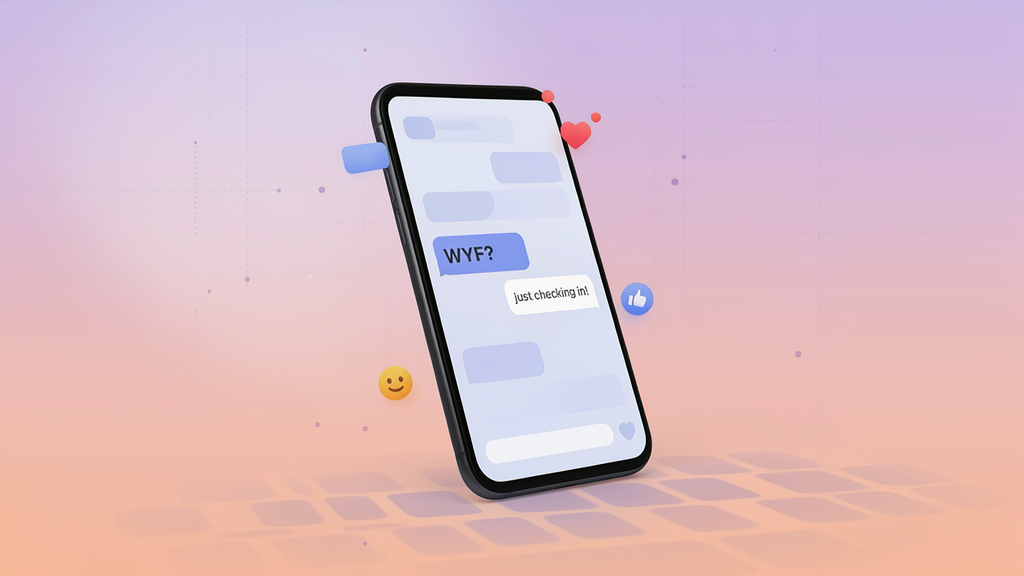
If you have received a message containing “WYF,” you may wonder what the abbreviation means and how you should respond. What does WYF mean in text is a common question because short forms can have different meanings depending on the conversation, platform, and context.
In most casual texting situations, WYF is used as a quick way to ask “Where you from?” It is commonly seen in chats, social media messages, and conversations between people getting to know each other. The examples below explain how it works in different situations.
WYF Meaning in Text and Everyday Chat
WYF most commonly means “Where you from?” in texting and online conversations. It is an informal abbreviation used to ask about someone’s hometown, city, state, country, or general place of origin. The phrase is especially common in casual chats where people prefer quick messages.
- 🌍 “WYF?” usually means “Where you from?” Someone may use it when starting a conversation and wanting to learn where you live or come from. It is short, casual, and common in online chats. 💬
- 😊 If someone sends “WYF?” after saying hello, they are probably trying to get to know you better. You can simply answer with your city, country, or another location you are comfortable sharing.
- 📱 WYF is designed for quick communication. Instead of typing “Where are you from?” a person can use three letters and still communicate the same basic question in a casual conversation.
- 🏙️ A simple reply could be “I’m from Lahore.” This gives the other person exactly the information they requested without making the conversation unnecessarily formal. You can add another question afterward to keep chatting.
- 💬 WYF can appear in a first conversation. Someone who has just connected with you online might use it as an easy conversation starter before asking about your interests, work, studies, or hobbies.
- ✨ The abbreviation feels informal rather than professional. It generally belongs in friendly conversations, social media messages, gaming chats, and personal texting rather than formal emails or workplace communication.
- 🌎 WYF can refer to a broad location. Depending on the conversation, the person may want to know your country, state, city, neighborhood, or simply where you consider home.
- 😄 “WYF?” can be a friendly icebreaker. When someone does not know what to say next, asking about your background gives the conversation an easy direction without sounding overly complicated.
- 🗣️ The meaning is usually straightforward. If the surrounding messages involve introductions, travel, hometowns, or locations, WYF almost certainly refers to asking where you are from.
- 📍 You do not need to give your exact address. A general response such as “I’m from Pakistan” or “I’m from Texas” can answer the question while keeping more private location details to yourself.
- 💕 WYF may appear in friendly or flirty conversations. Someone interested in continuing a conversation may ask where you are from simply because they want to learn more about you.
- 🌟 Short forms like WYF save typing time. People often use abbreviations because texting encourages fast, conversational communication rather than complete formal sentences.
- 📲 WYF can look confusing to new texters. Once you understand that it commonly means “Where you from?”, the abbreviation becomes easy to recognize in casual messages.
- 🧭 A person may ask WYF while discussing travel. If you are talking about different cities or countries, the abbreviation can naturally lead into a conversation about where each person lives or grew up.
- 😎 The tone of WYF is generally relaxed. It does not automatically indicate flirting, friendship, or romantic interest; the meaning of the conversation depends on the people involved and the surrounding messages.
- 🌐 Online communities often favor short expressions. WYF fits naturally alongside abbreviations such as WYA, IDK, BTW, and LOL, although each one has a different meaning and purpose.
- 💡 Context helps confirm the meaning. If someone asks WYF immediately after introducing themselves, they are most likely asking about your place of origin rather than using an unrelated interpretation.
- 🤝 WYF can help two strangers find common ground. Discovering that you are from the same city, country, or region can quickly create a more personal and comfortable conversation.
- 📖 The phrase is grammatically shortened. “Where you from?” drops the verb “are,” but this kind of shortened wording is common in informal speech and internet communication.
- 🌈 Understanding WYF makes online conversations easier. Once you recognize the abbreviation, you can answer naturally and continue the conversation without stopping to ask what the sender meant.
WYF Meaning in Texting Conversations
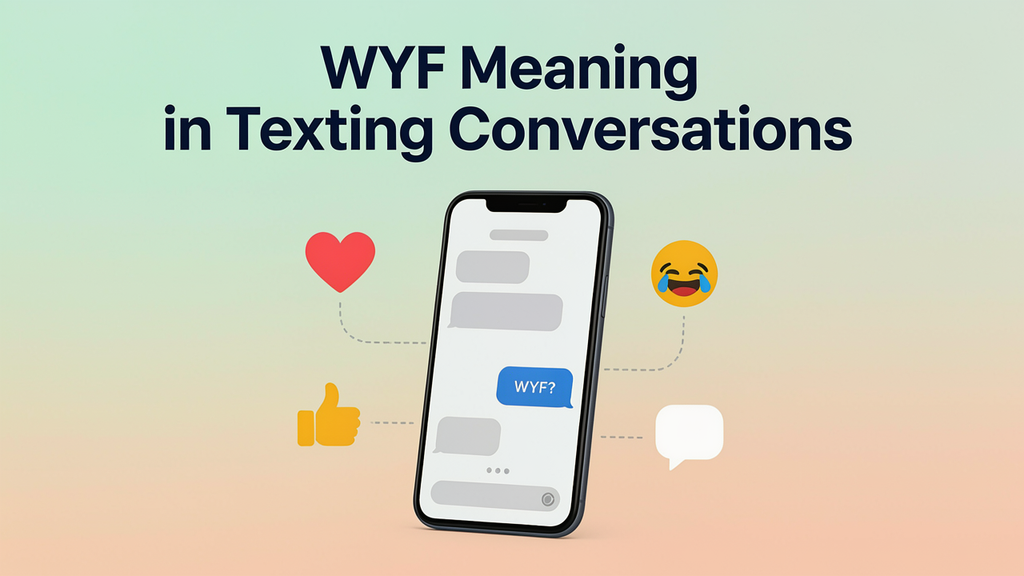
In texting, WYF functions as a compact version of “Where you from?” It is usually used when someone wants basic information about your background or location. Because texting is informal, the abbreviated form can sound more natural than a complete sentence in some conversations.
- 📱 Texting often uses shortened language to save time. WYF fits this style because it communicates a simple question using only three letters, making it convenient during fast-moving conversations. ⚡
- 🗨️ Someone might text “Hey, WYF?” This can be an easy way to begin a conversation with a new contact. A natural answer might be “Hey! I’m from Karachi. What about you?”
- 🌍 WYF can introduce a conversation about culture. After learning someone’s location, people may naturally discuss food, traditions, languages, travel, or interesting places from their respective regions.
- 😊 The abbreviation usually has a casual tone. If a friend or online contact sends WYF, you generally do not need to respond formally with a complete sentence unless the situation calls for it.
- 💬 You can answer WYF directly. Saying “I’m from Canada” or “I grew up in Delhi” gives a clear response and leaves room for the other person to continue the conversation.
- 🏠 WYF may ask about where you are originally from. It does not necessarily mean “Where are you right now?” That question is more commonly expressed through phrases such as “Where are you?” or “WYA?”
- ✨ The distinction matters in conversations. If someone asks WYF, think about your origin or hometown; if they ask WYA, they are generally asking about your current location.
- 🌎 Texting abbreviations depend heavily on context. The same letters can occasionally have other meanings, so reading the surrounding messages is important before deciding exactly what the sender intended.
- 😄 Friends may use WYF casually. A longtime friend might ask it jokingly if they have forgotten where you grew up, although the usual meaning remains “Where you from?”
- 📲 WYF is especially convenient on mobile devices. Short abbreviations reduce typing and allow people to keep conversations moving quickly without writing full questions every time.
- 🧑🤝🧑 New online friendships may begin with WYF. People in gaming groups, social communities, or discussion spaces sometimes use location questions as a simple way to introduce themselves.
- 💖 WYF does not automatically mean romantic interest. A person can use the abbreviation with a friend, stranger, classmate, or potential romantic connection, depending entirely on the conversation.
- 🗣️ You can answer with different levels of detail. “I’m from Pakistan” is broad, while “I’m from Multan” is more specific. Choose the amount of information that feels appropriate for the situation.
- 🔐 Privacy should still matter online. When chatting with strangers, you do not need to provide an exact address, workplace, school, or other identifying details simply because someone asks WYF.
- 🌟 WYF can lead to useful follow-up questions. After answering, you might ask “What about you?” This keeps the conversation balanced and encourages the other person to share as well.
- 💡 Understanding the abbreviation improves message comprehension. Instead of treating WYF as random letters, recognizing its common meaning lets you focus on the actual conversation.
- 📨 WYF can appear at the beginning or middle of a chat. Its position does not change the usual meaning, although surrounding words can provide additional clues about what the sender wants.
- 🌐 Internet slang changes over time. Abbreviations can become more or less common as communication habits evolve, so context remains important when interpreting short forms.
- 😎 A casual answer works well in casual chats. You might say, “I’m from Lahore! Where are you from?” This answers the question and naturally sends it back to the other person.
- 🎯 The simplest interpretation is usually the most useful. In ordinary texting, WYF generally asks about your origin or hometown, making it a straightforward conversational abbreviation.
WYF Meaning in Chat Messages
WYF in chat usually asks “Where you from?” It is often used during introductions or casual conversations between people who do not know each other well. The abbreviation can appear in private messages, group chats, gaming communities, and other informal online spaces.
- 💬 A chat message saying “WYF?” is usually asking about your background. The sender may want to know your city, state, country, or general hometown. 🌍
- 👋 “Hi, WYF?” can function as an introduction. Rather than immediately asking a personal or complicated question, the sender starts with something simple that can open a longer conversation.
- 🏙️ Your response can stay general. You could say, “I’m from Islamabad,” without sharing your street, neighborhood, or exact location. This gives enough information for an ordinary conversation.
- 😊 WYF can create an easy social connection. If both people discover they come from nearby places, they may have common experiences, familiar landmarks, or shared cultural interests to discuss.
- 📱 Group chats may use WYF differently depending on context. Someone joining a new community might ask members where they are from as a casual way to introduce themselves and learn about others.
- 🌎 International chats frequently use location questions. People from different countries may use WYF to learn where another participant lives or grew up, especially in language-learning or travel communities.
- ✨ WYF is not a formal expression. It belongs to conversational internet language, so using it in a business letter or official communication would generally feel out of place.
- 🗣️ Tone depends on the relationship. A close friend may send WYF without any formal greeting, while a stranger may include “Hey” or another friendly phrase before asking the question.
- 💕 WYF can appear during flirting. If someone is getting to know you romantically, they might ask where you are from as one of several basic questions about your life.
- 🔎 Do not interpret WYF by itself. Look at the messages before and after it. The surrounding conversation can tell you whether the sender is asking about your hometown, current area, or something else.
- 🤝 Answering WYF can make a conversation feel more personal. Sharing a general hometown gives the other person something specific to respond to rather than leaving the conversation at simple greetings.
- 🌟 You can return the question. A response such as “I’m from Lahore. WYF?” is short, natural, and keeps the conversation moving without requiring a long explanation.
- 📍 WYF and WYA are different. WYF usually asks where you are from, while WYA generally means “Where you at?” and asks about your current location.
- 😄 The shortened grammar is intentional. Online conversations often remove words such as “are” because the goal is quick, relaxed communication rather than formal grammar.
- 🔐 Be careful with strangers. If a person you do not know asks WYF, giving your country or city may be enough. You are not required to disclose your exact whereabouts.
- 📲 WYF is easy to recognize once learned. After seeing the abbreviation a few times, most users can understand it immediately from context.
- 🌐 Chat slang varies between communities. Some groups may use abbreviations more frequently than others, so familiarity with internet language can depend on age, platform, and social circle.
- 💡 The phrase can be conversational rather than investigative. In many casual chats, someone simply wants to learn your background and is not necessarily asking for precise location information.
- 🎉 WYF can be part of a fun introduction. After answering, you can mention something interesting about your hometown, such as a famous food, place, tradition, or activity.
- 💬 The best response is usually simple. If the conversation is casual and you are comfortable answering, provide a general location and ask the sender where they are from too.
WYF Meaning on Social Media
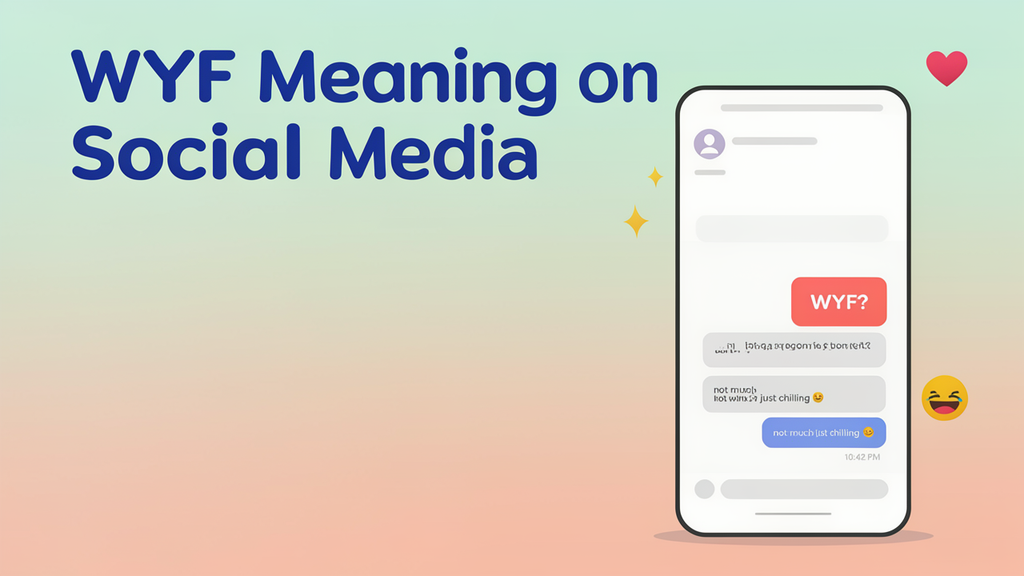
On social media, WYF commonly means “Where you from?” People may use it in direct messages, comments, community conversations, or replies. Social platforms encourage short and informal communication, making abbreviations such as WYF convenient for quick interactions.
- 📱 WYF fits naturally into social media conversations. Users often communicate with people they have never met, so asking about location can be an easy way to begin learning about someone.
- 🌍 A new follower might send “WYF?” They could simply be curious about your background after seeing your profile or content. Your answer can be as broad as your country or city.
- 💬 WYF can appear in direct messages. If someone contacts you after discovering your profile, the abbreviation may be part of a casual introduction rather than a formal request for information.
- ✨ Social media slang changes quickly. Although WYF has a common meaning, users sometimes create their own abbreviations, so context should always be considered before interpreting unfamiliar letters.
- 😊 A friendly response could be “I’m from Pakistan!” You can then ask the other person where they are from, creating a natural two-way conversation.
- 🏙️ Social media can connect people from different locations. WYF allows users to quickly discover whether another person is from the same city, country, or region.
- 🔐 Privacy is important on public platforms. If someone asks WYF publicly, avoid sharing details such as your exact address or real-time location unless there is a good reason.
- 💕 WYF may occur in dating conversations. Someone interested in getting to know another person might ask about their hometown as part of a broader introduction.
- 🎥 Creators and viewers can use WYF casually. A viewer may ask where a creator is from after hearing an accent, seeing a cultural reference, or discussing travel.
- 🌎 The question may be about nationality or hometown. Different people interpret “from” differently, so your response can clarify whether you mean where you currently live or where you grew up.
- 🗨️ Comments can be very short. On fast-moving social platforms, users often prefer compact expressions like WYF rather than complete sentences.
- 😎 WYF is generally informal slang. It is better suited to casual social interaction than official announcements, professional networking messages, or formal correspondence.
- 💡 Context provides the strongest clue. If a conversation is already discussing countries, cities, accents, or travel, WYF almost certainly relates to someone’s origin.
- 🤝 The abbreviation can help people find shared interests. Two people from the same region may quickly discover common places, foods, sports, or cultural experiences.
- 📲 A simple answer keeps the exchange natural. “I’m from Karachi. You?” is enough to respond without turning a short social media interaction into a lengthy conversation.
- 🌟 WYF can also encourage cultural exchange. Once locations are known, people may ask about local traditions, languages, festivals, or popular attractions.
- 🧭 It should not automatically be read as “Where are you now?” That interpretation is more closely associated with WYA or a direct question such as “Where are you?”
- 💬 Different platforms may have different slang habits. However, the common location-related meaning of WYF remains recognizable across many casual online conversations.
- 🔎 Look for clues before responding. If the sender is discussing your profile, hometown, or background, a location-based answer is likely appropriate.
- 🌈 Knowing WYF helps decode social media slang. Once you understand its usual meaning, you can recognize the question quickly and choose a response that matches the conversation.
WYF Meaning on Snapchat, Instagram, and TikTok
WYF can be used across platforms such as Snapchat, Instagram, and TikTok to ask “Where you from?” The platform itself does not normally change the basic meaning. However, the tone and context can vary depending on whether the message appears in a DM, comment, or conversation.
- 👻 On Snapchat, WYF may appear in a private chat. Someone who has recently added you could use it as a quick way to start a conversation and learn your general location.
- 📸 Instagram users may send WYF through DMs. If someone discovers your profile and wants to know more about you, asking where you are from can be an easy opening question.
- 🎵 TikTok conversations can also include WYF. A viewer or mutual follower might ask about your location after seeing your content, accent, language, or references to a particular place.
- 🌍 The usual meaning remains “Where you from?” The social platform does not normally change the abbreviation, although other meanings can exist in specialized contexts.
- 💬 A short answer is completely acceptable. You can respond with your country or city and then ask the sender the same question to continue the conversation.
- 😊 WYF can be friendly rather than intrusive. In a casual conversation, the sender may simply be trying to find a shared connection or understand your background.
- 🔐 You control how much information you share. If you do not know the person well, a general country or region is safer than an exact location.
- 💕 In a social or dating DM, WYF can be an icebreaker. It may be followed by questions about age, interests, hobbies, studies, or other basic personal details.
- ✨ A profile can give context. If your bio already mentions a city or country, the person may still ask WYF as a natural conversation starter.
- 🗣️ WYF is conversational slang rather than formal English. It works because social media communication often values speed and informality.
- 📲 Snapchat conversations are often especially brief. Because messages can move quickly, short forms such as WYF are convenient for casual exchanges.
- 🌟 Instagram DMs can become longer conversations. WYF might be only the first question before someone asks about your interests, work, travel, or mutual connections.
- 🎥 TikTok comments can create location-based conversations. If a video references a particular culture or city, viewers may use WYF to ask about the creator’s background.
- 🧭 Remember the difference from WYA. WYF generally asks where someone is from, whereas WYA usually asks where someone is currently located.
- 💡 Do not assume romantic intent. WYF alone does not prove that someone is flirting; the rest of the conversation is needed to understand the tone.
- 🤝 Shared locations can create instant conversation topics. Discovering that two people come from the same area can lead to discussions about familiar places and experiences.
- 🌎 International followers may use WYF frequently. Social media connects people globally, making questions about nationality and hometowns a natural part of online introductions.
- 😄 You can make your response conversational. “I’m from Lahore! Have you ever been here?” provides an answer while also giving the other person something interesting to discuss.
- 🔎 Context remains important across every platform. If WYF appears in an unusual technical or specialized discussion, check the surrounding conversation before assuming the standard slang meaning.
- 📱 Platform names do not change the basic abbreviation. Whether you see WYF on Snapchat, Instagram, or TikTok, “Where you from?” is the common casual interpretation.
WYF Meaning From a Girl or Guy

When a girl or guy sends WYF, the basic meaning is still usually “Where you from?” The sender’s gender does not change the abbreviation. What can change is the conversational context, relationship, and tone surrounding the message.
- 😊 If a girl texts “WYF?” she may simply be asking where you are from. The message alone does not establish whether she is being friendly, curious, or romantically interested.
- 😎 If a guy sends WYF, the same general meaning applies. He may be starting a conversation, looking for common ground, or simply asking about your background.
- 💬 Context matters more than gender. Read the messages around WYF to understand whether the conversation is friendly, social, professional, playful, or romantic.
- 🌍 Someone may ask WYF after meeting online. Learning where another person is from is a common introductory question, especially when two people have not met in person.
- 💕 In a romantic conversation, WYF can be an icebreaker. However, the abbreviation itself does not prove romantic interest because the same question is commonly used between friends and strangers.
- 📱 A social media DM can begin with “Hey, WYF?” This is a simple way to introduce a location-related topic without sending a long message.
- ✨ The safest interpretation is the ordinary one. Unless the surrounding conversation gives additional evidence, understand WYF as a question about where someone is from.
- 🗣️ You can answer naturally without overthinking it. “I’m from Islamabad. What about you?” is friendly, clear, and appropriate for many casual conversations.
- 🔐 Do not feel pressured to reveal personal details. If you do not know the sender, you can give a broad location or politely avoid answering.
- 🌟 The question may lead to shared interests. People often discover mutual connections through hometowns, schools, languages, food, sports, or travel experiences.
- 🤝 WYF can help establish familiarity. A person may ask because they want to know whether you live nearby or share a similar cultural background.
- 💡 Gender does not create a different dictionary definition. The meaning of the abbreviation comes from the words it represents, not from whether the sender is male or female.
- 🌎 A girl might ask about your country, while a guy might ask about your city, but both can still be using WYF in exactly the same basic sense.
- 😊 Your response can match the tone. If the conversation is playful, you can answer casually; if it is more reserved, a simple location is enough.
- 📲 Avoid reading too much into one abbreviation. A single three-letter message provides limited information about another person’s intentions or feelings.
- 💬 Follow-up questions provide better context. If the conversation continues with questions about hobbies or relationships, you can understand the interaction more clearly from the full exchange.
- 🏙️ You can choose your preferred level of detail. “I’m from Pakistan” is broad, while “I’m from Multan” is more specific. Either can be a valid answer.
- 🌈 WYF can be used by anyone. Friends, classmates, online acquaintances, coworkers in informal chats, and strangers may all use it when asking about someone’s origin.
- 🧭 Remember that WYF differs from WYA. If someone wants to know where you are right now, they are more likely to say WYA or directly ask your current location.
- 💖 The best way to understand the message is to consider the whole conversation. WYF usually asks about your origin, while the relationship and tone must be understood from the surrounding messages.
How to Use WYF Correctly in Texting
WYF is most appropriate in casual texting where abbreviated language is already being used. It can make a message shorter and more conversational. For formal communication, writing “Where are you from?” is clearer and more professional.
- 📱 Use WYF when the conversation is informal. A message such as “Hey! WYF?” can sound natural when talking with friends, online acquaintances, or people you have recently met.
- 💬 Avoid WYF in formal emails. If you are communicating with a client, teacher, employer, or official organization, the complete phrase “Where are you from?” is generally more appropriate.
- 😊 Pair WYF with a friendly greeting. Writing “Hi! WYF?” can make the abbreviation feel less abrupt when you are starting a conversation with someone new.
- 🌍 Use it when asking about origin. If you want to know someone’s hometown, country, or general background, WYF can communicate the question quickly.
- 🗣️ Do not use WYF when asking someone’s current location. In that situation, “Where are you?” or “WYA?” is more directly aligned with the intended meaning.
- ✨ Consider your audience. Someone unfamiliar with internet slang may not understand WYF, so spelling out the question can prevent confusion.
- 📲 Use WYF naturally rather than repeatedly. Abbreviations are useful for convenience, but excessive slang can make conversations harder to understand.
- 🌟 A good example is “Nice meeting you! WYF?” The first sentence establishes a friendly tone, while the abbreviation introduces a simple question about the person’s background.
- 🤝 You can combine WYF with another question. “WYF, and what do you do?” can move the conversation from location into broader introductions.
- 🔎 Keep the context clear. If you suddenly write WYF during a conversation about someone’s current whereabouts, the other person might interpret it incorrectly.
- 🏙️ A location answer can be short. “I’m from Multan” is enough to answer the question without adding unnecessary personal information.
- 🔐 Respect privacy when using WYF. Asking about someone’s general origin is different from requesting their exact address or real-time location.
- 💕 WYF can work in friendly flirting. If both people are already having a playful conversation, the abbreviation can fit naturally into the relaxed tone.
- 😄 You can use punctuation for clarity. “WYF?” makes the intended question immediately recognizable and is usually easier to understand than simply writing “WYF.”
- 🌎 Use a complete phrase when clarity matters. If the recipient may not know internet slang, “Where are you from?” removes ambiguity and communicates your question directly.
- 💡 WYF is best viewed as conversational shorthand. It is not a replacement for the formal English question in every situation, but it works well where casual texting is expected.
- 📱 Match the language style of the conversation. If the other person uses abbreviations and emojis, WYF may fit naturally; if they write formally, spell out the question.
- 🗨️ You can ask WYF after an introduction. “I’m from Lahore. WYF?” creates a simple exchange in which both people share basic information.
- 🌈 Use abbreviations to make communication easier, not confusing. The goal of WYF is to save time while preserving meaning, so choose the full phrase whenever the abbreviation could be misunderstood.
- 🎯 Good texting is about context. WYF works best when the recipient already understands casual internet language and the conversation clearly concerns where someone is from.
How to Respond to WYF in a Text
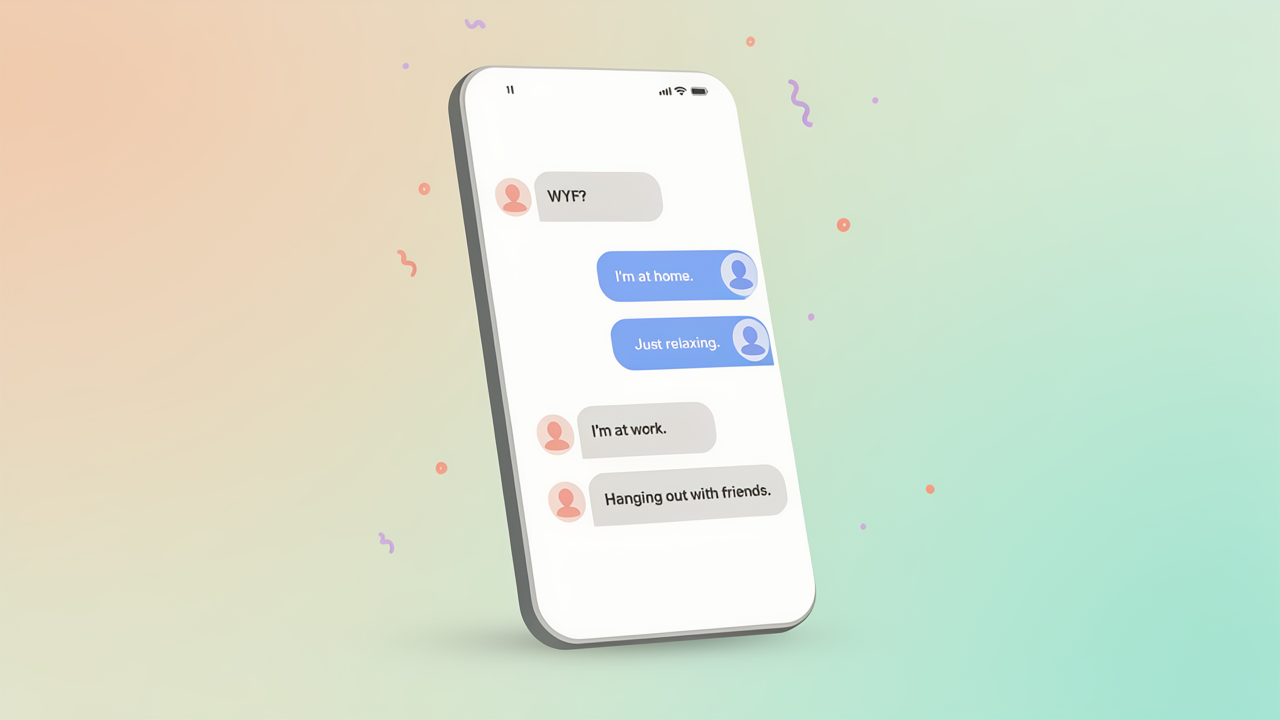
Responding to WYF is usually simple because the sender is asking where you are from. You can provide a country, city, state, or general region. If you are comfortable, you can also ask the same question back to keep the conversation going.
- 🌍 A direct response is “I’m from Pakistan.” This answers WYF clearly while sharing only a general location. You can then ask, “What about you?” to continue the conversation.
- 🏙️ If you want to be more specific, you might say, “I’m from Lahore.” A city-level answer is still general enough for many casual conversations without providing an exact address.
- 😊 A friendly reply could be “I’m from Karachi! WYF?” This feels conversational because it answers the question and immediately invites the other person to share their own location.
- 💬 You can mention where you grew up. For example, “I grew up in Islamabad, but I live somewhere else now.” This works when your hometown and current location are different.
- 🔐 You can keep your answer private. If you do not know the person, saying “I’m from Pakistan” may be enough without revealing your city or neighborhood.
- 🌎 You can answer with a region. “I’m from the Midwest” or “I’m from northern England” gives useful context without becoming overly specific.
- 📱 A casual reply can be short. “Lahore! You?” is perfectly understandable in a relaxed conversation and keeps the exchange quick.
- ✨ If you are unsure what WYF means, you can ask, “Do you mean where I’m from?” This is better than guessing when the context is unclear.
- 🗣️ You can turn the question into conversation. “I’m from Pakistan. Have you ever visited?” gives the other person an easy topic to respond to.
- 💕 In a friendly romantic conversation, you might answer warmly while keeping personal details appropriate. A general city or country can provide enough information to continue talking.
- 😎 Humor can work among friends. A playful response such as “Somewhere with great food 😄” can be fun, although it does not directly answer the question.
- 🌟 If you prefer direct communication, simply state your location and stop there. You do not have to provide additional personal information just because someone asks.
- 🧭 If you think they mean your current location, clarify. You can say, “Do you mean where I’m from or where I am right now?” This prevents confusion between WYF and WYA.
- 🤝 Returning the question is a useful habit. “I’m from Multan. What about you?” creates balance and gives the other person an opportunity to introduce themselves.
- 🔎 Read the surrounding conversation first. If you were discussing hometowns, the answer is straightforward; if you were discussing current plans, clarification may be useful.
- 📲 Your response should match the platform. A quick Snapchat reply may be very short, while a longer Instagram DM can naturally include more information.
- 🌈 You can mention culture if relevant. “I’m from Pakistan, so I grew up around a lot of amazing food and traditions.” This can turn a basic location question into a richer conversation.
- 💡 There is no required response format. WYF is informal slang, so your answer can be short, conversational, detailed, or private depending on your comfort.
- 😊 A polite response can be as simple as “I’m from Canada. How about you?” This is friendly, clear, and suitable for many ordinary conversations.
- 🌟 The key is answering only what you want to share. WYF asks about your origin, but you decide whether to provide a country, city, region, or no location information at all.
WYF vs WYA, WTF, and Other Texting Abbreviations
WYF can be confused with other three-letter texting abbreviations because many internet expressions look similar. The most important comparison is WYF vs. WYA: WYF usually asks where someone is from, while WYA usually asks where someone is currently located.
- 🧭 WYF usually means “Where you from?” It asks about origin or background, while WYA commonly means “Where you at?” and asks about someone’s current location.
- 📍 WYA focuses on the present. If a friend asks “WYA?”, they generally want to know where you are right now rather than where you grew up.
- 💬 WTF has a completely different meaning. It commonly stands for “What the fuck?” and is generally used to express surprise, confusion, frustration, or disbelief.
- 🌍 WYF is location-related but not necessarily real-time. It usually concerns where a person comes from, such as a city, country, state, or hometown.
- 📱 WYA is often used for practical coordination. A friend might text WYA when trying to meet you, while WYF is more likely to appear during an introduction.
- ✨ Context separates similar abbreviations. Reading the complete conversation is often enough to determine which interpretation makes sense.
- 😊 WYF sounds more like an introductory question. Someone meeting you online may ask it to learn your background before discussing other topics.
- 🗣️ WYA sounds more immediate. If someone asks it during a meetup or event, they probably want your present location.
- 🌟 Other abbreviations can look similar without being related. The letters alone do not tell you everything; the surrounding words and topic provide important clues.
- 🔎 WYF and WYA should not be treated as interchangeable. Substituting one for the other can change the intended question from someone’s origin to their current whereabouts.
- 💬 A simple example shows the difference: “WYF?” can receive “I’m from Pakistan,” while “WYA?” might receive “I’m at the mall.” The answers reveal the different meanings.
- 😄 WTF is usually emotional language. Unlike WYF, which asks for information, WTF commonly expresses a reaction to something unexpected or confusing.
- 🌎 WYF may lead to cultural conversation. Once someone shares their origin, the chat can move toward language, food, traditions, travel, or hometown experiences.
- 📲 These abbreviations are part of informal internet language. Their popularity can vary by community, age group, platform, and individual texting habits.
- 🔐 Location questions should be handled thoughtfully. WYF generally asks for broad origin, while WYA can involve current whereabouts, which may be more sensitive.
- 💡 Do not assume every abbreviation has only one possible meaning. Specialized communities can use the same letters differently, so context remains the strongest guide.
- 🤝 Understanding these differences prevents awkward replies. Knowing whether someone asks about your origin or current location helps you provide the information they actually requested.
- 🏙️ WYF can be answered with a hometown. WYA can be answered with a present location, while WTF usually receives a response to the situation that caused surprise or frustration.
- 🌈 Texting language rewards context awareness. Instead of memorizing every abbreviation separately, look at the topic and the surrounding words to interpret unfamiliar slang.
- 🎯 The practical distinction is simple: WYF generally concerns where someone is from, WYA concerns where they are now, and WTF expresses a strong reaction.
WYF Meaning in Different Contexts

WYF normally means “Where you from?”, but the exact nuance can change with the conversation. It can ask about nationality, hometown, city, or general background. Looking at the surrounding messages helps determine what level of location the sender is actually interested in.
- 🌍 In an introduction, WYF usually asks about your origin. The person may want to know your country, city, or hometown as part of getting acquainted with you.
- 🏙️ During a travel conversation, WYF may focus on your home region. Someone discussing destinations could ask where you are from before sharing their own travel experiences.
- 💬 In a gaming chat, WYF can be a casual icebreaker. Players from different regions may ask each other where they are from while discussing games or online communities.
- 📱 In a social media DM, WYF may simply start a conversation. The sender may have seen your profile and want an easy topic for getting to know you.
- 💕 During flirting, WYF can be part of basic introductions. It may be followed by questions about hobbies, interests, or relationship status, but the abbreviation alone does not establish romantic intent.
- 😊 Among friends, WYF can sound playful. A friend who already knows you may use it jokingly, especially if the conversation involves different accents, places, or memories.
- 🔐 When a stranger asks WYF, privacy becomes relevant. You can provide a broad answer without revealing your exact address or current location.
- 🌎 In international conversations, WYF may refer to nationality. Someone might answer with a country because that is the most useful way to explain their background.
- 🗣️ In local conversations, WYF may refer to a city. If both people already live in the same country, the sender may be interested in your hometown or nearby area.
- ✨ The question can also reflect curiosity about culture. Learning where someone is from can lead to discussions about language, food, traditions, music, and everyday life.
- 🧭 WYF is different from asking where you are now. If the discussion is about meeting somewhere today, a current-location question such as WYA would usually be more appropriate.
- 🌟 Context determines how detailed your answer should be. A country may be enough in one conversation, while a city might make more sense when discussing local travel or shared experiences.
- 💡 Some people use slang differently. If the message appears in a highly specialized community, consider whether the group has its own terminology before assuming the most common interpretation.
- 📲 Platform context can provide clues. A quick DM, public comment, gaming chat, or close-friend conversation can each create slightly different reasons for asking the same basic question.
- 🤝 WYF can establish common ground. Discovering that two people come from the same region can create an immediate subject for further conversation.
- 😎 The abbreviation keeps the tone relaxed. It sounds much more like casual conversation than an official demographic question, especially when combined with greetings or emojis.
- 📖 The underlying phrase is grammatically informal. “Where you from?” is a shortened version of “Where are you from?” that is widely recognizable in casual communication.
- 🔎 Look at what happened immediately before WYF. If someone mentioned their own hometown first, their question is likely inviting you to share yours.
- 🌈 Your response can reflect your comfort level. You can answer broadly, clarify the question, or politely decline if the conversation does not feel trustworthy.
- 🎯 The common meaning remains the starting point. In ordinary online communication, interpret WYF as “Where you from?” unless the surrounding context gives a strong reason to understand it differently.
WYF Texting Examples and Everyday Conversations
Examples make WYF easier to understand because the abbreviation can sound different depending on the surrounding words. In casual conversations, it commonly appears after greetings, introductions, or discussions about locations, travel, culture, and personal background.
- 💬 Example: “Hey! WYF?” “I’m from Lahore. What about you?” This is a simple introduction where both people exchange their general locations. 🌍
- 😊 Example: “Nice meeting you here! WYF?” “I’m from Canada.” The abbreviation keeps the conversation relaxed while allowing the new contacts to learn something basic about each other.
- 📱 Example: “You seem familiar. WYF?” “I’m from Islamabad.” Here, the sender may be trying to discover whether they have a shared geographical connection.
- 🏙️ Example: “WYF originally?” “I grew up in Karachi.” Adding “originally” makes it especially clear that the question concerns background rather than someone’s current location.
- 🌎 Example: “I’m from the UK. WYF?” “I’m from Pakistan.” This exchange shows how WYF can naturally appear after someone shares their own country first.
- 💕 Example: “You’re really easy to talk to. WYF?” “Thanks! I’m from Multan.” The question can appear in a warm conversation without automatically indicating romantic interest.
- 🎮 Example: “What games do you play? WYF?” “I’m from the US.” Online gaming communities can use WYF as a casual way to learn more about other players.
- ✨ Example: “Your accent is interesting! WYF?” “I’m from Australia.” In this context, the sender’s curiosity about location is connected directly to the person’s accent.
- 🗣️ Example: “WYF? I’m guessing somewhere in Europe.” “Close, I’m from Germany!” This playful exchange uses WYF as a lighthearted introduction.
- 🔐 Example: “WYF?” “I’m from Pakistan, but I don’t share my exact location online.” This is a useful response when you want to answer generally while maintaining privacy.
- 🌟 Example: “WYF? I’m from Lahore.” “No way, me too!” Shared locations can quickly turn a basic question into an engaging conversation about familiar places.
- 📲 Example: “Hey, WYF and what do you do?” “I’m from Canada, and I work in design.” WYF can be paired with another introductory question to learn more about someone.
- 🧭 Example: “WYF?” “Do you mean where I’m from or where I am right now?” Clarification is useful when the context could make the abbreviation confusing.
- 😄 Example: “WYF?” “Somewhere with amazing food 😂.” A playful answer can work with close friends, although it does not provide the direct location requested.
- 🌍 Example: “I’m from India. WYF?” “I’m from Pakistan.” Such exchanges can naturally lead to conversations about food, traditions, languages, and travel.
- 💡 Example: “WYF?” “I’m from Multan. Have you ever visited?” The answer provides the requested information while creating an opportunity for the conversation to continue.
- 🤝 Example: “WYF? I noticed you mentioned a city in your post.” “I grew up there.” Here, the surrounding social media content provides context for why the sender asked.
- 📖 Example: “What does WYF mean?” “It usually means ‘Where you from?’” This demonstrates how someone unfamiliar with texting slang might encounter the abbreviation.
- 🌈 Example: “WYF?” “I’m from Karachi. How about you?” This remains one of the simplest and most natural response patterns for everyday chatting.
- 🎯 Example: “Hey! WYF?” “I’m from Islamabad. Nice to meet you!” The complete exchange shows how WYF can work naturally as a short conversation opener.
Frequently Asked Questions
What does WYF mean in text?
WYF most commonly means “Where you from?” It is an informal texting abbreviation used to ask about someone’s hometown, city, country, or general place of origin.
What does WYF mean in texting?
In texting, WYF usually stands for “Where you from?” It is casual shorthand that makes the question quicker to type and is commonly used in informal conversations.
What does WYF mean on Snapchat?
On Snapchat, WYF generally means “Where you from?” Someone may use it in a chat when they want to learn your general location or background.
What does WYF mean on Instagram?
WYF on Instagram usually means “Where you from?” It can appear in DMs or casual conversations, especially when someone is getting to know a new follower or contact.
What does WYF mean on TikTok?
On TikTok, WYF commonly means “Where you from?” A viewer or creator may use it when asking about someone’s city, country, accent, or background.
What does WYF mean on WhatsApp?
WYF on WhatsApp generally means “Where you from?” It is an informal abbreviation that can be used between friends, acquaintances, or people meeting through online conversations.
What is the difference between WYF and WYA?
WYF generally means “Where you from?”, asking about origin or background. WYA usually means “Where you at?”, asking where someone is currently located.
What does WYF mean from a girl?
If a girl sends WYF, it normally has the same meaning: “Where you from?” The abbreviation itself does not establish whether the message is friendly, curious, or romantic.
What does WYF mean from a guy?
If a guy sends WYF, it usually means “Where you from?” His gender does not change the basic definition, so the surrounding conversation should be considered when interpreting tone.
How should I respond to WYF?
You can answer with a general location such as your country or city. For example, “I’m from Pakistan. What about you?” is a simple, natural response that keeps the conversation going.
Conclusion
Understanding what does WYF mean in text makes it easier to follow casual conversations across texting and social media. WYF most commonly means “Where you from?” and is used to ask about someone’s origin, hometown, country, or general background.
When you see what does WYF mean in text in a message, check the surrounding conversation before deciding exactly what the sender wants to know. In most everyday situations, a simple location-based response is enough, while privacy should always be considered when communicating with people you do not know well.
Read More All Encompassing Synonyms List (With Simple Examples) 2026