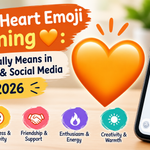
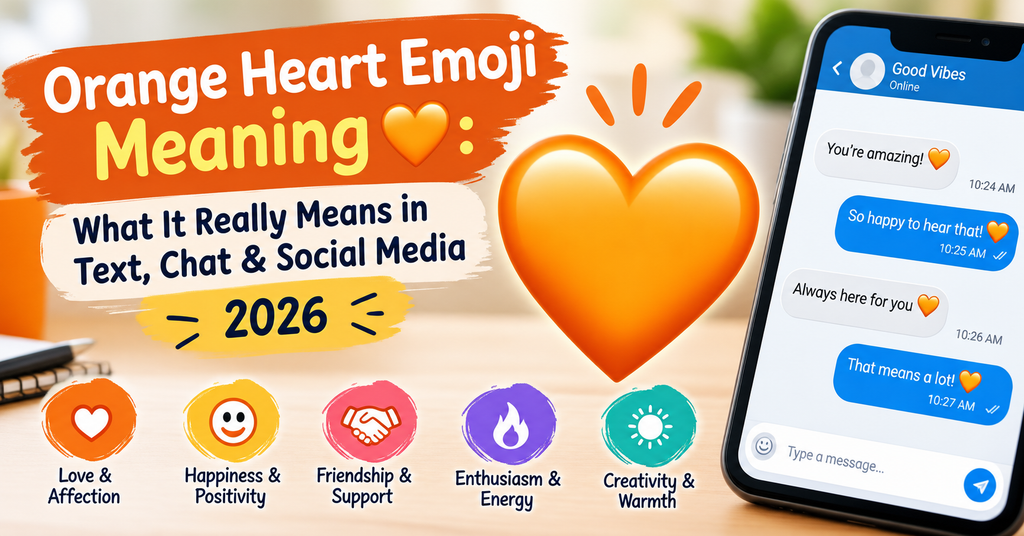
The Orange Heart Emoji Meaning can be surprisingly flexible. The 🧡 emoji often expresses warmth, friendship, encouragement, care, appreciation, and emotional support without always carrying the strong romantic feeling associated with a red heart. Its exact meaning depends on the conversation, relationship, and surrounding words.
In texting, chat, Instagram, Snapchat, TikTok, and other social platforms, the Orange Heart Emoji Meaning can change with context. Someone may use 🧡 to show friendly affection, celebrate a shared interest, offer comfort, or send a subtle emotional signal. Understanding the tone around the emoji is the best way to interpret what someone really means.
What Does the Orange Heart Emoji Mean?
The orange heart 🧡 generally represents warmth, care, friendship, encouragement, and positive emotional energy. It can feel affectionate without necessarily suggesting romantic love, making it popular between friends, relatives, classmates, coworkers, and people developing a closer connection.
🌞 The orange heart can express genuine warmth toward someone without making the message sound intensely romantic. It works especially well when you want to show that you care while keeping the emotional tone comfortable and friendly. 🧡
🤗 When someone sends 🧡 after you share a difficult experience, it may communicate emotional support and kindness. The sender could simply be saying, “I’m here for you,” without needing a long explanation.
✨ An orange heart can add positive energy to an ordinary message. Instead of sounding flat or formal, a simple sentence with 🧡 can feel more personal, cheerful, and emotionally welcoming.
🌻 Many people associate orange with warmth and enthusiasm, which gives the heart a friendly emotional character. It can suggest appreciation, optimism, and a desire to maintain a positive connection with another person.
🫶 The emoji may represent affection that is meaningful but not necessarily romantic. Friends can use it to celebrate their bond, encourage each other, or show appreciation after a thoughtful conversation.
💬 In everyday texting, 🧡 often softens the tone of a message. A short “Thank you 🧡” can feel warmer than plain text while remaining casual enough for many friendships and social situations.
🧡 If someone sends an orange heart after congratulating you, it can signal sincere happiness for your achievement. The emoji adds friendliness and emotional enthusiasm without requiring a romantic interpretation.
🌅 Orange can remind people of sunsets, autumn leaves, warmth, and cozy moments. Because of these associations, the heart may communicate comfort, peaceful affection, or appreciation for a pleasant shared experience.
😊 The orange heart can be a simple way to make someone feel valued. It may accompany compliments, supportive words, birthday wishes, or everyday conversations where the sender wants to add a little emotional warmth.
🎉 In celebratory messages, 🧡 can communicate excitement and support. Someone might use it after saying congratulations, wishing you luck, or celebrating an important personal milestone with you.
🌈 An orange heart does not have one universal emotional definition. Its meaning develops from the relationship, conversation, and other emojis, so it is better to consider the complete message than the symbol alone.
💛 Some people choose 🧡 instead of a red heart because it feels softer and less intense. It can express affection while avoiding the stronger romantic or passionate impression that ❤️ sometimes creates.
🧸 The emoji may also create a cozy, reassuring feeling. In a comforting message, it can suggest emotional safety, kindness, and gentle support, especially when someone needs encouragement during a stressful moment.
🌟 When used between close friends, 🧡 can symbolize appreciation for the friendship itself. It can say, “You matter to me,” while keeping the relationship firmly within a warm and supportive space.
🗣️ In group chats, the orange heart can show agreement or encouragement. A person may send it to support someone’s announcement, celebrate good news, or show enthusiasm without writing a detailed response.
🍂 The orange heart is sometimes connected with autumn aesthetics and seasonal content. In those situations, its purpose may be partly visual, adding a warm color that matches fall photos, outfits, decorations, or scenery.
🧡 If someone frequently uses this heart with you, it may indicate that they feel comfortable expressing affection. However, frequency alone does not prove romantic interest because emoji habits differ greatly between individuals.
💕 The emoji can represent a middle ground between a simple smile and an intense love symbol. It adds emotional meaning while remaining flexible enough for friendship, family relationships, encouragement, and casual affection.
☀️ In a positive conversation, 🧡 can reinforce feelings of happiness and optimism. It often makes a message feel brighter, particularly when paired with compliments, good wishes, gratitude, or encouraging words.
🌼 Ultimately, the orange heart usually communicates some form of positive emotional connection. Whether that means friendship, support, appreciation, or gentle affection depends on the person sending it and the context around it.
Orange Heart Emoji Meaning in Texting

In texting, the 🧡 emoji can make short messages feel warmer and more expressive. Because text lacks facial expressions and vocal tone, people often use emojis to communicate emotional details that ordinary words may not fully convey.
📱 “Thank you 🧡” can sound more heartfelt than a simple “Thank you.” The orange heart adds appreciation and warmth while keeping the message relaxed, making it suitable for friends, classmates, coworkers, or supportive acquaintances.
💬 When someone writes “You’ve got this 🧡,” the heart strengthens the encouragement. It suggests that the sender genuinely cares about the other person’s success and wants to provide emotional support.
😊 A message like “Hope you feel better soon 🧡” uses the emoji to create a gentle, caring tone. It can communicate concern without making the message overly serious or emotionally intense.
🌻 “So happy for you 🧡” is a natural way to celebrate someone’s good news. The heart adds enthusiasm and affection, showing that the sender feels personally connected to the recipient’s happiness.
🤝 Friends may use 🧡 after making plans together. In that setting, it can simply communicate friendliness and excitement about spending time together rather than suggesting romantic feelings.
✨ If someone says “You always know how to make me laugh 🧡,” the emoji emphasizes appreciation. It can make the compliment feel warmer and more personal without necessarily changing the relationship into something romantic.
🫶 A supportive text followed by 🧡 can communicate presence and reassurance. For example, “I’m always here if you need me 🧡” uses the symbol to reinforce emotional availability and genuine care.
🌅 The orange heart can work particularly well in casual evening conversations. A message such as “Sleep well and take care 🧡” feels thoughtful and affectionate while remaining relatively low-pressure.
💛 Choosing 🧡 instead of ❤️ may intentionally create a softer emotional tone. The sender might want to show closeness without making the message appear like a declaration of romantic love.
🎈 In birthday texts, the emoji can communicate cheerful affection. “Happy birthday! Hope your day is amazing 🧡” feels friendly, celebratory, and personal without sounding excessively formal.
🧡 Texting habits vary from person to person, so the same emoji may mean different things in different conversations. A close friend might use it casually, while someone interested in you might use it more intentionally.
🌟 When paired with encouragement, 🧡 can make motivational words feel less generic. “Keep going—you’re doing better than you think 🧡” sounds supportive because the emoji reinforces the emotional message.
🍊 Some people use the orange heart simply because they like the color. In that case, interpreting it as a hidden romantic signal would probably add meaning that the sender never intended.
🥰 An orange heart beside an affectionate sentence can suggest closeness. Still, the surrounding words are important because “Love your new outfit 🧡” carries a very different meaning from “I love you 🧡.”
🌼 If a person normally avoids emojis but suddenly sends 🧡, the change may deserve attention. It could reflect increased warmth, but it could also simply mean they felt especially appreciative at that moment.
💌 The heart can make digital communication feel more human. Since texting removes gestures and facial expressions, a small symbol like 🧡 can help communicate kindness that might otherwise be lost in a short message.
🤍 The orange heart may also appear when someone wants emotional warmth without the seriousness associated with other heart colors. It can feel friendly, positive, and approachable in everyday digital conversations.
🎯 In professional texting, 🧡 should be used carefully. With a close colleague it may be harmless, but in formal workplace communication, words alone are often safer and more appropriate.
🌞 A morning text such as “Have a wonderful day 🧡” can use the emoji as a friendly emotional boost. It suggests thoughtfulness without necessarily implying that the sender has romantic intentions.
💬 The safest way to interpret 🧡 in texting is to read the complete message. Words, relationship history, frequency, timing, and the sender’s normal emoji habits provide much stronger clues than the heart color alone.
Orange Heart Emoji Meaning in Chat
In online chats, the orange heart often works as a quick emotional response. People may send it instead of writing a longer message to acknowledge kindness, agree with someone, show encouragement, or add warmth to casual conversation.
💬 Sending 🧡 in a group chat can show support for someone’s message. It may mean “I agree,” “I appreciate this,” or simply “That made me happy,” depending on what everyone is discussing.
🤗 In a private chat, the orange heart can make reassurance feel more personal. A friend saying “Don’t worry, everything will work out 🧡” may use it to communicate genuine emotional support.
🎉 When someone shares exciting news, responding with 🧡 can be a quick celebration. It acknowledges their happiness and creates a positive atmosphere without requiring a lengthy written response.
🫶 During an emotional conversation, 🧡 may act as a gentle sign of care. It can reassure someone that their feelings have been heard and that the conversation matters to you.
🌟 Chat messages are often brief, so emojis carry extra emotional information. An orange heart can indicate that a short reply is friendly rather than cold, especially when the written message itself is very simple.
🧡 A person might reply to “I finally finished my project!” with “Proud of you 🧡.” Here, the heart supports the words of encouragement and reinforces a positive personal connection.
😊 If someone sends 🧡 after a funny story, it may simply express affection for the conversation. It does not automatically indicate flirting, particularly when the chat is between established friends.
🌻 The emoji can also signal appreciation after receiving helpful advice. “That really helped me, thank you 🧡” combines gratitude with warmth and makes the response feel more sincere.
✨ In community chats, 🧡 can represent friendliness toward other members. It may be used to welcome someone, appreciate their contribution, or encourage respectful interaction within the group.
🌅 An orange heart can soften disagreement. When used after a thoughtful explanation, it may communicate that although people have different opinions, the conversation remains respectful and friendly.
💛 Sometimes people choose the orange heart simply because it fits their personal emoji style. Not every color choice contains a hidden message, so avoid assuming a specific emotional intention without supporting context.
🤝 In a networking conversation, 🧡 can occasionally communicate appreciation for a helpful connection. However, professional boundaries still matter, and the emoji should match the existing level of familiarity.
🍂 The heart may appear frequently in autumn-themed chats because orange matches seasonal imagery. In those conversations, its purpose can be decorative as much as emotional.
🧸 A comforting chat may use 🧡 alongside phrases such as “Take your time” or “I’m listening.” The symbol can make those words feel softer and more reassuring without requiring romantic language.
🎈 During celebrations, the orange heart can complement balloons, cakes, fireworks, or congratulations. Its warm color adds visual energy and helps the chat feel more festive and emotionally expressive.
💌 If someone sends several affectionate emojis together, context becomes even more important. 🧡 by itself may be friendly, while 🧡 combined with romantic language could communicate a more intimate feeling.
🌈 Chat platforms encourage quick reactions, and hearts are often used as emotional shortcuts. An orange heart may therefore mean something as simple as “I liked this” rather than a deep personal statement.
🌞 When a conversation ends, “Good night 🧡” can sound caring and thoughtful. Still, the meaning depends on the relationship, since close friends and romantic partners may both use this kind of message.
🧡 The orange heart can help prevent short replies from appearing dismissive. A simple “Okay 🧡” may feel warmer than “Okay,” although the exact interpretation depends on the broader conversation.
🌼 In chat, the most reliable clue is the combination of words and behavior. Look at what the person says, how consistently they communicate, and how they normally use emojis before deciding what 🧡 means.
Orange Heart Emoji Meaning From a Girl

When a girl sends 🧡, the meaning can range from friendship and support to affectionate interest. Gender alone cannot determine what she intends, so the surrounding conversation and the nature of your relationship are more useful clues.
🧡 If a girl sends you an orange heart after you help her, it may simply express sincere appreciation. She could be thanking you warmly without trying to communicate romantic attraction.
😊 A message such as “You’re so sweet 🧡” may show friendly affection. Depending on your relationship, it could also contain a subtle emotional signal, so consider the overall tone rather than the emoji alone.
🌻 If she uses 🧡 regularly with many friends, it is probably part of her normal communication style. In that situation, receiving the same emoji should not automatically be interpreted as flirting.
🫶 If she sends 🧡 while discussing something personal, it may indicate emotional trust. She could be showing that she values your support and feels comfortable sharing meaningful parts of her life.
✨ A girl might use the orange heart to celebrate your achievements. “I knew you could do it 🧡” usually communicates encouragement, pride, and genuine happiness for your success.
💬 If she sends 🧡 after a playful conversation, the emoji may simply reinforce friendliness. Humor, teasing, and casual affection can naturally appear together without indicating that she wants a romantic relationship.
🌅 “Good night 🧡” can feel affectionate, but it is not definitive proof of romantic interest. Friends, siblings, and romantic partners can all use warm good-night messages.
🤗 When she sends 🧡 after saying “I’m here for you,” the most likely message is emotional support. The heart emphasizes care and reassurance during a difficult or vulnerable moment.
💕 If 🧡 appears alongside explicitly romantic language, its meaning may become more intimate. The important clue is not the color alone but the complete emotional message surrounding it.
🎉 A girl may send an orange heart when congratulating you on a promotion, birthday, graduation, or personal achievement. In these situations, it commonly represents celebration and supportive friendship.
🌼 If she rarely uses emojis and chooses 🧡 specifically with you, it may deserve more attention. Even then, one message is not enough to establish romantic intent.
🧡 Sometimes the orange heart is chosen because it feels less intense than ❤️. She may want to express closeness while avoiding a strong romantic implication.
🍊 Color preference can also explain the choice. Some people have favorite emojis and use them consistently, meaning the orange heart may be aesthetic rather than emotionally coded.
🌟 If she combines 🧡 with compliments about your personality, humor, or kindness, it may show genuine appreciation. Whether that appreciation is romantic depends on other behaviors and the relationship.
💌 A heart after a vulnerable conversation can be meaningful because it adds emotional softness. It may show that she cares about the connection, even if she has not expressed romantic feelings.
🤝 In a friendship, 🧡 can symbolize loyalty and mutual support. A girl may use it to communicate that she values the friendship and wants to maintain a positive bond.
☀️ If she sends “Have a beautiful day 🧡,” the tone is usually warm and encouraging. It could be friendly or affectionate, but the phrase itself does not establish romantic interest.
🥰 Repeated affectionate emojis combined with frequent personal conversations may suggest increased closeness. Still, interpreting the relationship requires looking at the complete communication pattern rather than decoding one symbol.
💬 If you are unsure about her intention, avoid treating the emoji as a secret confession. A respectful conversation is much more reliable than guessing based on emoji colors.
🌈 Ultimately, an orange heart from a girl most often signals positive affection, warmth, or care. It can become romantic in the right context, but there is no universal rule that makes 🧡 a romantic symbol.
Orange Heart Emoji Meaning From a Guy
When a guy sends 🧡, he may be expressing friendship, appreciation, encouragement, emotional support, or affection. Just as with any sender, his intention cannot be determined from gender or emoji color alone.
🧡 A guy may send an orange heart after receiving help or kindness. In that context, it can simply mean “I appreciate you” and add a warmer tone to an otherwise ordinary thank-you message.
🤝 Between friends, 🧡 can represent loyalty and mutual respect. A guy may use it to show that he values the friendship without intending anything romantic or flirtatious.
😊 If he says “You’re awesome 🧡,” the heart can reinforce the compliment. It communicates positive feelings, but the exact nature of those feelings depends on the relationship and conversation.
🌟 A guy might use 🧡 when encouraging someone through a difficult situation. The symbol can communicate emotional availability and reassurance, particularly when paired with supportive words.
💬 If he normally communicates without emojis, an orange heart may indicate extra warmth. However, it still does not automatically mean romantic interest because he may simply be responding emotionally to a particular situation.
🎉 After your good news, “Congrats! 🧡” is generally a supportive response. The heart adds friendliness and excitement, showing that he is happy about your success.
🌻 If he uses 🧡 with many people, it is probably part of his regular texting style. His personal emoji habits are therefore an important clue when interpreting his messages.
🫶 A guy sending 🧡 after a serious conversation may be emphasizing care. It can be his way of showing that he values the emotional connection and wants you to feel supported.
🌅 A “Good night 🧡” message can sound affectionate, but context matters. Close friends may exchange these messages just as easily as people who are romantically interested in each other.
💕 If 🧡 appears with flirting, compliments, or discussions about dating, it may carry a stronger romantic undertone. The surrounding words provide much more information than the heart color itself.
🍂 Some guys choose orange hearts because they like the visual style. If the conversation involves sports, autumn, favorite colors, or orange-themed content, the emoji may have little emotional significance.
✨ The orange heart can communicate appreciation without the intensity of a red heart. Someone may choose it when they want to express affection while keeping the emotional message comfortable and understated.
🤗 When a guy says “Take care of yourself 🧡,” he may be showing genuine concern. It is a caring message, but concern and romance are not automatically the same thing.
☀️ An orange heart can brighten a casual morning message. “Hope your day goes well 🧡” usually expresses goodwill and warmth rather than making a direct romantic statement.
💌 If he sends 🧡 after sharing something personal, it may suggest growing trust. The heart can function as an emotional punctuation mark that says the connection matters to him.
🌈 Repeated personal conversations combined with consistent affectionate communication may indicate deeper interest. Even so, emojis should be considered supporting clues rather than definitive evidence of romantic feelings.
🧡 In workplace or group settings, a guy may use the emoji simply to be friendly. Professional context can significantly change the interpretation of an otherwise affectionate-looking symbol.
😊 If he responds to your kindness with 🧡, it may be his preferred way to show gratitude. Some people find emotional expression easier through emojis than through longer written explanations.
🗣️ If his messages are confusing, focus on direct communication. Asking about someone’s feelings respectfully is more accurate than building conclusions around whether they chose 🧡, ❤️, 💛, or another heart.
🌼 In general, an orange heart from a guy suggests warmth, care, or positive affection. It may be romantic in some situations, but the sender’s words, actions, and relationship with you matter more than the emoji itself.
Orange Heart Emoji Meaning in Relationships

Within relationships, 🧡 can represent affection, emotional warmth, support, friendship, and a comfortable bond. Romantic couples may use it as a softer alternative to ❤️, while friends and family may use it to celebrate closeness.
🧡 Couples may use the orange heart when they want to express affection without making every message intensely romantic. Its softer appearance can add warmth to everyday conversations about plans, meals, work, or routines.
🫶 In a healthy relationship, emojis can reinforce emotional connection. An orange heart beside supportive words may communicate care and appreciation, especially when partners are encouraging one another through stressful days.
💛 Some couples intentionally alternate heart colors to create different emotional tones. Orange can feel playful and warm, while red may feel more passionate, although these meanings are personal rather than universal.
🌻 Friends can also use 🧡 to celebrate long-term connection. It may symbolize loyalty, trust, shared memories, and appreciation without changing a platonic friendship into a romantic relationship.
🤗 Family members may send the orange heart when expressing encouragement or affection. Parents, siblings, cousins, and relatives can use it as a warm digital substitute for a hug or reassuring gesture.
💬 If partners use 🧡 frequently, it may become an inside meaning within their relationship. Couples often develop personal emoji codes, so their private interpretation can differ from common online definitions.
✨ The heart can be useful when saying something emotionally supportive. “I’m proud of how you handled that 🧡” communicates admiration while focusing on the person’s effort rather than romantic passion.
🌅 In a long-distance relationship, small affectionate symbols can help maintain emotional closeness. A simple orange heart can make a short check-in feel more connected when partners cannot communicate face to face.
💌 If one partner sends 🧡 after an apology, it may help soften the emotional atmosphere. However, an emoji should support sincere communication rather than replace accountability or meaningful discussion.
🌟 Couples may also use orange hearts during celebrations. Birthdays, anniversaries, vacations, achievements, and shared milestones can all provide natural opportunities to use the symbol.
😊 In friendships, 🧡 may express affection while respecting boundaries. It can say “I value you” without carrying the stronger romantic expectations that some people associate with a red heart.
🤝 The emoji can represent emotional partnership outside romance. Friends supporting each other through career changes, personal challenges, or major decisions may use 🧡 to emphasize mutual care.
🍂 Some relationships use different heart colors according to mood. Orange might become associated with comfort, autumn memories, humor, or a particular shared experience that gives it special meaning.
🌈 Online relationships can develop emotional language through emojis. A recurring 🧡 may become a recognizable sign of reassurance between two people, especially when they communicate frequently and understand each other’s habits.
☀️ The heart can add warmth to ordinary relationship maintenance. A message such as “Made it home safely 🧡” can communicate consideration even though the actual information is simple.
🥰 When combined with romantic words, 🧡 can become more intimate. The meaning comes from the entire communication pattern, not from the orange color functioning as a universal romantic code.
💬 If partners disagree about emoji meanings, discussing those preferences can prevent misunderstandings. Digital communication is clearer when both people understand how the other person uses hearts and other emotional symbols.
🧸 An orange heart can be especially comforting during difficult relationship moments. It may communicate tenderness, but serious issues still require direct conversation rather than relying entirely on digital symbols.
🧡 The emoji can represent affection at different levels. It may be friendly for one person, deeply meaningful for another, and romantic for someone else, which is why personal context matters.
🌼 Healthy relationships depend on communication beyond emojis. Whether 🧡 means friendship, affection, or romance, its real significance becomes clearer when it matches consistent words, actions, respect, and emotional honesty.
Orange Heart Emoji Meaning in Dating
In dating conversations, 🧡 can be interpreted as a gentle form of affection. It may show interest, comfort, friendliness, or emotional curiosity, but it does not provide enough evidence by itself to confirm someone’s romantic intentions.
🧡 During early dating, an orange heart may feel less intense than a red heart. Someone could be showing interest while keeping the conversation relaxed and avoiding an overly serious romantic signal.
😊 If a date texts “Had such a great time 🧡,” the emoji can strengthen the positive message. It suggests warmth and appreciation, although the exact level of romantic interest remains personal.
✨ A person may use 🧡 when flirting subtly. If the emoji appears alongside playful teasing, compliments, frequent messages, and invitations to meet again, the broader pattern may suggest growing interest.
💬 Dating conversations often involve uncertainty, so it is easy to overanalyze emojis. One orange heart should not be treated as proof that someone wants a relationship or has developed strong romantic feelings.
🌻 If someone sends 🧡 after you share a vulnerable story, it may show emotional interest and care. It could also simply indicate that they are being kind and supportive during an important conversation.
🫶 “Thinking of you 🧡” can sound affectionate during dating. Whether it is romantic depends on your existing connection, communication frequency, and whether the person expresses similar feelings directly.
🌅 A good-morning or good-night message containing 🧡 may suggest increased closeness. Still, some people naturally use hearts with friends, so the emoji should be interpreted alongside their overall behavior.
💕 If orange hearts appear with romantic compliments, plans for future dates, or explicit expressions of attraction, the combined message becomes more suggestive. Context provides the strongest clue.
🤗 During difficult dating situations, 🧡 may communicate reassurance. Someone could be telling you that they care about your feelings even if they are not ready to define the relationship.
🎉 After a successful first date, “I had fun tonight 🧡” is often a positive sign. It communicates enjoyment and warmth, but a direct invitation for another date provides stronger evidence of interest.
🌟 People sometimes choose orange because it feels safer emotionally. Compared with ❤️, the color may allow them to express affection without creating pressure or making the relationship seem more serious than it is.
🧡 If someone consistently sends the emoji only to you, it may indicate that your relationship feels special to them. Even then, direct communication is necessary before drawing a definite conclusion.
🍊 An orange-themed profile, outfit, sports team, or favorite color can explain the emoji choice. Not every repeated symbol is a romantic clue, especially when visual aesthetics are part of the conversation.
💌 During online dating, emojis help communicate tone because people have not yet developed many shared nonverbal cues. 🧡 can make messages feel friendlier and reduce the risk of sounding overly formal.
🥰 A combination of affectionate words and repeated heart emojis may suggest emotional closeness. However, dating intentions are better understood through consistent effort, respectful behavior, and willingness to spend time together.
🌈 If someone suddenly changes from neutral emojis to hearts, the shift may reflect changing comfort. It is worth noticing, but it still should not be treated as definitive evidence of attraction.
🤝 Dating relationships often move through stages, and emoji use can change along with emotional comfort. An orange heart may be especially common during the stage when affection is developing but labels remain uncertain.
☀️ A simple “Good luck today 🧡” from someone you are dating can communicate support. It shows that they are thinking about your experience and want something positive for you.
💬 If you are confused by someone’s messages, avoid testing them through emoji games. Honest, low-pressure questions about intentions are more respectful and much more reliable than trying to decode every symbol.
🌼 In dating, 🧡 usually suggests warmth or affection rather than guaranteeing romance. Look at the complete pattern—words, actions, consistency, invitations, and emotional openness—to understand what the person really means.
Orange Heart Emoji Meaning on Social Media

On Instagram, TikTok, Snapchat, Facebook, and other platforms, the orange heart can have both emotional and visual meanings. Users may choose it for friendship, support, aesthetics, fandoms, seasonal posts, or positive social interaction.
📸 An orange heart in an Instagram comment can show appreciation for someone’s photo or achievement. It often feels warmer than a simple like while remaining casual enough for public social interaction.
🧡 On TikTok, users may add orange hearts to supportive comments. The emoji can communicate encouragement, admiration, or agreement without suggesting that the commenter has a personal romantic relationship with the creator.
🌅 Orange hearts can fit sunset photographs particularly well. In aesthetic posts, the emoji may primarily match the visual mood while still adding a subtle feeling of warmth and appreciation.
🍂 During fall, 🧡 becomes especially common because orange represents autumn leaves, pumpkins, cozy outfits, and seasonal decorations. In this context, the emoji may be more aesthetic than emotional.
✨ Social media captions often use several emojis to create a visual mood. An orange heart can contribute warmth and energy while complementing travel photos, celebrations, lifestyle content, or inspirational posts.
🤳 A friend might comment “Love this 🧡” under your new picture. Here, the heart likely reinforces appreciation for the content rather than expressing romantic attraction.
🌻 Organizations and communities may use orange hearts to communicate friendliness and support. The meaning can depend on the group’s branding, campaign, cause, or shared identity.
🎉 Birthday and graduation posts frequently include hearts because they communicate celebration. Orange offers a cheerful alternative to traditional red and can make a public message feel bright and friendly.
💬 In Snapchat conversations, 🧡 may be used as a quick affectionate response. Because Snapchat communication is often informal, users may attach hearts casually without assigning a deep symbolic meaning.
🌈 Social media users sometimes choose heart colors based on personal aesthetics. A person who prefers orange themes may use 🧡 frequently across captions, comments, stories, and private messages.
🫶 An orange heart comment can also provide emotional support. Someone responding to a difficult post may use it alongside kind words to communicate compassion and encouragement.
😊 The emoji can make public comments feel less mechanical. “Congratulations 🧡” has a warmer social tone than simply writing “Congratulations,” especially when celebrating someone you know.
📱 Social media changes emoji meaning through trends and communities. A symbol may develop temporary associations within particular fandoms, friend groups, creators’ communities, or online conversations.
🌟 Orange can symbolize enthusiasm, creativity, and positive energy in visual communication. That makes the heart useful for content focused on motivation, celebration, hobbies, and personal expression.
🧡 If someone comments an orange heart repeatedly, it may simply be their favorite reaction. Repetition does not necessarily indicate increasing emotional or romantic interest.
🎨 Designers and content creators may choose 🧡 because it balances warmth with visual contrast. The heart can work well with neutral, autumnal, bright, or sunset-inspired color palettes.
💕 A social media heart can be interpreted differently from a private message. Public comments are often broader and more casual, so they generally provide weaker evidence about someone’s private feelings.
🤗 Supportive communities may use orange hearts to welcome newcomers. The symbol can create an atmosphere of friendliness and emotional safety without requiring a personal relationship between users.
☀️ Travel, summer, beach, and sunset content can naturally feature orange hearts. In these posts, the emoji may communicate happiness and visual harmony as much as interpersonal affection.
🌼 On social media, context is everything. Consider the caption, image, community, platform, and user’s normal communication style before deciding whether 🧡 is emotional, aesthetic, supportive, or simply decorative.
Orange Heart Emoji Symbolism and Psychology
Emoji symbolism is influenced by color associations, social habits, personal experiences, and digital communication norms. Orange is often linked with warmth, enthusiasm, energy, friendliness, and comfort, which can shape how people perceive 🧡.
🧡 Orange often feels warmer than cooler colors, which helps explain why the orange heart can communicate emotional warmth. People may associate it with friendliness, enthusiasm, comfort, and positive social energy.
☀️ Color psychology can influence digital communication, but it does not create universal rules. A person’s culture, preferences, experiences, and relationship with the recipient can change how they interpret the same emoji.
🌅 Orange is commonly associated with sunsets and warm light. Those visual connections may contribute to the heart’s cozy emotional impression, particularly when it appears in affectionate or reflective conversations.
🤗 The orange heart can function as emotional punctuation. It adds a feeling that plain words may not fully communicate, helping recipients understand that a sentence is intended warmly rather than coldly.
✨ Digital body language includes emojis, punctuation, response timing, and wording. Because online communication lacks many physical cues, these small signals can influence how people interpret emotional tone.
💬 A heart can soften a direct statement. For example, “Take care 🧡” sounds more caring than “Take care” to many readers, although individual interpretation still varies.
🌻 Orange can also communicate enthusiasm without the intensity associated with passion. That makes 🧡 useful when someone wants to express positive feelings while maintaining a relatively relaxed emotional tone.
🫶 Emotional support is another common symbolic use. When placed after reassuring words, the orange heart may reinforce compassion and signal that the sender is emotionally present.
😊 People also learn emoji meanings through repeated social exposure. If someone’s friends consistently use 🧡 for friendship, that person may naturally develop the same interpretation.
🌈 Online communities can create their own emoji conventions. This means a symbol’s meaning may sometimes depend more on a group’s shared communication habits than on general emoji definitions.
🍂 Seasonal associations can affect perception. Because orange is strongly connected with fall, 🧡 may evoke comfort, nostalgia, coziness, and familiar seasonal imagery even when the conversation is not explicitly about relationships.
💛 Comparing heart colors can help explain emotional differences, but these differences are not official emotional categories. Heart colors are flexible communication tools rather than a fixed dictionary of human feelings.
🧸 The orange heart can feel gentle because it combines a familiar heart shape with a less intense color. That combination can make affection seem approachable rather than dramatic.
🌟 Emoji psychology is best understood as contextual communication rather than mind reading. An emoji can provide a clue about tone, but it cannot reveal someone’s private thoughts with certainty.
🗣️ People often use emojis to compensate for missing vocal cues. In spoken conversation, warmth can be communicated through tone of voice; in texting, an emoji can help provide some of that emotional information.
💌 The emotional effect of 🧡 can also depend on the sentence. “Great job 🧡” is encouraging, while “I miss you 🧡” may feel much more intimate despite using the exact same symbol.
🎨 Visual preference matters too. Some users select emojis because they fit a color palette, personal brand, or aesthetic. Psychological interpretation should therefore account for design choices as well as emotional context.
🤝 Social relationships shape emoji meaning through shared experience. Two close friends may understand 🧡 as an inside symbol for their friendship even if outsiders interpret it differently.
☀️ Positive associations with orange can make the emoji feel energetic and optimistic. It may be particularly effective when someone wants to encourage confidence, celebrate progress, or brighten someone’s mood.
🌼 The psychology of 🧡 is ultimately about flexible emotional signaling. It can suggest warmth and connection, but understanding the sender requires considering words, behavior, relationship history, and communication patterns together.
Difference Between Orange Heart and Other Heart Emojis

Heart emojis share a common emotional foundation, but their colors can create different impressions. These associations are not strict rules, yet comparing them can help explain why someone chooses 🧡 instead of another heart.
❤️ The red heart is often associated with strong love, romance, passion, and deep affection. Compared with ❤️, the orange heart can feel softer, friendlier, and less emotionally intense.
💛 The yellow heart is commonly associated with friendship, happiness, positivity, and cheerful affection. Orange can feel slightly warmer or more energetic, although many people use the two colors interchangeably.
💚 The green heart may be associated with nature, growth, health, jealousy, or particular communities. Its meaning varies widely, while orange often carries a more consistently warm and enthusiastic visual impression.
💙 The blue heart can communicate trust, calmness, loyalty, or support. Compared with blue’s cooler emotional feeling, 🧡 often appears more energetic, cozy, and socially warm.
💜 The purple heart can suggest compassion, admiration, creativity, or special communities. Orange may feel more casual and cheerful, whereas purple can sometimes carry a more distinctive or expressive tone.
🖤 The black heart can communicate dark humor, grief, sophistication, irony, or emotional depth depending on context. The orange heart generally produces a brighter and more optimistic impression.
🤍 The white heart may symbolize purity, peace, sympathy, or gentle affection. Orange can feel more energetic and expressive, particularly in casual friendship and encouragement messages.
🤎 The brown heart can evoke comfort, earthiness, warmth, and natural aesthetics. Orange shares some of that warmth but often feels brighter, more playful, and more energetic.
🩷 The pink heart is often associated with sweetness, affection, tenderness, and romantic or playful feelings. Orange can offer affection while sounding somewhat less conventionally romantic.
🩵 The light-blue heart may communicate calmness, softness, friendship, or gentle support. Orange generally creates a warmer visual impression and may feel more energetic.
🩶 The gray heart can suggest neutrality, subtle emotion, maturity, or muted feelings. Orange provides a stronger visual sense of warmth and positive energy.
🧡 Heart colors do not have official relationship levels. Someone choosing orange instead of red does not necessarily mean they are intentionally reducing romantic intensity; they may simply prefer orange.
🌈 Different platforms and communities can influence how heart colors are perceived. A meaning that seems obvious in one social group may be completely different in another.
💬 The words around a heart are often more informative than its color. “I appreciate you 🧡” is naturally different from “I love you 🧡,” even though both messages contain the same emoji.
🎨 Aesthetic choices can also determine heart color. People may select a heart because it matches their photo, outfit, profile theme, seasonal content, or favorite color.
🫶 Heart emojis often overlap in meaning. Most can communicate some form of affection, appreciation, or emotional connection, with color adding a subtle mood rather than a strict definition.
🌟 If someone switches between several heart colors, it may be pointless to assign a separate hidden meaning to every choice. Their overall communication habits are more useful than individual emoji variations.
😊 Orange may be especially useful for friendly affection. It provides an emotional touch while remaining flexible enough for family, friendships, dating, coworkers, and online communities.
💕 Couples can develop their own heart-color meanings over time. What starts as a general emoji may become a personal symbol connected with memories, jokes, milestones, or shared experiences.
🧡 The best heart emoji interpretation combines common symbolism with personal context. Color can suggest tone, but the sender’s words, relationship, habits, and intentions provide the strongest evidence.
How to Respond to an Orange Heart Emoji
Responding to 🧡 depends on the relationship and the original message. You can mirror the warmth, answer with words, or choose another emoji that reflects your feelings without assuming too much about the sender’s intention.
🧡 If a friend sends you an orange heart, returning one can be an easy way to match their friendly warmth. It communicates appreciation without forcing the conversation into a more romantic direction.
😊 A simple “Thank you! 🧡” works well when someone sends support or congratulations. It acknowledges their kindness while keeping your response natural, positive, and emotionally appropriate.
🤗 If someone sends 🧡 during a difficult conversation, consider responding with supportive words too. “That means a lot to me, thank you 🧡” communicates genuine appreciation rather than relying only on symbols.
💬 If you are dating and want to show interest, you can mirror the orange heart. Adding a thoughtful sentence gives the other person more information than simply returning the emoji.
🌻 If you are unsure about the sender’s intentions, do not feel pressured to match their emotional level. A friendly smile emoji or warm written response can acknowledge the message without making assumptions.
✨ After receiving congratulations, “Thank you so much! I really appreciate it 🧡” is a warm response. It works in many casual situations and makes the sender feel that their support was noticed.
🫶 When someone uses 🧡 to comfort you, you can respond honestly. Saying “I really needed to hear that today” communicates emotional appreciation and helps build a more meaningful conversation.
🎉 If the orange heart appears in a celebration, respond with enthusiasm. “Thank you! I’m so excited too 🧡” keeps the positive energy going without overcomplicating the exchange.
🌅 For a good-night message, “Good night, sleep well 🧡” can naturally mirror the warmth. This response works particularly well when both people already communicate affectionately.
💛 If you prefer a more clearly friendly tone, using 💛 can be a comfortable alternative. It communicates warmth and positivity while avoiding an assumption that the conversation is romantic.
❤️ If you have established a romantic relationship, returning ❤️ may communicate stronger affection. However, choose it because it genuinely reflects your feelings rather than because you believe the sender expects it.
🤝 In a professional setting, words may be more appropriate than another heart. A response such as “Thank you, I appreciate your support” keeps the interaction warm while maintaining professional boundaries.
🌟 If the message is public, such as an Instagram comment, a simple appreciative response is usually enough. You do not need to decode or publicly explain the meaning of the orange heart.
🍂 If the heart appears in an autumn-themed post, you can respond with seasonal emojis. A leaf, pumpkin, or orange heart may match the visual theme without adding unnecessary romantic meaning.
💌 If someone repeatedly sends affectionate messages and you are interested, respond consistently rather than relying on emoji games. Genuine conversation provides a clearer path toward understanding each other’s feelings.
🗣️ If you are genuinely confused, asking a respectful question is better than guessing. You can focus on the conversation itself rather than asking someone to define every emoji they send.
☀️ If you want to keep things light, a cheerful response can match the tone. “Aww, thank you! Hope your day is great too 🧡” feels friendly and naturally reciprocal.
🌈 If you do not share the sender’s emotional intensity, you can respond kindly without mirroring it. A thoughtful sentence lets you acknowledge their message while maintaining your own boundaries.
🧸 During emotional conversations, prioritize words over emoji interpretation. If someone is sharing something serious, responding thoughtfully demonstrates care more effectively than simply returning a heart.
🧡 The best response is one that matches your actual relationship and feelings. Emojis should make communication easier, not create pressure, confusion, or expectations that neither person has directly discussed.
FAQs
What does the orange heart emoji 🧡 mean?
The orange heart commonly represents warmth, friendship, care, encouragement, appreciation, and positive affection. Depending on context, it can also express romantic interest or emotional closeness, but it does not have one fixed meaning.
Is the orange heart emoji romantic?
It can be romantic, but it is not automatically a romantic emoji. Many people use 🧡 for friends, family, support, and casual affection, so the surrounding words and relationship provide better clues.
What does 🧡 mean from a girl?
From a girl, 🧡 may indicate friendship, appreciation, emotional support, affection, or romantic interest. Her normal texting style and the conversation around the emoji are more reliable indicators than the emoji itself.
What does 🧡 mean from a guy?
A guy may use 🧡 to show friendship, care, encouragement, appreciation, or affection. In a dating context, it can sometimes suggest romantic interest, but one emoji cannot confirm someone’s intentions.
What does the orange heart mean in texting?
In texting, 🧡 often adds warmth to a message. It can make thank-you messages, encouragement, congratulations, good-night texts, and supportive statements feel more personal and emotionally expressive.
Is the orange heart a friendship emoji?
Yes, 🧡 is commonly used for friendship and platonic affection. It can communicate loyalty, support, appreciation, and emotional warmth without necessarily suggesting romantic love.
What is the difference between 🧡 and ❤️?
❤️ is often perceived as stronger, more romantic, or more passionate, while 🧡 can feel warmer, friendlier, and less intense. However, personal emoji habits mean these interpretations are not universal rules.
Does an orange heart mean someone likes you?
It can indicate affection or interest, but it does not prove romantic attraction. Look at the person’s words, actions, communication frequency, invitations, and overall behavior before drawing conclusions.
What does the orange heart mean on Instagram?
On Instagram, 🧡 may express appreciation, friendship, encouragement, support, or aesthetic preference. Its meaning can depend on the post, caption, relationship between users, and community where it appears.
Can the orange heart have different meanings?
Yes. Emoji meanings are highly contextual. The same 🧡 can mean friendship in one conversation, emotional support in another, and romantic affection somewhere else, depending on the sender and recipient.
Conclusion
The Orange Heart Emoji Meaning is best understood as a flexible expression of warmth, care, friendship, appreciation, encouragement, and affection. It can appear in everyday texts, private chats, dating conversations, social media comments, family messages, and supportive exchanges. While the emoji can sometimes carry romantic meaning, its color alone cannot reveal someone’s intentions.
When interpreting the Orange Heart Emoji Meaning, always look beyond the symbol. Consider the words around it, the relationship you share, the sender’s usual communication style, and their actions over time. 🧡 is most useful as a tone-setting symbol that adds emotional warmth to digital communication rather than as a strict code with one universal definition.
Read More: What Does ICL Mean in Text? Meaning, Uses, Examples & Slang (2026)