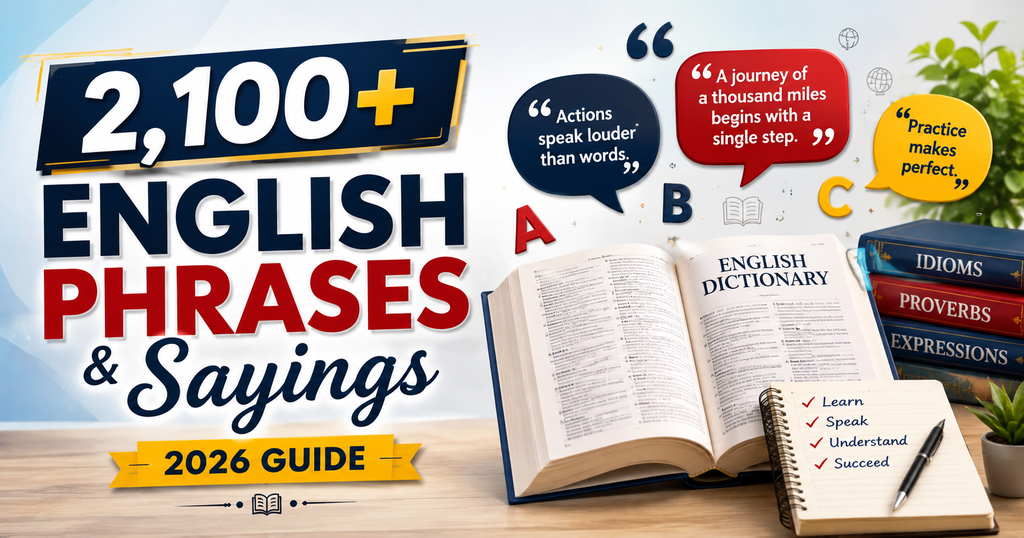
English is full of colorful phrases, memorable sayings, traditional proverbs, and everyday expressions that can make communication more natural and interesting. English Phrases And Sayings are useful because their meanings are often different from the literal meaning of the individual words. Learning them helps readers understand conversations, books, movies, social media, and workplace communication more confidently.
English phrases, from everyday ones like “break the ice” to old sayings like “a stitch in time saves nine,” tell us a lot about history, culture, humor, and how people live. This guide lists useful phrases and explains them simply. It helps English learners know what they mean and how to use them naturally.
Common English Phrases for Everyday Conversation
Everyday conversation contains many short expressions that native speakers use naturally. Understanding these phrases can make spoken English easier to follow and can also help learners sound more comfortable when talking with friends, colleagues, classmates, or family members.
| # | English Phrase | Meaning and Example |
| 1. 🌞 | A piece of cake | This means something is very easy to do. For example, if a simple task takes only a few minutes, you can say it was “a piece of cake.” 😊 |
| 2. 💬 | Break the ice | This phrase means starting a friendly conversation and making people feel more comfortable. A simple joke or question can help break the ice at a new meeting. |
| 3. ✨ | About time | “About time” expresses that something should have happened earlier. It can sound humorous or slightly impatient depending on the situation. ⏰ |
| 4. 👍 | Better late than never | This saying means doing something late is still better than not doing it at all. It is often used to encourage someone who has finally taken action. |
| 5. ☕ | A penny for your thoughts | This friendly expression asks someone what they are thinking about. It is especially useful when a person seems unusually quiet or thoughtful. |
| 6. 🌿 | Take it easy | “Take it easy” can mean relaxing, avoiding unnecessary stress, or saying goodbye casually. It is common in friendly everyday conversations. |
| 7. 😄 | Bob’s your uncle | This British expression means that something is finished or achieved easily after following the necessary steps. It is usually informal and cheerful. |
| 8. 🎯 | Cut to the chase | This means getting directly to the important point instead of wasting time. It is useful when a discussion has become too long or indirect. |
| 9. 🧊 | Cold feet | Having “cold feet” means becoming nervous or uncertain before doing something important. Someone may get cold feet before an interview, wedding, or major decision. |
| 10. 💡 | A no-brainer | A “no-brainer” is something that seems extremely easy to decide. The expression suggests that very little thought is needed before choosing an option. |
| 11. 🚀 | Back on track | This means returning to the correct plan or making progress again after a problem. It can describe work, studies, projects, or personal goals. |
| 12. 🗣️ | Chit-chat | Chit-chat means light, informal conversation about ordinary topics. People often use it while waiting, socializing, or getting to know one another. |
| 13. 🌟 | All of a sudden | This expression means something happened unexpectedly and very quickly. It is commonly used when describing a surprising change or event. |
| 14. 🤝 | Agree to disagree | This phrase means two people accept that they have different opinions without continuing an argument. It encourages respectful communication. |
| 15. 🛤️ | Go with the flow | To go with the flow means accepting circumstances instead of trying to control every detail. It often suggests flexibility and a relaxed attitude. |
| 16. 📌 | Duly noted | “Duly noted” means that you have heard and acknowledged something. It can be professional, but depending on tone, it may sometimes sound formal or slightly sarcastic. |
| 17. 😌 | Easy-peasy | This informal phrase means something is very easy. It is playful and is more suitable for casual conversations than formal writing. |
| 18. 🎉 | Bring it on | “Bring it on” shows confidence and readiness to face a challenge. Someone might say it before a competition, difficult task, or demanding situation. |
| 19. 🔄 | Back to square one | This means returning to the beginning because a plan has failed or produced no useful result. It is common when discussing projects and problem-solving. |
| 20. ❤️ | All in all | “All in all” introduces a final overall judgment after considering different details. It is useful when summarizing an experience or situation. |
Popular English Idioms and Their Meanings
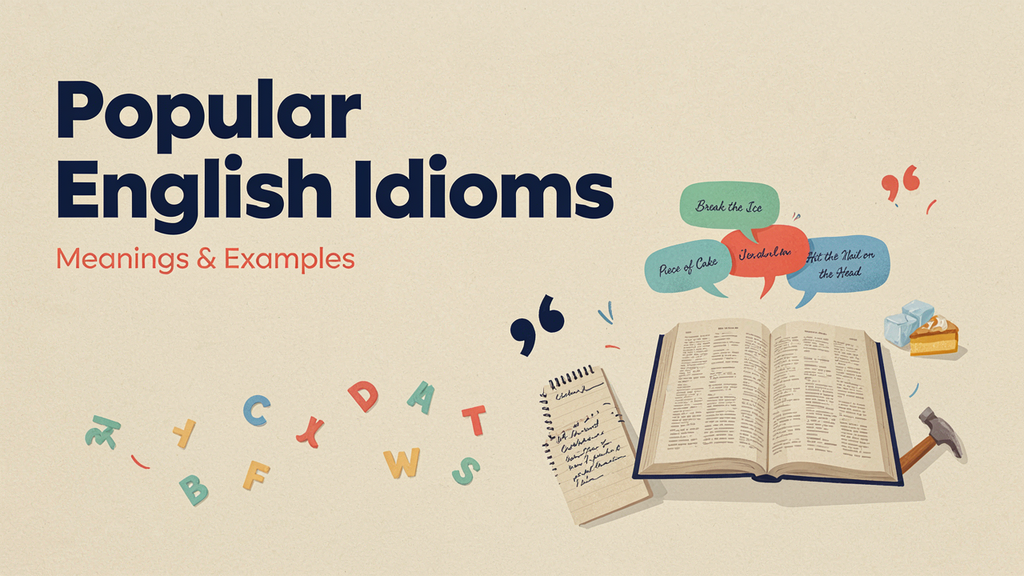
Idioms are expressions whose overall meaning cannot always be understood by translating every word literally. They are especially important for English learners because native speakers use them frequently in casual speech, entertainment, journalism, and workplace communication.
| # | English Idiom | Meaning and Example |
| 1. 🐦 | A bird in the hand is worth two in the bush | This saying advises people to value something they already have rather than risk losing it while chasing something uncertain. It promotes practical decision-making. |
| 2. 🌧️ | Every cloud has a silver lining | This optimistic saying means that even difficult situations may contain something positive. It encourages people to look for opportunities during challenging times. |
| 3. 🐺 | A wolf in sheep’s clothing | This describes someone who appears harmless or kind but secretly has bad intentions. The phrase reminds people not to judge character only by appearances. |
| 4. 🧩 | A different kettle of fish | This British expression describes a person, situation, or subject that is completely different from another one being discussed. It highlights an important contrast. |
| 5. 🐝 | A bee in your bonnet | Having a bee in your bonnet means being strongly focused or worried about a particular idea. The expression often suggests that the person cannot stop thinking about it. |
| 6. 🐟 | A fish out of water | Someone who feels like a fish out of water feels uncomfortable or unfamiliar in a particular environment. It is often used when someone is new to a situation. |
| 7. 🌳 | Barking up the wrong tree | This means following the wrong idea, person, or approach while trying to solve a problem. The expression is useful when someone has misunderstood the real cause. |
| 8. 💎 | A diamond in the rough | A diamond in the rough is a person or thing with excellent potential that has not yet been developed or polished. It suggests hidden quality. |
| 9. 🪨 | Between a rock and a hard place | This describes a difficult situation where every available choice has a disadvantage. It is useful when someone feels trapped between two unpleasant options. |
| 10. 🧱 | A foot in the door | Getting a foot in the door means obtaining a small opportunity that may lead to something bigger. It is often used in careers and business. |
| 11. 🎯 | Hit the nail on the head | This means identifying something exactly or giving an accurate answer. It is often used to praise someone for correctly understanding a situation. |
| 12. 🐔 | Don’t count your chickens before they hatch | This saying warns people not to assume success before it actually happens. It encourages patience and realistic expectations. |
| 13. 🪶 | A feather in one’s cap | A feather in one’s cap represents an achievement that makes someone proud. It can describe an award, successful project, qualification, or important accomplishment. |
| 14. 🌊 | A drop in the bucket | A drop in the bucket means a very small amount compared with what is actually needed. It often describes an effort that has limited overall impact. |
| 15. 🧊 | Cold shoulder | Giving someone the cold shoulder means deliberately ignoring or treating them in an unfriendly way. It usually suggests emotional distance or rejection. |
| 16. 🔥 | Add fuel to the fire | This means making an already difficult or angry situation worse. A careless comment can add fuel to the fire during an argument. |
| 17. 👀 | Keep an eye on | To keep an eye on something means watching or monitoring it carefully. Parents, teachers, managers, and friends commonly use this expression. |
| 18. 🐷 | Pig in a poke | Buying a pig in a poke means accepting or purchasing something without properly examining it first. The expression warns against making uninformed decisions. |
| 19. 🧵 | A thread of hope | A thread of hope describes a small but meaningful possibility that a difficult situation can improve. It emphasizes optimism when circumstances seem uncertain. |
| 20. 🕰️ | At the eleventh hour | This means something happens at the last possible moment. It can describe a decision, rescue, submission, or solution that arrives just before a deadline. |
Famous English Sayings About Life and Experience
Traditional sayings often contain practical lessons about patience, responsibility, relationships, effort, and decision-making. These expressions have remained popular because they communicate larger life lessons in short and memorable forms.
| # | English Saying | Meaning and Example |
| 1. 🌱 | A journey of a thousand miles begins with a single step | This saying reminds us that large goals begin with small actions. Starting today, even with a modest step, can eventually lead to significant progress. |
| 2. 🧵 | A stitch in time saves nine | Taking care of a small problem early can prevent a much bigger problem later. The saying encourages responsibility, preparation, and timely action. |
| 3. 💰 | A penny saved is a penny earned | This proverb emphasizes the value of saving money. Avoiding unnecessary spending can be just as useful as earning additional income. |
| 4. 🗣️ | Actions speak louder than words | This means what people do often reveals more than what they say. Consistent behavior can demonstrate honesty, commitment, and character more clearly than promises. |
| 5. 🌾 | As you sow, so shall you reap | This saying suggests that our actions eventually produce corresponding results. Kindness, hard work, and responsibility can create positive outcomes over time. |
| 6. ⏳ | All things come to those who wait | Patience can be valuable when results cannot be achieved immediately. The saying encourages people to remain steady rather than becoming discouraged by slow progress. |
| 7. 🏠 | East, west, home’s best | This traditional saying expresses the comfort and emotional value of home. Even after traveling, people often appreciate familiar surroundings and loved ones. |
| 8. ⚖️ | Better safe than sorry | This advises people to take reasonable precautions instead of regretting a preventable mistake later. It is useful for travel, work, health, and everyday decisions. |
| 9. 🌤️ | All’s well that ends well | This means an unpleasant experience may be viewed positively if the final outcome is successful. It focuses attention on the eventual result. |
| 10. 🪞 | Don’t judge a book by its cover | People and things should not be judged only by their appearance. The saying encourages deeper understanding before forming an opinion. |
| 11. 🤝 | A friend in need is a friend indeed | A genuine friend shows support when circumstances become difficult. The saying emphasizes loyalty and practical kindness rather than friendship based only on good times. |
| 12. 🦋 | Change is as good as a rest | A change in routine can refresh the mind and reduce boredom. Trying a different activity may provide renewed energy without requiring complete rest. |
| 13. 🐦 | Birds of a feather flock together | People with similar interests, attitudes, or habits often spend time together. The saying highlights the influence of social groups on behavior and identity. |
| 14. 🏆 | Every dog has its day | This means everyone eventually has a chance to succeed, receive recognition, or enjoy good fortune. It can offer encouragement during disappointing periods. |
| 15. 🌊 | A rising tide lifts all boats | When conditions improve for a community or group, many people can benefit. The saying is often used when discussing shared economic or social progress. |
| 16. 🔥 | Where there’s smoke, there’s fire | This expression suggests that repeated signs of a problem may indicate that something is actually wrong. However, it should not be treated as proof without evidence. |
| 17. 🌳 | A house divided against itself cannot stand | This saying emphasizes the importance of unity. A group weakened by internal conflict may struggle to remain stable or achieve common goals. |
| 18. 🛠️ | A bad workman always blames his tools | This saying criticizes people who blame equipment or circumstances instead of accepting responsibility for poor results. It encourages honest self-assessment. |
| 19. 🪙 | Easy come, easy go | Things gained quickly may also disappear quickly. The phrase often refers to money, opportunities, possessions, or circumstances that were not difficult to obtain. |
| 20. 🌟 | A good beginning makes a good ending | Starting a project carefully can create a strong foundation for success. Preparation and a positive beginning often make later stages easier to manage. |
English Expressions for Work, Study, and Success

English expressions are common in professional and educational settings. Learning them can help readers understand meetings, emails, classroom discussions, workplace conversations, and advice about personal development.
| # | Expression | Meaning and Example |
| 1. 💼 | Against the clock | Working against the clock means trying to complete something before time runs out. It often describes deadlines, examinations, projects, and urgent assignments. |
| 2. 📚 | Bone up on | To bone up on something means to study or learn it intensively. A student might bone up on vocabulary before an important language examination. |
| 3. 🎯 | Cut corners | Cutting corners means doing something too quickly or cheaply by skipping important steps. Although it may save time, it can reduce quality and create future problems. |
| 4. 🚀 | Blaze a trail | To blaze a trail means to create a new path or become a pioneer. It can describe people who introduce innovative ideas or achieve something previously uncommon. |
| 5. 📈 | Move up the ladder | This expression describes progressing toward higher positions or greater responsibility. It is often used when discussing careers and professional development. |
| 6. 🧠 | A little knowledge is a dangerous thing | This saying warns that limited knowledge can create overconfidence. Understanding the limits of your knowledge is important before making complicated decisions. |
| 7. 📝 | Back to the drawing board | This means returning to the planning stage because an idea or solution did not work. It is common in design, business, engineering, and academic projects. |
| 8. ⏰ | Down to the wire | Something that goes down to the wire continues until almost the final possible moment. It is commonly used for deadlines, competitions, and close decisions. |
| 9. 🛠️ | Donkey work | Donkey work refers to repetitive, tiring, or routine tasks that require effort but may receive little recognition. Every successful project often contains some of this work. |
| 10. 🏅 | A feather in your cap | An achievement described as a feather in your cap is something you can proudly add to your record. It may strengthen your professional reputation. |
| 11. 💡 | Think outside the box | This means considering creative solutions instead of relying only on conventional approaches. It is frequently used in business, education, and problem-solving discussions. |
| 12. 📌 | By the book | Doing something by the book means following official rules or established procedures carefully. The phrase is particularly common in professional and legal contexts. |
| 13. 🤝 | Team player | A team player is someone who cooperates well with others and contributes toward shared goals. The expression is especially common in employment discussions. |
| 14. 🔑 | A golden key can open any door | This saying suggests that money, opportunity, skill, or influence can sometimes provide access to possibilities that otherwise seem unavailable. Context determines the intended meaning. |
| 15. 🏁 | Race against time | A race against time describes an urgent situation where there is very little time available. It highlights pressure and the need for quick action. |
| 16. 🌱 | Learn the ropes | Learning the ropes means becoming familiar with how a job, activity, or organization works. It is commonly used when discussing newcomers. |
| 17. 💪 | Buckle down | To buckle down means to begin working seriously and with concentration. It is often used when someone needs to stop delaying and focus on an important task. |
| 18. 🎓 | Exceedingly well read | Someone who is exceedingly well read has extensive knowledge gained from reading widely. The expression can describe a person with broad literary or academic interests. |
| 19. 📊 | Ballpark figure | A ballpark figure is a rough estimate rather than an exact number. It is useful when discussing approximate costs, budgets, quantities, or timelines. |
| 20. 🌟 | Cut the mustard | To cut the mustard means to meet the required standard or perform well enough. It is often used when judging someone’s ability or performance. |
British English Phrases and Traditional Sayings
British English contains many expressions that may sound unusual to international learners. Some are still common, while others are strongly associated with older speech or particular regions. Learning their meanings provides useful cultural context.
| # | British Phrase | Meaning and Example |
| 1. 🇬🇧 | A load of codswallop | This British expression means complete nonsense or something considered untrue. It is informal and often used humorously when rejecting a ridiculous explanation. |
| 2. 🐟 | A pretty kettle of fish | This describes an awkward, confusing, or unpleasant situation. It is generally used when circumstances have become more complicated than expected. |
| 3. ☕ | A sticky wicket | Originally associated with cricket, this phrase describes a difficult situation. Someone facing a complicated problem may say they are on a sticky wicket. |
| 4. 🎩 | As bold as brass | This describes someone who behaves with surprising confidence and little embarrassment. It can be positive, humorous, or critical depending on context. |
| 5. 🐝 | As busy as a bee | Someone who is as busy as a bee is extremely active and has many things to do. It is a friendly way to describe a hardworking person. |
| 6. 😎 | As cool as a cucumber | This means remaining calm and relaxed, especially during pressure. It is often used to praise someone who does not panic easily. |
| 7. 🐭 | As quiet as a mouse | This describes someone or something extremely quiet. It can refer to a person speaking softly or a room with almost no noise. |
| 8. 🐴 | A country mile | A country mile means a considerable distance, often humorously suggesting that something is farther away than expected. It does not describe a precise measurement. |
| 9. 🎯 | A dead ringer | A dead ringer is someone or something that looks almost exactly like another person or thing. It is commonly used when comparing appearances. |
| 10. 🪣 | A damp squib | A damp squib describes something that is disappointing because it fails to create the excitement or impact people expected. |
| 11. 🍽️ | Done to a turn | Food cooked “to a turn” has been prepared perfectly. The expression can also be used more broadly to describe something completed at exactly the right level. |
| 12. 🧹 | Faff about | To faff about means spending time doing unimportant things instead of dealing with the main task. It is informal British English. |
| 13. 😴 | Duvet day | A duvet day is an informal day spent staying in bed, usually to rest or avoid normal responsibilities. The phrase is modern and conversational. |
| 14. 🥪 | A square meal | A square meal means a substantial and satisfying meal. The expression is often used when someone needs proper food rather than a quick snack. |
| 15. 💷 | A pretty penny | If something costs a pretty penny, it is expensive. The phrase is informal and often adds a slightly humorous tone to a comment about price. |
| 16. 🧤 | Belt and braces | This means using two methods of protection or preparation to reduce risk. It suggests being especially careful and well prepared. |
| 17. 🎉 | All singing, all dancing | This humorous expression describes something with many impressive features or functions. It is often used for products, technology, or services. |
| 18. 🐕 | A dog’s breakfast | A dog’s breakfast describes something badly organized, messy, or poorly completed. It can refer to work, appearance, plans, or physical spaces. |
| 19. 💰 | Dosh | “Dosh” is informal British slang for money. It is casual and should generally be avoided in formal writing or professional documents. |
| 20. 👍 | Bags of | “Bags of” means a large amount or plenty of something. For example, someone might say a person has bags of energy or bags of confidence. |
American English Sayings and Expressions
American English has developed many expressions through sports, business, entertainment, regional culture, and everyday speech. Some are widely understood internationally, while others are more strongly associated with the United States.
| # | American Expression | Meaning and Example |
| 1. 🇺🇸 | Ballpark figure | In American English, a ballpark figure means an approximate number or estimate. It is frequently heard in business conversations about prices, budgets, and forecasts. |
| 2. ⚾ | Behind the eight ball | This means being in a difficult or disadvantaged position. It is often used when someone must overcome an obstacle before making progress. |
| 3. 🚗 | Hit the road | “Hit the road” means to leave or begin a journey. It is informal and can also be used when telling someone to go away. |
| 4. 🦃 | Cold turkey | Going cold turkey means stopping a habit suddenly rather than reducing it gradually. The phrase is commonly associated with quitting addictive behaviors. |
| 5. 🏆 | Go the extra mile | This means making additional effort beyond what is normally expected. It can describe excellent customer service, study habits, teamwork, or personal dedication. |
| 6. 💵 | An arm and a leg | If something costs an arm and a leg, it is extremely expensive. The phrase is informal and often used to emphasize unexpectedly high costs. |
| 7. 🌽 | Corny | Something described as corny is overly sentimental, predictable, or old-fashioned in a way that may be amusing. The term is common in casual American English. |
| 8. 🐟 | Big fish in a small pond | This describes someone who is important or successful in a limited environment but may not have the same influence in a larger setting. |
| 9. 📺 | Binge-watch | To binge-watch means watching many episodes of a television series in a short period. Streaming platforms have made this expression common in modern conversation. |
| 10. 🎯 | Catch-22 | A Catch-22 is a situation where rules or conditions create a problem that prevents someone from solving the problem. It describes a frustrating contradiction. |
| 11. 🕰️ | At the drop of a hat | This means doing something immediately or without needing much encouragement. It can describe someone who is always ready for an activity or decision. |
| 12. 🐴 | Don’t look a gift horse in the mouth | This saying advises people not to criticize or examine a gift too closely. It encourages appreciation for something received freely. |
| 13. 💡 | A shot in the dark | A shot in the dark is a guess made without enough information. It is useful when someone offers an uncertain answer or prediction. |
| 14. 🌪️ | A perfect storm | A perfect storm describes a situation where several unfavorable conditions happen together and create an unusually difficult result. |
| 15. 🛋️ | Couch potato | A couch potato is someone who spends a lot of time sitting and watching television or doing little physical activity. It is informal and often humorous. |
| 16. 🎉 | Bring home the bacon | This means earning money or providing financially for oneself or a household. It is an informal expression about supporting daily needs. |
| 17. 🔥 | Bite the bullet | To bite the bullet means facing something difficult or unpleasant with courage. It often suggests accepting a necessary task instead of avoiding it. |
| 18. 🧊 | Break the ice | In American everyday speech, breaking the ice means creating a more relaxed atmosphere when people first meet. A friendly question can do this naturally. |
| 19. 🏠 | Home sweet home | This expression shows happiness about returning home. It emphasizes the emotional comfort and familiarity people associate with their own living space. |
| 20. 💬 | What’s up? | “What’s up?” is a casual American greeting asking how someone is doing or what is happening. It is common among friends and acquaintances. |
English Proverbs About Relationships, Character, and People
Many English sayings offer observations about friendship, trust, personality, behavior, and human relationships. These expressions can be useful because they communicate social lessons in short, memorable forms.
| # | Saying | Meaning and Example |
| 1. 🤝 | A man is known by the company he keeps | This saying suggests that the people someone regularly spends time with may influence how others judge their character. It encourages thoughtful choices about friendships. |
| 2. 👥 | A friend to all is a friend to none | The saying suggests that trying to please everyone may prevent a person from forming deep, loyal relationships. Genuine friendship often requires trust and commitment. |
| 3. ❤️ | Blood is thicker than water | This traditional saying is commonly understood as emphasizing the importance of family relationships. Its use can vary depending on context and personal interpretation. |
| 4. 🐦 | Birds of a feather flock together | People with similar interests or personalities often naturally form groups. The saying highlights how social connections can reflect shared values or habits. |
| 5. 👀 | Beauty is in the eye of the beholder | This means ideas about beauty and attractiveness are subjective. Different people can honestly have very different opinions about what they find beautiful. |
| 6. 📖 | Beauty is only skin deep | This reminds us that physical appearance does not reveal a person’s complete character. Personality, kindness, intelligence, and behavior can matter much more. |
| 7. 🐑 | Black sheep of the family | A black sheep is a family member who is noticeably different from others in behavior, lifestyle, interests, or values. The expression can be humorous or critical. |
| 8. 🐕 | A barking dog never bites | This saying suggests that people who make loud threats may not always act on them. However, it should not be interpreted as a guarantee that threats are harmless. |
| 9. 🐆 | A leopard cannot change its spots | This expression suggests that a person’s fundamental character or habits can be difficult to change. It is often used when someone repeatedly behaves in the same way. |
| 10. 🎭 | A wolf in sheep’s clothing | This describes someone who hides harmful intentions behind a friendly appearance. It is a warning to look beyond outward behavior. |
| 11. 🤫 | A little bird told me | This playful phrase means the speaker learned information from an unnamed source. It is often used when someone does not want to reveal who provided the information. |
| 12. 🗣️ | Actions speak louder than words | People may make promises, but their behavior provides stronger evidence of their intentions. The saying encourages us to pay attention to consistent actions. |
| 13. 💔 | Add insult to injury | This means making a bad situation even worse by adding another unpleasant action or comment. It often describes insensitive behavior after someone has already suffered. |
| 14. 🤐 | Between you, me and the bedpost | This humorous expression introduces information intended to remain private. It is informal and often signals that the speaker is sharing a secret. |
| 15. 🧠 | Know someone inside out | Knowing someone inside out means understanding their personality, habits, preferences, and reactions very well. It usually develops through long familiarity. |
| 16. 🪞 | Like father, like son | This traditional phrase suggests that children may resemble their parents in personality, behavior, or interests. It can be complimentary or simply observational. |
| 17. 🌱 | The apple doesn’t fall far from the tree | This means children often share characteristics with their parents. The phrase can refer to personality, talents, habits, or behavior. |
| 18. 🤲 | Charity begins at home | This saying suggests that people should take care of responsibilities toward their own family and community before helping more distant causes. |
| 19. 🧭 | A safe pair of hands | Someone described as a safe pair of hands is dependable and trustworthy. The expression is often used when assigning responsibility to a capable person. |
| 20. 🕊️ | Bury the hatchet | To bury the hatchet means ending a disagreement and making peace. It suggests choosing reconciliation instead of continuing an old conflict. |
Funny, Informal, and Colorful English Expressions
English becomes especially lively through humorous and informal expressions. These phrases often use exaggeration, animals, food, objects, or unusual images to communicate ordinary ideas in memorable ways.
| # | Expression | Meaning and Example |
| 1. 😂 | As mad as a hatter | This humorous expression means extremely strange or eccentric. Today it is generally used playfully rather than as a serious description of someone’s mental state. |
| 2. 🐝 | As busy as a bee | This describes someone who is constantly active or occupied. It creates a vivid image of a bee moving from one task to another. |
| 3. 🐭 | As quiet as a mouse | This means extremely quiet or silent. It is often used humorously when someone enters a room without making any noticeable noise. |
| 4. 🥒 | As cool as a cucumber | Someone who remains calm under pressure can be described this way. The expression creates a memorable image of relaxed confidence. |
| 5. 🐘 | The elephant in the room | This refers to an obvious issue that everyone knows about but nobody wants to discuss. Ignoring it does not make the problem disappear. |
| 6. 🐑 | A curate’s egg | This describes something that has both good and bad qualities. It can be used when an overall judgment is mixed rather than completely positive or negative. |
| 7. 🧹 | Clean as a whistle | Something that is clean as a whistle is extremely clean or tidy. The phrase can also describe someone with a spotless reputation in certain contexts. |
| 8. 🎩 | Dressed to the nines | This means dressed very elegantly or stylishly. Someone attending a formal event in their best clothing might be described this way. |
| 9. 🐴 | Hold your horses | This means wait or slow down. It is a friendly but direct way to tell someone not to act too quickly. |
| 10. 🐐 | Act the giddy goat | This British expression means behaving foolishly, playfully, or in a silly manner. It is informal and often used humorously. |
| 11. 🧁 | Easy-peasy | This playful expression means extremely easy. It is especially common in casual speech and informal writing. |
| 12. 🐔 | Chicken feed | Chicken feed can mean a very small amount of money or something considered insignificant. The phrase is informal and often dismissive. |
| 13. 🐟 | Drink like a fish | This means drinking a very large amount of alcohol. It is informal and can sound critical depending on how it is used. |
| 14. 🐕 | Dog’s dinner | A dog’s dinner describes something messy, badly arranged, or poorly done. It is commonly used in British English. |
| 15. 🎪 | A barrel of laughs | Someone or something described as a barrel of laughs is very funny or entertaining. The phrase can also be used sarcastically about an unpleasant situation. |
| 16. 🦋 | Away with the fairies | This informal expression describes someone who seems distracted, unrealistic, or lost in their own thoughts. It is usually playful rather than literal. |
| 17. 🤪 | Bats in the belfry | Having bats in the belfry means behaving in a strange or eccentric way. It is an old-fashioned humorous expression. |
| 18. 🧩 | A cock and bull story | This means a complicated or unbelievable story that is probably invented. It is often used when someone gives a suspicious explanation. |
| 19. 🛌 | Bone idle | Someone who is bone idle is extremely lazy and unwilling to work. The expression is informal and particularly associated with British English. |
| 20. 🎭 | All mouth and no trousers | This British expression describes someone who talks confidently or makes big claims but does not actually take action. It is humorous and informal. |
Wise, Motivational, and Thought-Provoking English Sayings
Many English sayings have survived because they offer practical wisdom in a memorable form. They can be useful in articles, speeches, conversations, personal development, and everyday reflection when used naturally.
| # | Saying | Meaning and Example |
| 1. 🌅 | All things must pass | This saying reminds us that difficult and pleasant periods are temporary. It encourages patience by showing that circumstances continually change. |
| 2. 💪 | Bite the bullet | This means facing an unpleasant situation bravely instead of continuing to avoid it. Sometimes progress requires accepting short-term discomfort. |
| 3. 🌱 | A rolling stone gathers no moss | Traditionally, this suggests that someone who keeps moving avoids becoming stuck or burdened. It can have positive or negative interpretations depending on context. |
| 4. 🕯️ | Better to light a candle than curse the darkness | This saying encourages constructive action instead of simply complaining about a problem. Even a small positive effort can be more useful than endless criticism. |
| 5. 🏹 | As straight as an arrow | This expression describes something perfectly straight or, figuratively, someone direct and honest. It emphasizes clarity and straightforward behavior. |
| 6. 🐂 | As strong as an ox | Someone described this way is considered extremely strong or physically powerful. It is an informal comparison that uses the strength associated with an ox. |
| 7. 🦅 | As free as a bird | This means having a strong sense of freedom and few restrictions. It can describe travel, independence, or a relaxed lifestyle. |
| 8. 🌊 | A change is as good as a rest | Changing your routine can refresh your mind and restore motivation. New surroundings or activities can sometimes provide the mental benefit of rest. |
| 9. 🏆 | Every dog has its day | Everyone has an opportunity to succeed or receive recognition eventually. The saying can give hope to people who currently feel overlooked. |
| 10. 🌟 | A thing of beauty is a joy forever | This phrase expresses the idea that beautiful things can provide lasting pleasure. It is often used when discussing art, nature, literature, or meaningful experiences. |
| 11. 🛤️ | Failing to plan is planning to fail | This modern saying emphasizes preparation. While planning cannot guarantee success, having a clear approach can reduce avoidable mistakes and confusion. |
| 12. ⏳ | Good things come to those who wait | Patience can be valuable when worthwhile results require time. The saying encourages persistence instead of demanding immediate rewards. |
| 13. 🔥 | Where there is a will, there is a way | This expression suggests that determination can help people find solutions to difficult problems. It emphasizes persistence and resourcefulness. |
| 14. 🌾 | As you sow, so shall you reap | Our choices and actions can influence future results. The saying encourages responsibility by connecting present behavior with later consequences. |
| 15. 🧭 | Discretion is the better part of valor | This means avoiding unnecessary danger can sometimes be wiser than demonstrating courage through reckless action. Good judgment is an important form of strength. |
| 16. 🪴 | Little by little | This expression emphasizes gradual progress. Small improvements made consistently can eventually create meaningful results in learning, work, or personal goals. |
| 17. 🌤️ | Every cloud has a silver lining | Even difficult experiences may contain lessons, opportunities, or unexpected benefits. The saying encourages balanced optimism rather than ignoring problems. |
| 18. 🏁 | A good beginning makes a good ending | Careful preparation at the beginning can improve the chances of a successful conclusion. Strong foundations matter in both personal and professional projects. |
| 19. 🤲 | A problem shared is a problem halved | Talking about a difficulty with a trusted person can make it feel easier to manage. Support can provide emotional relief and practical ideas. |
| 20. 🌍 | All the world’s a stage | This famous literary expression compares human life with a theatrical performance. It suggests that people move through different roles and stages throughout life. |
Interesting English Phrases, Proverbs, and Expressions to Learn
The most useful language collections combine everyday expressions with traditional sayings, figurative phrases, and memorable proverbs. Learning expressions in groups makes vocabulary easier to remember and helps learners understand how English communicates ideas beyond literal words.
| # | English Phrase or Saying | Meaning and Example |
| 1. 🌹 | A rose by any other name would smell as sweet | This famous expression suggests that changing the name of something does not necessarily change its essential qualities. It is often used when discussing labels and identity. |
| 2. 🖼️ | A picture is worth a thousand words | A visual image can communicate an idea or emotion more effectively than a long explanation. The saying is especially relevant to photography, art, and visual communication. |
| 3. 🎯 | A shot in the dark | This means making a guess without enough information to be certain. It is useful when someone offers an answer based mainly on intuition. |
| 4. 🪶 | A sight for sore eyes | This describes someone or something that is especially pleasant to see, particularly after a long absence or difficult experience. It often expresses affection or relief. |
| 5. 🧱 | A millstone around one’s neck | A millstone around someone’s neck represents a heavy responsibility, problem, or burden that is difficult to escape. The phrase emphasizes emotional or practical weight. |
| 6. 🌊 | A sea change | A sea change means a major transformation in a situation, attitude, or system. It suggests a significant difference rather than a small adjustment. |
| 7. 🕯️ | A blessing in disguise | Something that initially appears unfortunate may later prove beneficial. The phrase encourages people to reconsider difficult experiences after seeing their longer-term consequences. |
| 8. ⚡ | A bolt from the blue | This describes something that happens suddenly and unexpectedly. It is often used for surprising news, events, or changes that nobody anticipated. |
| 9. 🧩 | A riddle wrapped up in an enigma | This describes something extremely mysterious or difficult to understand. It suggests that one mystery is hidden inside another. |
| 10. 🏠 | An Englishman’s home is his castle | This traditional saying emphasizes the privacy and independence people may associate with their homes. It reflects an older cultural idea about personal space. |
| 11. 🐝 | A little knowledge is a dangerous thing | Limited understanding can sometimes create unjustified confidence. The saying encourages people to learn carefully before making strong conclusions. |
| 12. 🪙 | A fool and his money are soon parted | This proverb warns that careless or inexperienced people can lose money easily. It encourages financial awareness and thoughtful decision-making. |
| 13. 🛡️ | Better safe than sorry | Taking sensible precautions can prevent regret later. It is commonly used when recommending preparation, checking details, or avoiding unnecessary risks. |
| 14. 🌍 | Across the pond | This informal phrase usually refers to crossing the Atlantic, especially between Britain and the United States. Its meaning depends on the speaker’s location. |
| 15. 🎭 | A legend in one’s own lifetime | This describes someone who becomes famous or highly admired while still alive. It can be sincere praise or humorous exaggeration. |
| 16. 🔍 | A skeleton in the closet | This refers to an embarrassing or secret fact from someone’s past. The expression suggests something a person prefers to keep hidden. |
| 17. 🌟 | A perfect storm | Several unfavorable circumstances occurring at the same time can create a perfect storm. The phrase is useful for explaining unusually complicated problems. |
| 18. 🚪 | A golden opportunity | A golden opportunity is an especially valuable chance that may not appear again soon. It encourages people to recognize and act on important possibilities. |
| 19. 🧠 | Common sense | Common sense means practical judgment based on ordinary understanding rather than specialized knowledge. It helps people make sensible decisions in everyday situations. |
| 20. ❤️ | Absence makes the heart grow fonder | This saying suggests that being separated from someone can increase appreciation and affection. Time apart may make relationships feel more meaningful. |
FAQs
What are English phrases and sayings?
English phrases and sayings are just ways we put words together to share thoughts, feelings, or observations. Some of them mean exactly what the words say. Others, like idioms, have meanings you can’t always figure out just by looking at the individual words. Proverbs usually pass on old wisdom, and common phrases just help us talk to each other smoothly every day.
What is the difference between a phrase, idiom, and saying?
A phrase is just a few words put together that make sense as a unit. An idiom is a phrase where the meaning isn’t obvious from the individual words, like “break the ice.” A saying, on the other hand, is something people say often, usually to give advice or share a bit of wisdom, such as “better late than never.”
Why should English learners study common phrases?
Common phrases help learners understand how native speakers actually communicate. Textbook vocabulary alone may not explain expressions heard in movies, podcasts, workplaces, social conversations, or online discussions. Learning common expressions can improve listening comprehension, vocabulary, confidence, and natural spoken English.
What are some common English phrases used every day?
Examples include “How are you?”, “What’s up?”, “take it easy,” “no problem,” “sounds good,” “give me a hand,” “hang on,” “see you later,” and “that makes sense.” The appropriate expression depends on the situation, relationship, level of formality, and regional variety of English.
Are British and American English phrases different?
Yes. British and American English use many of the same words, but each has phrases that might sound odd to speakers of the other. For instance, “Bob’s your uncle” is very common in British English, while phrases like “behind the eight ball” are more specific to American English.
What is an English proverb?
An English proverb is a traditional or widely recognized saying that communicates practical advice, observation, or general wisdom. Examples include “actions speak louder than words” and “don’t judge a book by its cover.” Proverbs are usually short, memorable, and easy to apply to different situations.
How can I remember English idioms more easily?
Learn idioms in context instead of memorizing isolated definitions. Write a short example sentence, connect the phrase with a mental image, and notice how native speakers use it. Reviewing expressions regularly and using them in appropriate conversations can also make them easier to remember.
Are all English sayings suitable for formal writing?
Some sayings are formal or neutral, while others are very informal, funny, specific to a region, old-fashioned, or just slang. For example, you might use “by the book” in professional writing, but slang like “dosh” is more for casual chats among people in Britain.
Can English phrases improve spoken English?
Yes. Learning commonly used expressions can make spoken English sound more natural and help learners understand native speakers more easily. Instead of translating every sentence word by word, learners can recognize complete expressions and use them appropriately in real conversations.
How should beginners learn English phrases and sayings?
Beginners should start with common expressions used in everyday life, then gradually study idioms, proverbs, regional phrases, and less common sayings. Learning the meaning, pronunciation, context, and one practical example for each expression is more useful than trying to memorize thousands at once.
Conclusion
Learning English Phrases And Sayings is more than memorizing unusual combinations of words. These expressions provide a window into how English speakers describe emotions, relationships, success, failure, humor, work, friendship, and everyday experiences. When learners understand both the literal words and the intended meaning, conversations become much easier to follow.
A useful approach is to learn a small number of expressions regularly and use them in realistic sentences. Keep notes of phrases you hear in conversations, books, films, podcasts, and lessons, and pay attention to whether they belong to British, American, or general English. With regular practice, English Phrases And Sayings can become a valuable part of your vocabulary and help you communicate with greater confidence and naturalness.
Read More: Brasssmile A Complete Guide to Brasssmile Com and What You Should Know(2026)