
Finding the right word can make everyday conversations, professional emails, academic writing, and personal messages sound warmer and more thoughtful. Synonyms of Respectful help you express courtesy, admiration, dignity, consideration, and good manners without repeating the same word. Choosing a precise alternative also makes your writing clearer and more natural.
Whether you are a student, employee, teacher, writer, or simply someone who wants to communicate kindly, having a strong vocabulary can improve your tone. Synonyms of Respectful include words such as courteous, polite, considerate, deferential, gracious, tactful, dignified, and well-mannered, but each carries a slightly different meaning and level of formality.
Common Synonyms of Respectful for Everyday Use
The most useful alternatives to “respectful” are words that fit naturally into ordinary conversations and writing. Courteous, polite, considerate, civil, kind, and well-mannered are especially useful because they describe positive behavior without sounding overly formal or complicated.
🌞 Polite: A polite person uses thoughtful words and good manners when speaking with others. This word works well for everyday situations, especially when describing friendly conversations, considerate requests, or appropriate social behavior. 😊
💬 Courteous: Courteous describes someone who treats other people with good manners and consideration. It is slightly more formal than “polite” and works beautifully when discussing customer service, workplace behavior, or social etiquette. 🤝
🌿 Considerate: Considerate means being aware of other people’s feelings, needs, or circumstances before acting. It suggests genuine thoughtfulness rather than simply following rules of etiquette. ❤️
😊 Kind: Kind is a simple and warm alternative when respectful behavior also involves compassion. It emphasizes treating people gently and thoughtfully, making it useful in personal conversations, friendships, and supportive messages.
✨ Well-mannered: Well-mannered describes someone who consistently follows accepted standards of good behavior. It is especially useful for describing children, students, guests, or anyone who behaves appropriately in social settings.
🤗 Gracious: Gracious suggests warmth, generosity, and pleasant manners toward others. It can describe someone who accepts compliments, handles disagreements, welcomes guests, or responds to difficult situations with dignity.
🌸 Civil: Civil means behaving politely and calmly, even when people disagree. This synonym is particularly useful when describing discussions where individuals maintain basic courtesy despite having different opinions.
🕊️ Thoughtful: Thoughtful describes behavior that shows careful attention to another person’s feelings or needs. It can communicate respect in a softer, more personal way and works well in everyday and professional contexts.
👔 Well-behaved: Well-behaved refers to someone who follows expected rules and behaves appropriately. It is commonly used for children and students but can also describe respectful conduct in public or formal environments.
🌼 Friendly: Friendly emphasizes warmth and positive social interaction. While it does not always mean respectful, the word can work when respectful behavior is expressed through openness, kindness, and a welcoming attitude.
🤍 Gentle: Gentle suggests a calm, careful, and non-aggressive manner. It can describe someone’s words, actions, or communication style when they show sensitivity toward another person’s emotions.
🎓 Humble: Humble describes someone who does not act as though they are superior to others. It can convey respect because humble people often listen carefully, acknowledge others, and avoid unnecessary arrogance.
🗣️ Well-spoken: Well-spoken refers to someone who communicates clearly, appropriately, and pleasantly. It is particularly useful when describing respectful communication in interviews, presentations, classrooms, or professional conversations.
🌺 Attentive: Attentive describes someone who listens carefully and notices what others need or say. This quality often demonstrates respect because giving another person your full attention shows that their words matter.
🤝 Accommodating: Accommodating means willing to consider another person’s needs or preferences. It can be a useful synonym when respectful behavior involves flexibility, cooperation, and a willingness to help.
📚 Decorous: Decorous means behaving in a proper, dignified, and socially appropriate manner. It is more formal than “polite” and can be useful in essays, formal descriptions, and professional writing.
🌟 Dignified: Dignified describes behavior that shows self-respect, seriousness, and appropriate composure. It can also suggest that someone treats others honorably without becoming overly familiar or disrespectful.
💐 Cordial: Cordial means warm, polite, and friendly, especially in social or professional interactions. It is useful for describing relationships or conversations that remain pleasant and respectful.
🧘 Calm: Calm is not a direct synonym for respectful, but it can describe a respectful communication style. A calm person can disagree, explain concerns, or solve problems without becoming aggressive or insulting.
💙 Honorable: Honorable suggests behavior worthy of admiration because it follows strong moral or ethical standards. It is a powerful choice when respect involves integrity, fairness, responsibility, and good character.
Formal Synonyms of Respectful for Professional Writing

Formal communication requires careful word choice because tone can influence how a message is received. Words such as deferential, diplomatic, dignified, courteous, honorable, and decorous can replace “respectful” when writing professional emails, reports, applications, or official correspondence.
👔 Deferential: Deferential means showing respectful regard toward someone, often because of their position, experience, or authority. It is appropriate in formal contexts but can sometimes suggest a stronger level of submission than ordinary courtesy.
🏛️ Dignified: Dignified is an excellent formal choice when respectful behavior involves composure and seriousness. It works particularly well in professional reports, speeches, biographies, and descriptions of someone’s conduct.
🤝 Diplomatic: Diplomatic describes communication that handles sensitive subjects carefully and avoids unnecessary conflict. It is especially useful for workplace discussions, negotiations, leadership communication, and situations involving disagreement.
📜 Decorous: Decorous means proper and socially appropriate. Because it has a formal tone, it is often better suited to essays, official writing, literary descriptions, and discussions of social conduct.
⚖️ Civil: Civil communication remains polite even when disagreement exists. The term is valuable in professional settings because it emphasizes maintaining basic respect without suggesting that everyone must share the same opinion.
🌿 Courteous: Courteous is one of the safest formal alternatives to respectful. It communicates good manners and consideration while remaining natural in business letters, customer-service messages, workplace communication, and formal requests.
✍️ Polite: Polite remains appropriate in formal writing when the context is straightforward. It can describe a request, response, tone, manner, or interaction without sounding excessively sophisticated.
🌟 Gracious: Gracious adds warmth to formal communication. It is particularly useful when expressing appreciation, accepting assistance, responding to criticism, or acknowledging another person’s contribution.
🕊️ Tactful: Tactful describes someone who chooses words carefully to avoid embarrassment, offense, or unnecessary tension. It is especially valuable when communicating criticism or discussing sensitive professional matters.
📖 Reverent: Reverent means showing deep respect or admiration, often toward something considered sacred, important, or worthy of honor. It is stronger and more specialized than ordinary respectful language.
🏅 Honorable: Honorable communicates moral respect and admiration. It works well when describing professional conduct, ethical decisions, responsible leadership, or actions that demonstrate strong principles.
🌸 Considerate: Considerate is formal enough for professional writing while still sounding natural. It highlights awareness of other people’s feelings, schedules, needs, boundaries, and perspectives.
💼 Professional: Professional can describe respectful communication when the emphasis is on appropriate workplace standards. It suggests maturity, responsibility, courtesy, and an understanding of professional boundaries.
🗣️ Diplomatic: A diplomatic tone is measured, thoughtful, and designed to maintain positive relationships. It is especially helpful when writing difficult emails, negotiating responsibilities, or addressing workplace disagreements.
🔹 Proper: Proper can describe conduct that follows accepted standards of behavior. Although broad in meaning, it can work when discussing formal etiquette, professional manners, or appropriate communication.
🧭 Principled: Principled means guided by strong moral standards. When used in discussions about respectful conduct, it emphasizes fairness, integrity, and consistency rather than surface-level politeness.
🌼 Measured: Measured communication is controlled, thoughtful, and carefully expressed. It can suggest respect because the speaker avoids impulsive reactions and chooses language suitable for the situation.
🤍 Discreet: Discreet describes someone who handles sensitive matters carefully and avoids unnecessary exposure or embarrassment. This quality can demonstrate respect for privacy and personal boundaries.
📌 Appropriate: Appropriate means suitable for the particular situation, audience, or purpose. It is useful when discussing respectful workplace behavior because professional communication should match the setting.
🌱 Composed: Composed means calm and self-controlled, especially under pressure. A composed communication style can show respect because it prevents frustration from turning into rude or aggressive language.
Respectful Synonyms for Essays and Academic Writing
Academic writing benefits from precise vocabulary rather than repetitive wording. Depending on the context, writers can use terms such as considerate, courteous, dignified, reverent, deferential, civil, diplomatic, or honorable to communicate different shades of respect.
📚 Courteous: Courteous is useful in essays discussing social behavior, communication, etiquette, or interpersonal relationships. It clearly communicates good manners while remaining easy for readers to understand.
🎓 Considerate: Considerate works well when an essay focuses on empathy, social responsibility, or awareness of other people’s needs. It gives the writing a thoughtful and human-centered tone.
✍️ Civil: Civil is especially useful in academic discussions about disagreement or public discourse. It emphasizes maintaining politeness and restraint even when people hold opposing views.
🧠 Diplomatic: Diplomatic is appropriate when discussing conflict resolution, international relations, leadership, workplace communication, or sensitive conversations. It suggests careful language designed to preserve relationships.
🌟 Dignified: Dignified adds a sense of seriousness to academic writing. It can describe behavior that demonstrates self-control, maturity, and appropriate respect toward other people.
🏛️ Deferential: Deferential is useful when an essay discusses hierarchy, authority, tradition, or social relationships. It indicates respect toward someone viewed as having greater status, knowledge, or experience.
🌿 Reverent: Reverent should be chosen when the respect being described is especially deep or connected with religion, tradition, culture, or something considered sacred.
🤝 Polite: Polite is a straightforward choice for essays written in accessible English. It works particularly well when discussing manners, communication, classroom behavior, or everyday social interaction.
🕊️ Tactful: Tactful can strengthen essays about communication because it describes the ability to address difficult subjects without causing unnecessary offense or embarrassment.
🌼 Gracious: Gracious conveys generosity and warmth in addition to courtesy. It is useful when describing someone who responds positively to others even during challenging circumstances.
📖 Respectable: Respectable describes something considered worthy of approval or esteem. It should be used carefully because it can describe reputation or social standing rather than behavior alone.
⚖️ Honorable: Honorable is appropriate when respectful conduct is connected to ethics, honesty, fairness, or moral responsibility. It adds a stronger value-based meaning than “polite.”
💬 Thoughtful: Thoughtful works well in essays about empathy and interpersonal communication. It suggests that respectful behavior results from considering how one’s actions affect others.
🌸 Humble: Humble can describe a person who recognizes their own limitations and values other people’s contributions. It is particularly useful in essays about leadership, learning, and character.
👥 Well-mannered: Well-mannered is useful when discussing social etiquette or upbringing. It clearly identifies behavior that follows accepted standards of politeness and courtesy.
🧭 Ethical: Ethical is not a direct synonym for respectful, but it can fit when respect involves moral responsibility. It is useful in academic writing about fairness, professional conduct, and social responsibility.
🌱 Attentive: Attentive emphasizes listening and awareness. In essays about communication, it can show how paying attention to another person’s words demonstrates consideration.
🏅 Admiring: Admiring expresses positive regard toward another person, achievement, tradition, or quality. It is more focused on appreciation than everyday manners.
🔎 Regardful: Regardful is a less common but meaningful word associated with showing consideration or respect. Because it is uncommon, writers should use it only when the context supports its meaning naturally.
💙 Esteeming: Esteeming refers to holding someone in high regard. It is more closely connected with admiration and appreciation than ordinary politeness, making it useful in formal or reflective writing.
Respectful Synonyms for Emails and Messages

Email etiquette depends heavily on tone. A respectful email should be clear, professional, and considerate without sounding cold. Words such as courteous, polite, diplomatic, gracious, considerate, and professional can help create a positive impression.
📧 Courteous: A courteous email sounds professional without becoming unnecessarily stiff. Use this word when describing messages that show consideration for the recipient’s time, responsibilities, and perspective.
💼 Professional: Professional communication uses appropriate language, structure, and tone. It is a strong choice when you want an email to sound respectful, competent, and suitable for a workplace.
🌿 Polite: Polite is ideal for everyday professional emails. A polite request can communicate what you need clearly while avoiding language that sounds demanding or impatient.
🤝 Considerate: Considerate emails recognize the recipient’s circumstances. Phrases that acknowledge someone’s workload, schedule, or effort can make communication feel more respectful and cooperative.
🕊️ Diplomatic: Diplomatic language is especially valuable when you need to disagree, correct an error, or raise a concern. It helps communicate the issue without unnecessarily damaging the relationship.
✨ Gracious: Gracious communication often includes sincere appreciation. It is useful when thanking someone for assistance, accepting feedback, or recognizing another person’s contribution.
🌸 Tactful: Tactful emails address difficult matters without using unnecessarily harsh language. This quality is important when discussing mistakes, delays, misunderstandings, or sensitive workplace issues.
👔 Formal: Formal language can demonstrate respect when communicating with senior leaders, officials, clients, or unfamiliar contacts. However, it should still sound natural rather than excessively complicated.
📌 Clear: Clear communication can itself be respectful because it reduces confusion and saves the recipient time. Avoiding unnecessary wording often makes professional messages more considerate.
🌼 Warm: A warm email combines professionalism with human friendliness. It can be particularly effective when expressing thanks, welcoming someone, congratulating a colleague, or maintaining a positive relationship.
💬 Friendly: Friendly language creates a welcoming tone while still allowing the message to remain professional. It is especially suitable for colleagues and people with whom you already have a positive relationship.
🌟 Thoughtful: Thoughtful messages demonstrate that the writer has considered the recipient’s feelings and situation. They are particularly effective when giving feedback, encouragement, or appreciation.
🧭 Measured: A measured email avoids emotional exaggeration and impulsive wording. This approach is helpful when responding to complaints, disagreements, stressful situations, or unexpected problems.
🧘 Calm: Calm communication prevents tense situations from escalating. A calm email focuses on facts, solutions, and next steps instead of blame or emotionally charged language.
🌱 Accommodating: An accommodating message shows willingness to consider reasonable alternatives. It can help communicate flexibility when arranging meetings, resolving scheduling issues, or supporting coworkers.
🏆 Appreciative: Appreciative language acknowledges another person’s effort or assistance. Even a short expression of genuine gratitude can make professional communication feel more respectful and positive.
🤍 Humble: Humble wording avoids unnecessary self-importance. It can be useful when requesting assistance, acknowledging a mistake, asking for feedback, or recognizing another person’s expertise.
📖 Respectful: The original word remains perfectly appropriate in email communication. A respectful email is direct but considerate, professional without being distant, and confident without becoming demanding.
🌺 Cordial: Cordial describes communication that remains pleasant and friendly. It is particularly useful when maintaining professional relationships with clients, vendors, former colleagues, or unfamiliar contacts.
🗣️ Well-spoken: Well-spoken communication is clear, polished, and appropriately worded. It can make an email appear thoughtful and professional without relying on unnecessarily complex vocabulary.
Synonyms for Respectful Behavior and Conduct
Respectful behavior is demonstrated through actions as well as words. The best vocabulary for this idea includes courteous, considerate, civil, well-mannered, dignified, attentive, tactful, and thoughtful, depending on what the behavior actually shows.
🤝 Courteous behavior: Courteous behavior means using good manners and showing consideration for others. Holding a door, listening without interrupting, or responding politely can all demonstrate everyday courtesy.
🌿 Considerate conduct: Considerate conduct involves thinking about how your actions affect other people. It can include respecting personal space, keeping promises, and avoiding behavior that creates unnecessary difficulty.
😊 Polite behavior: Polite behavior follows common standards of good manners. Saying “please,” “thank you,” and “excuse me” may seem simple, but these expressions can make social interactions more pleasant.
🕊️ Civil conduct: Civil conduct means remaining respectful even when disagreement occurs. It is especially important in public discussions, workplaces, classrooms, and online communities where different opinions are common.
🌟 Dignified behavior: Dignified behavior shows self-control and maturity. Someone can remain dignified during criticism or conflict by refusing to insult others or respond impulsively.
🌸 Well-mannered conduct: Well-mannered conduct reflects established social expectations. It can include appropriate greetings, respectful conversation, attentive listening, and consideration for people in different social situations.
👂 Attentive behavior: Attentive behavior demonstrates that another person’s words matter. Listening carefully, remembering important details, and avoiding distractions can communicate respect without requiring elaborate language.
💬 Tactful conduct: Tactful conduct involves handling sensitive situations carefully. It allows someone to correct, disagree, or offer criticism without embarrassing another person unnecessarily.
💐 Gracious behavior: Gracious behavior combines politeness with warmth and generosity. It can be seen when someone accepts an apology, welcomes a guest, or responds kindly to another person’s mistake.
🧘 Calm conduct: Calm conduct is particularly valuable during conflict. Remaining controlled and focused can prevent a difficult conversation from turning into personal attacks or unnecessary hostility.
🏅 Honorable behavior: Honorable behavior reflects integrity and strong moral standards. It may involve keeping commitments, treating people fairly, accepting responsibility, and doing what is right even when nobody is watching.
🌱 Thoughtful conduct: Thoughtful conduct considers other people’s feelings and circumstances. Small actions, such as checking whether someone needs help, can communicate genuine consideration.
🤍 Humble behavior: Humble behavior avoids arrogance and recognizes the value of others. A humble person can accept correction, give credit, and admit when they do not know something.
📚 Responsible conduct: Responsible conduct supports respectful relationships because it shows reliability. Meeting deadlines, following agreements, and accepting accountability can demonstrate respect for other people’s time and trust.
🌼 Friendly behavior: Friendly behavior creates an inviting social atmosphere. A warm greeting, positive attitude, and willingness to include others can communicate respect through everyday interactions.
🗣️ Diplomatic conduct: Diplomatic conduct focuses on preserving relationships while addressing real issues. It is valuable for leaders, teachers, managers, and anyone who must navigate disagreement carefully.
🎓 Appropriate conduct: Appropriate conduct means behaving according to the expectations of a particular environment. What is suitable at school, work, home, or a formal ceremony may differ.
✨ Compassionate behavior: Compassionate behavior adds empathy to respect. It means recognizing when someone is struggling and responding with patience rather than judgment.
🌺 Gentle conduct: Gentle conduct avoids unnecessary harshness. It can be especially meaningful when communicating with someone who is upset, vulnerable, inexperienced, or dealing with a difficult situation.
💙 Supportive behavior: Supportive behavior shows that you value another person’s well-being. Offering encouragement, listening patiently, and helping when appropriate can strengthen respectful relationships.
Synonyms of Respectful for Describing a Person
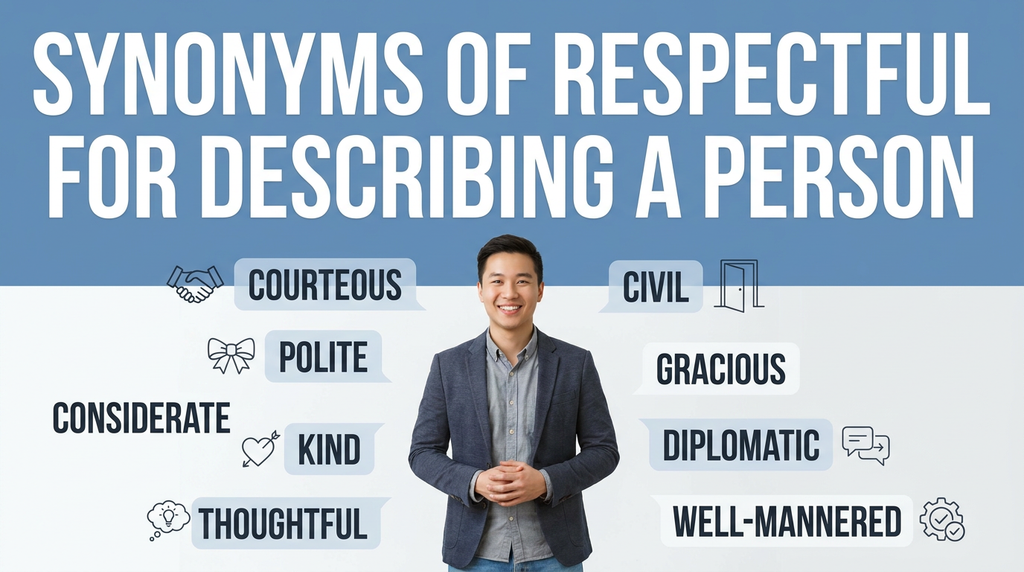
When describing a person, the best synonym depends on the quality you want to emphasize. Someone may be polite because of good manners, considerate because they notice others’ needs, or dignified because they remain composed and mature.
🌟 Courteous person: A courteous person treats others with consistent good manners. They listen, respond appropriately, and avoid making people feel ignored or unnecessarily uncomfortable.
😊 Polite person: A polite person uses respectful language and follows basic social etiquette. Their communication usually includes thoughtful expressions and an awareness of how their words affect others.
🌿 Considerate person: A considerate person thinks about other people’s needs before acting. They may adjust their behavior, offer help, or avoid actions that could inconvenience someone unnecessarily.
🤝 Well-mannered person: A well-mannered person understands common standards of social behavior. They demonstrate courtesy through greetings, conversation, patience, and appropriate conduct.
💼 Professional person: A professional person communicates responsibly and maintains appropriate boundaries. Their respectful attitude is often visible in how they handle deadlines, disagreements, feedback, and teamwork.
🕊️ Diplomatic person: A diplomatic person knows how to communicate difficult ideas without creating unnecessary conflict. They carefully consider their wording while still addressing important issues honestly.
🌸 Gracious person: A gracious person responds to others with warmth and generosity. They can accept praise, criticism, assistance, or disagreement without becoming unnecessarily defensive.
🧘 Dignified person: A dignified person behaves with composure and self-respect. They generally avoid rude reactions and maintain appropriate behavior even when circumstances become stressful.
🌼 Thoughtful person: A thoughtful person pays attention to details that affect others. Remembering preferences, offering encouragement, and checking on someone are examples of thoughtful behavior.
👂 Attentive person: An attentive person listens carefully and remains engaged during conversations. Their focus communicates that they value the speaker’s ideas, feelings, and time.
💬 Tactful person: A tactful person can communicate sensitive information without causing unnecessary embarrassment. They understand that honesty and kindness can work together.
🌱 Humble person: A humble person does not need to prove superiority. They are often willing to listen, learn, accept mistakes, and appreciate the abilities of others.
🏅 Honorable person: An honorable person acts according to strong principles. Their behavior demonstrates integrity, fairness, responsibility, and concern for treating others properly.
🤍 Kind person: A kind person treats others with warmth and compassion. Kindness can make respect feel genuine rather than merely formal or socially required.
🎓 Mature person: A mature person handles disagreements with emotional control and accountability. They understand that respectful communication often requires patience and self-awareness.
✨ Well-spoken person: A well-spoken person expresses ideas clearly and appropriately. Their vocabulary and tone can make conversations feel organized, considerate, and easy to understand.
🌺 Cordial person: A cordial person maintains pleasant interactions with others. Even when they are not close friends, they can communicate warmly and professionally.
🗣️ Soft-spoken person: A soft-spoken person generally communicates in a gentle and calm manner. Soft speech alone does not guarantee respect, but it can contribute to a considerate communication style.
🧭 Principled person: A principled person follows consistent values when making decisions. Their respect for others is often connected with fairness, honesty, and ethical behavior.
💙 Respectable person: Respectable describes someone viewed positively because of their conduct, character, or reputation. It focuses more on overall regard than on one specific interaction.
Respectful Synonyms for Different Tones and Contexts
No synonym has exactly the same meaning in every situation. Understanding context helps you choose between polite, courteous, reverent, deferential, diplomatic, considerate, and other related words without accidentally changing the intended tone.
🌞 Polite for everyday conversations: “Polite” is usually the safest choice for ordinary interactions. It communicates good manners without sounding too formal, emotional, or specialized.
👔 Courteous for professional settings: “Courteous” works particularly well in workplace communication. It sounds professional while still feeling natural and approachable.
🏛️ Deferential for authority: “Deferential” suggests respect toward someone with higher status, authority, or experience. It should be used when the relationship genuinely includes that difference.
🕊️ Diplomatic for disagreement: “Diplomatic” is ideal when respectful communication must also manage conflict. It emphasizes careful wording and relationship preservation.
🌸 Reverent for deep respect: “Reverent” suggests profound admiration or respect. It is commonly associated with religion, traditions, cultural heritage, or deeply valued subjects.
🌿 Considerate for empathy: “Considerate” is the best choice when the main idea is thinking about other people’s feelings or needs. It emphasizes awareness rather than formal manners.
✨ Gracious for warmth: “Gracious” adds generosity and friendliness to the idea of respect. It is useful when someone responds with warmth rather than merely following etiquette.
💬 Tactful for sensitive subjects: “Tactful” highlights careful communication. It is ideal when the speaker needs to express criticism, disagreement, or correction without causing unnecessary offense.
📚 Decorous for formal writing: “Decorous” has a refined and formal quality. It works best in academic, literary, historical, or official descriptions of proper conduct.
🏅 Honorable for moral character: “Honorable” suggests ethical behavior and integrity. It is stronger than simple politeness because it connects respect with principles and character.
🤍 Kind for emotional warmth: “Kind” emphasizes compassion and goodwill. It is especially effective when respectful behavior is personal rather than strictly formal.
🗣️ Well-spoken for communication: “Well-spoken” focuses on how someone expresses themselves. It can describe speech that is clear, polished, appropriate, and pleasant.
🌼 Cordial for friendly professionalism: “Cordial” suggests a pleasant relationship without necessarily implying close friendship. It works well for business correspondence and professional introductions.
🧘 Dignified for composure: “Dignified” describes someone who behaves with seriousness and self-control. It is useful when respect is demonstrated through mature actions.
🌱 Humble for lack of arrogance: “Humble” highlights modesty. It works when respectful behavior comes from recognizing that other people also have valuable knowledge, skills, and experiences.
🎓 Well-mannered for social etiquette: “Well-mannered” directly describes someone who follows accepted standards of behavior. It is particularly useful for discussing students, children, and social situations.
👂 Attentive for listening: “Attentive” is appropriate when respect is shown through concentration and active listening. It focuses on giving another person your time and attention.
🤝 Accommodating for flexibility: “Accommodating” emphasizes willingness to consider another person’s needs. It is useful when describing teamwork, hospitality, scheduling, or customer service.
🌺 Thoughtful for personal consideration: “Thoughtful” suggests deliberate care. It is ideal when someone takes another person’s circumstances or emotions seriously.
💙 Civil for controlled disagreement: “Civil” is especially useful when people disagree but remain respectful. It highlights restraint and basic courtesy rather than agreement or affection.
Polite Words to Use Instead of “Respectful”

Sometimes you need a single replacement word rather than a broad definition. The strongest choice depends on the sentence, because respectful communication can involve manners, empathy, admiration, professionalism, or restraint.
✨ Courteous: Choose “courteous” when you mean polite and considerate behavior. It is one of the closest natural alternatives and works across many personal and professional situations.
🌿 Polite: Choose “polite” when the main idea is good manners. It is simple, familiar, and appropriate for everyday English.
🤝 Considerate: Choose “considerate” when someone thinks about another person’s feelings, needs, or circumstances. It adds a stronger sense of empathy.
🕊️ Civil: Choose “civil” when people maintain basic courtesy despite disagreement. It is especially effective for describing discussions, debates, and public interactions.
👔 Courteous-minded: Rather than using an uncommon construction, most writers should simply use “courteous.” It sounds more natural and immediately communicates appropriate manners.
🌸 Tactful: Choose “tactful” when careful wording matters. It works particularly well for difficult conversations where honesty needs to be balanced with sensitivity.
💐 Gracious: Choose “gracious” when respectful behavior also feels warm and generous. It is a strong choice for appreciation, hospitality, and positive social interactions.
🏛️ Deferential: Choose “deferential” when respect is directed toward authority or higher status. It carries a stronger hierarchical meaning than “polite.”
🏅 Honorable: Choose “honorable” when respect is connected with moral principles. It is useful for describing actions or character rather than simple manners.
📚 Decorous: Choose “decorous” when describing proper, formal, or socially appropriate behavior. Its formal tone makes it less common in casual conversation.
🧘 Dignified: Choose “dignified” when the person maintains composure and self-respect. It is particularly effective for serious situations.
🌼 Well-mannered: Choose “well-mannered” when you want to emphasize learned social etiquette. It is straightforward and easy for most readers to understand.
🗣️ Diplomatic: Choose “diplomatic” when communication needs to avoid unnecessary conflict. It is common in professional, political, and organizational contexts.
👂 Attentive: Choose “attentive” when listening or paying attention demonstrates respect. It describes an observable communication behavior rather than general character.
🤍 Thoughtful: Choose “thoughtful” when someone carefully considers another person’s feelings. It adds emotional depth to the idea of respectful behavior.
🌱 Humble: Choose “humble” when respect is connected with modesty and a lack of arrogance. It works well for describing personality and leadership.
🌺 Cordial: Choose “cordial” when the interaction is pleasantly friendly and polite. It is especially suitable for professional relationships.
🎓 Well-spoken: Choose “well-spoken” when respectful language is expressed through clear and polished speech. It is useful when describing communication skills.
💙 Reverent: Choose “reverent” when respect is deep, serious, or connected with something sacred. It is not normally interchangeable with “polite.”
🌟 Professional: Choose “professional” when respectful behavior is connected with workplace standards. It emphasizes maturity, reliability, appropriate boundaries, and suitable communication.
Synonyms for Respectfully and Related Expressions
“Respectfully” is an adverb, so its alternatives should fit naturally into sentences describing how an action is performed. Depending on context, words such as politely, courteously, tactfully, graciously, diplomatically, and deferentially can work.
💬 Politely: “Politely” is the most common alternative to “respectfully” when describing how someone speaks or makes a request. It suggests good manners and consideration.
🤝 Courteously: “Courteously” emphasizes formal or thoughtful manners. It works well when describing customer service, workplace communication, and interactions with unfamiliar people.
🌿 Considerately: “Considerately” means acting while thinking about another person’s feelings or circumstances. It is useful when the behavior involves empathy as well as politeness.
🕊️ Diplomatically: “Diplomatically” describes careful communication intended to avoid unnecessary conflict. It is especially suitable for disagreements, negotiations, and sensitive professional situations.
🌸 Tactfully: “Tactfully” means handling a delicate matter with sensitivity and good judgment. It is a strong choice when respectful communication involves criticism or correction.
💐 Graciously: “Graciously” suggests warmth, generosity, and pleasant manners. It is particularly useful when describing how someone receives help, praise, or another person’s gesture.
🏛️ Deferentially: “Deferentially” means showing special respect toward someone because of their authority, experience, or status. It is more formal and specific than “politely.”
🌟 Kindly: “Kindly” can communicate a gentle and considerate manner. It is often useful in requests, although writers should make sure it does not sound overly formal or commanding.
👔 Professionally: “Professionally” can describe communication that follows workplace expectations. It suggests respectful boundaries, appropriate language, and responsible conduct.
🧘 Calmly: “Calmly” describes a controlled manner rather than respect itself. However, calm speech often supports respectful communication, especially during stressful conversations.
📚 Formally: “Formally” emphasizes appropriate language and structure. It can work when addressing senior professionals, officials, clients, or people you do not know well.
🌼 Thoughtfully: “Thoughtfully” suggests that the speaker has considered the effect of their words or actions. It is warmer and more personal than simply saying “politely.”
🤍 Humbly: “Humbly” emphasizes modesty and the absence of arrogance. It can be appropriate when acknowledging another person’s expertise or asking for assistance.
🗣️ Diplomatically: Diplomatic wording helps preserve relationships while communicating important information. It is particularly valuable when the message includes disagreement or correction.
🌱 Gently: “Gently” focuses on softness and sensitivity. It can describe respectful communication when someone needs to discuss an emotional or difficult subject.
🏅 Honorably: “Honorably” emphasizes moral standards rather than ordinary etiquette. It works best when describing actions based on integrity, fairness, or principle.
🌺 Cordially: “Cordially” communicates pleasant friendliness in a somewhat formal way. It often appears in professional correspondence and formal invitations.
✨ Attentively: “Attentively” emphasizes careful listening or observation. It can communicate respect when someone gives another person their full attention.
🌞 Warmly: “Warmly” adds friendliness and emotional connection. It can describe respectful greetings, thanks, invitations, and supportive messages.
💙 Reverently: “Reverently” means with deep respect or admiration. It should be reserved for contexts where the level of respect is especially profound or solemn.
How to Choose the Best Respectful Synonym in 2026

The best synonym is not always the most sophisticated word. Strong writing uses the term that accurately matches the context, audience, tone, and intended meaning. For everyday speech, “polite” may be ideal, while professional writing may benefit from “courteous” or “diplomatic.”
🌟 Choose “polite” for simple situations: “Polite” is familiar and easy to understand. Use it when you need a natural word for ordinary good manners without adding a specialized meaning.
💼 Choose “courteous” at work: “Courteous” sounds polished while remaining approachable. It works well for describing customer service, professional emails, workplace behavior, and formal requests.
🌿 Choose “considerate” for empathy: Use “considerate” when the person actively thinks about others’ needs or feelings. It communicates a deeper form of respect than basic etiquette.
🕊️ Choose “civil” during disagreement: Civil is ideal when people disagree but continue speaking appropriately. It emphasizes restraint and mutual courtesy rather than friendship or agreement.
🏛️ Choose “deferential” for hierarchy: Use deferential when respect is specifically directed toward authority, seniority, or status. Avoid it when you simply mean friendly manners.
💬 Choose “diplomatic” for difficult conversations: Diplomatic is excellent when you need to communicate a problem without escalating conflict. It is especially useful in leadership and workplace settings.
🌸 Choose “tactful” for sensitive topics: Tactful language protects people’s dignity while still communicating the truth. It is valuable when discussing mistakes, criticism, personal matters, or disagreement.
💐 Choose “gracious” for warmth: Gracious is a good choice when respect includes generosity and kindness. It can make descriptions of social behavior feel more positive and human.
🎓 Choose “well-mannered” for etiquette: Well-mannered directly describes someone who follows accepted social rules. It is particularly suitable for children, students, guests, and formal social situations.
🧘 Choose “dignified” for maturity: Dignified works when someone demonstrates self-control and composure. It is especially useful when describing behavior during difficult or emotional circumstances.
🏅 Choose “honorable” for integrity: Honorable should be selected when respectful behavior is connected to ethics or moral principles. It communicates admiration as well as good conduct.
📚 Choose “decorous” for formal writing: Decorous has a refined, formal tone. It can work well in essays and literary writing but may sound unnatural in casual conversation.
👂 Choose “attentive” for listening: If someone shows respect by listening carefully, attentive may be more precise than respectful. It identifies the specific behavior rather than making a broad judgment.
🤍 Choose “humble” for modesty: Humble is appropriate when someone respects others by avoiding arrogance. It is particularly useful when discussing leadership, education, or personal character.
🌼 Choose “cordial” for professional warmth: Cordial describes pleasant, friendly interactions without suggesting a close personal relationship. It is useful for business correspondence and formal introductions.
🗣️ Choose “well-spoken” for language: When the focus is someone’s communication skills, well-spoken may be more accurate. It describes clear, polished, and appropriate expression.
🌱 Choose “thoughtful” for personal care: Thoughtful works when respectful behavior involves deliberate consideration. It is especially effective for describing small gestures that show someone cares.
✨ Choose “reverent” for deep admiration: Reverent is much stronger than polite. Use it when the subject receives profound respect, especially in religious, cultural, or solemn contexts.
🤝 Choose “professional” for workplace conduct: Professional is useful when the desired behavior includes respect, reliability, boundaries, and appropriate workplace standards. It is broader than simple politeness.
💙 Choose the word that fits the audience: The strongest synonym is always the one that sounds natural for your readers. Simple words often communicate more effectively than complicated vocabulary when clarity matters.
FAQs
What are the best synonyms of respectful?
Some of the best synonyms include polite, courteous, considerate, civil, gracious, tactful, diplomatic, well-mannered, dignified, and deferential. The best option depends on whether you mean good manners, empathy, authority, professionalism, or deep admiration.
What is another word for respectful?
“Polite” is one of the closest and most common alternatives to respectful. “Courteous” is another excellent choice, especially in professional or formal communication.
What is a formal synonym for respectful?
“Deferential,” “courteous,” “dignified,” “decorous,” and “diplomatic” can work as formal alternatives. However, each word has a slightly different meaning, so choose according to context.
What is a synonym for respectful in an essay?
“Courteous,” “considerate,” “civil,” “dignified,” “diplomatic,” and “deferential” can work well in essays. Choose the word that describes the specific type of respect being discussed.
What is a synonym for respectful in an email?
“Courteous,” “polite,” “professional,” “considerate,” and “diplomatic” are useful choices for emails. “Courteous” is especially versatile because it sounds professional without being overly formal.
What is the difference between respectful and polite?
Polite usually focuses on good manners and socially appropriate language. Respectful has a broader meaning and can include valuing another person’s dignity, opinions, boundaries, authority, or feelings.
Is courteous the same as respectful?
Courteous and respectful are closely related, but they are not always identical. Courteous mainly emphasizes good manners, while respectful can express deeper regard, admiration, or recognition of another person’s dignity.
What is the opposite of respectful?
Common antonyms include disrespectful, rude, discourteous, impolite, inconsiderate, insulting, offensive, and insolent. The best opposite depends on the specific behavior being described.
What is another word for respectfully?
Common alternatives include politely, courteously, considerately, tactfully, diplomatically, graciously, and deferentially. The appropriate choice depends on the sentence and the level of formality.
Which respectful synonym is best for professional communication?
“Courteous,” “professional,” “diplomatic,” and “considerate” are excellent choices. For difficult workplace conversations, “diplomatic” or “tactful” may be more precise than simply using “respectful.”
Conclusion
A strong vocabulary gives you more control over tone, meaning, and clarity. Synonyms of Respectful can help you make everyday conversations warmer, professional emails more polished, and academic writing more precise. Words such as polite, courteous, considerate, diplomatic, and tactful each offer a slightly different shade of meaning.
The key is to choose vocabulary based on context rather than complexity. Synonyms of Respectful are most effective when they communicate the exact quality you want to express, whether that is kindness, good manners, dignity, admiration, empathy, or professionalism. With the right word, respectful communication becomes clearer and more natural.
Read More Biting Finger Emoji Meaning: What It Signals 2026