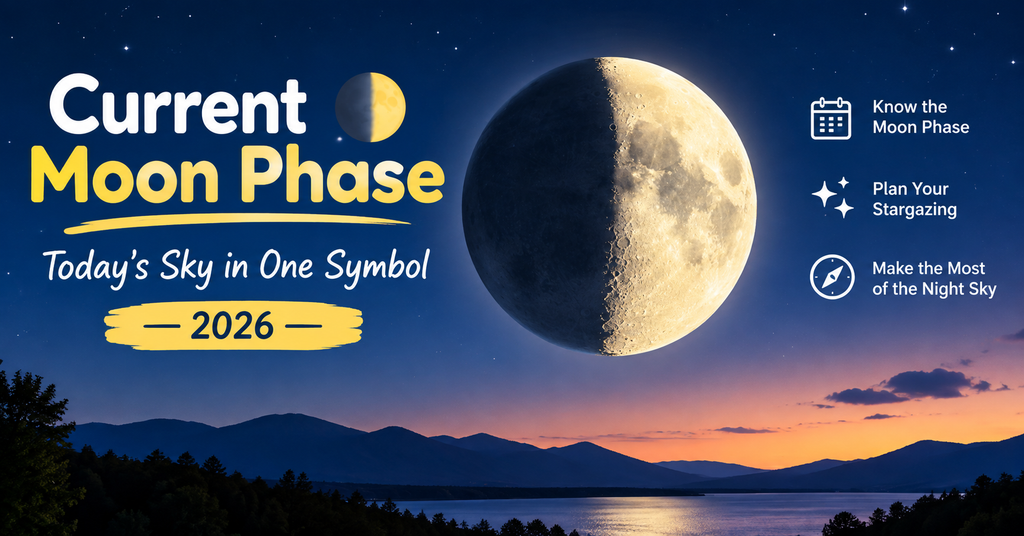
The Current Moon Phase Emoji gives people a simple visual way to represent the Moon, nighttime, changing emotions, and the beauty of the lunar cycle. From a bright full Moon 🌕 to a thin crescent 🌙, these symbols can add meaning to texts, social posts, captions, and stargazing conversations.
Understanding the Current Moon Phase Emoji also means knowing that emojis are symbolic rather than precise astronomical instruments. The actual Moon phase changes according to location, date, and time, while an emoji offers a quick visual impression that can make a message feel peaceful, romantic, mysterious, or playful.
Understanding Moon Phase Emojis
Moon phase emojis represent different stages of the lunar cycle through familiar symbols. They can be used for astronomy conversations, nighttime messages, social media captions, or simply to express a mood associated with the Moon and evening skies.
🌑 A new moon represents a fresh beginning because the Moon is barely visible from Earth during this phase. It can also symbolize quiet moments, hidden feelings, or starting something privately. 🌌
🌒 The waxing crescent suggests gradual growth as the illuminated portion begins to increase. It works beautifully when you want to describe hope, progress, patience, or a small beginning that may become something bigger. ✨
🌓 The first quarter moon is often associated with movement and decision-making because the lunar cycle has reached an important turning point. Use it for messages about taking action and continuing forward. 🌙
🌔 A waxing gibbous Moon shows that fullness is getting closer. It can symbolize anticipation, preparation, and excitement when something meaningful is developing but has not yet reached its final stage. 💫
🌕 The full moon is one of the most recognizable Moon symbols. It can represent brightness, completion, celebration, mystery, or a beautiful night spent looking at the sky. 🌕✨
🌖 A waning gibbous Moon represents the period after the full moon when illumination gradually decreases. It can fit messages about reflection, gratitude, slowing down, and appreciating what has already happened. 🌌
🌗 The last quarter moon shows another major stage in the lunar cycle. It can symbolize balance, transition, release, or the thoughtful process of making room for something new. 🌗🍃
🌘 The waning crescent appears near the end of the lunar cycle. Its delicate shape can represent rest, closure, quiet reflection, or the peaceful feeling of a late night under a darkening sky. 🌙
🌙 The crescent moon emoji is widely used as a nighttime emoji rather than a precise lunar-phase indicator. It often communicates sleep, evening, dreams, calmness, or a peaceful good-night feeling. 😴
🌚 The new moon face adds personality to the Moon theme. Its unusual expression can make a message feel mischievous, awkward, humorous, or slightly mysterious depending on the surrounding words. 😏
🌛 The first-quarter moon face gives the Moon a friendly human expression. It can create a whimsical tone in messages and is useful when ordinary moon symbols feel too plain or serious. 😊
🌜 The last-quarter moon face offers a similarly playful interpretation. People may use it in nighttime posts, jokes, dreamy captions, or conversations where the Moon is treated almost like a character. 🌙
🌝 The full moon face combines a bright lunar image with a smiling expression. It can suggest happiness, humor, friendliness, or playful nighttime energy rather than simply describing astronomy. 😄
🌞 Although it represents the Sun rather than the Moon, this symbol can create an interesting contrast with moon emojis. Pairing day and night symbols can communicate an entire daily cycle. ☀️🌙
⭐ A star beside a moon emoji creates a classic night-sky image. This combination is especially useful for captions about stargazing, peaceful evenings, travel photography, or enjoying a quiet moment outdoors. 🌌
🌌 The Milky Way emoji can expand the meaning of a moon phase symbol into a broader astronomy theme. It works well when talking about stars, night photography, dark skies, or celestial travel experiences. ✨
🔭 A telescope paired with a Moon emoji immediately suggests observation and astronomy. Use this combination when sharing a stargazing plan, discussing Moon viewing, or encouraging someone to look toward the sky. 🌙
📅 A lunar calendar and Moon emoji together can represent tracking lunar phases over time. This pairing is useful for educational posts, astronomy planning, cultural calendars, and monthly sky-watching reminders. 🌑
📸 A camera beside a moon symbol creates a natural choice for night photography posts. It can suggest capturing a beautiful Moon, photographing the stars, or preserving a memorable evening outdoors. 🌕📷
💤 A sleeping symbol combined with a crescent Moon communicates nighttime rest instantly. It is ideal for good-night messages, bedtime posts, relaxing captions, or reminders to slow down after a busy day. 🌙
What the Moon Phase Emojis Mean

Moon phase emojis can have both literal and emotional meanings. While they visually resemble stages of the lunar cycle, people often use them to express feelings such as mystery, romance, calmness, growth, completion, reflection, or nighttime energy.
🌑 The new moon can represent a blank page or a quiet beginning. In a personal message, it may suggest taking a fresh start without needing to explain every detail. 🌱
🌒 A waxing crescent often feels optimistic because the visible Moon is growing. It can represent small victories, personal development, and the belief that brighter days are gradually approaching. ✨
🌓 The first quarter moon can suggest determination. Its half-lit appearance makes it a useful symbol for moments when someone has made a decision and is ready to keep moving. 💪
🌔 A waxing gibbous Moon can symbolize anticipation. It fits situations where excitement is building, whether someone is waiting for a trip, celebration, achievement, or meaningful personal moment. 🎉
🌕 A full moon commonly represents completion and fullness. In emotional writing, it can describe a moment when feelings are strong, memories feel vivid, or something important has finally reached its peak. 💖
🌖 A waning gibbous Moon can communicate reflection after an exciting event. It works well for messages about appreciating memories while calmly moving into the next chapter. 🍂
🌗 The last quarter can represent a thoughtful transition. It may suggest reviewing past experiences, releasing unnecessary worries, or preparing mentally for another beginning. 🌗🕊️
🌘 The waning crescent has a soft and quiet appearance. It can express peaceful endings, solitude, rest, or the comfort of spending time alone with your thoughts. 🌙
🌙 The crescent moon is frequently connected with dreams and sleep. A simple “good night” message becomes warmer when this familiar nighttime symbol accompanies it. 💤✨
🌚 The dark moon face can have a humorous or mischievous tone. Its unusual appearance makes it popular when someone wants to communicate an inside joke or playful nighttime mood. 😈
🌝 The full moon face often feels cheerful and quirky. It can make a serious-looking Moon topic more casual, especially in friendly conversations or social media comments. 😄🌕
🌛 A moon face can make a message feel nostalgic or magical. It is useful when describing childhood memories of looking at the Moon or imagining stories among the stars. 📖✨
🌜 Another moon face can add personality to a nighttime caption. Instead of simply saying “beautiful night,” the symbol gives the sentence a visual connection to the sky. 🌌
💫 A shooting-star style symbol can emphasize wonder and dreams. Pair it with a Moon emoji when writing about wishes, special nights, travel memories, or inspirational moments. 🌙
✨ Stars and Moon symbols together can communicate peaceful beauty. They are especially effective when a caption focuses more on atmosphere and emotion than on exact astronomical information. 🌟
🪐 A planet paired with a Moon emoji broadens the message into a space theme. This combination works well for astronomy pages, educational content, and people fascinated by the universe. 🔭
❤️ A heart beside a Moon symbol can suggest affection during the evening. It may be romantic, friendly, or sentimental depending on the words and relationship between the people chatting. 🌙
🤍 A white heart with a crescent Moon can create a gentle and peaceful aesthetic. It suits messages about calm evenings, quiet support, friendship, and emotional comfort. 🌙
🫶 Combining a Moon with a heart-hands emoji can express caring nighttime support. It is useful when reminding someone that they are valued even when the day has become quiet. ✨
🌃 A city-at-night emoji and Moon symbol can represent evening adventures. This combination fits travel captions, urban photography, late-night walks, and memorable city experiences. 📸
Current Moon Phase Emoji and the Lunar Cycle
The lunar cycle moves through eight commonly recognized phases, beginning with the new moon and continuing through waxing, full, and waning stages. Moon emojis can visually represent these stages, but they should not be treated as exact astronomical measurements.
🌑 New moon begins the traditional eight-phase sequence. Because the illuminated side generally faces away from Earth, the Moon is difficult to see, making this symbol a natural choice for darkness and beginnings. 🌌
🌒 Waxing crescent follows the new moon. The illuminated portion slowly becomes more visible, making it a fitting symbol for growth, development, hope, and gradual progress. 🌱✨
🌓 First quarter occurs when roughly half of the visible lunar disk appears illuminated. It is an important point in the cycle and is often used symbolically for decisions and momentum. 🌙
🌔 Waxing gibbous comes after the first quarter. More than half of the visible disk is illuminated, creating a visual sense of approaching completion and growing brightness. 💫
🌕 Full moon occurs when the Moon appears fully illuminated from Earth. It is one of the easiest phases to recognize and is frequently associated with beauty, celebration, and nighttime photography. 📷
🌖 Waning gibbous begins after the full moon. The visible illuminated area decreases, creating a natural symbolic connection with reflection, gratitude, and gradually letting go. 🍃
🌗 Last quarter shows approximately half of the visible lunar disk illuminated again. This stage can symbolize transition, balance, review, and preparation for another lunar cycle. ⚖️
🌘 Waning crescent appears shortly before the next new moon. Its slim illuminated shape makes it a beautiful symbol of quiet endings, rest, and the return to darkness. 🌙
🔄 The entire lunar cycle takes about a month to repeat from one new moon to the next. This recurring pattern makes lunar phases useful for calendars, educational activities, and sky-watching traditions. 🌑
📅 A lunar calendar organizes dates around lunar cycles rather than simply following the standard solar calendar. Moon emojis can make these calendars easier to understand visually for casual readers. 🌙
🔭 Sky watchers can use the lunar phase to plan observations. A full Moon is bright and easy to locate, while a darker Moon can provide better conditions for viewing many faint celestial objects. ⭐
🌃 The Moon phase can change the appearance of an evening landscape. A bright Moon can illuminate scenery, while a thin crescent may create a more subtle and atmospheric night scene. 📸
🌕 Full Moon nights are popular for photography because the lunar surface is highly visible. A tripod and appropriate exposure settings can help photographers capture clearer nighttime images. 📷✨
🌑 New Moon periods can offer darker skies away from city lights. For stargazing, reduced moonlight may make faint stars and other celestial features easier to notice. 🔭⭐
🌙 A crescent Moon is especially recognizable in travel photography. It can frame mountains, buildings, beaches, deserts, or historic landmarks and add a strong nighttime atmosphere. 🏔️
🧭 Travelers interested in dark-sky destinations can consider Moon phases when planning observation trips. Local weather, light pollution, and seasonal visibility also matter when choosing a viewing date. 🌌
📝 Moon phase symbols are helpful in educational content because they turn an abstract cycle into a visual sequence. Students can quickly compare waxing and waning stages using familiar icons. 📚
🌗 The difference between waxing and waning is important when reading a lunar calendar. Waxing means the illuminated portion is increasing, while waning means it is decreasing. 🌙
🔎 Emoji symbols provide a simplified representation of lunar phases. Their appearance can vary between platforms, so astronomical accuracy should always come from a reliable lunar calendar or astronomy source. 📱
🌌 The lunar cycle connects everyday digital communication with real astronomy. A small Moon symbol can encourage people to look outside and compare the emoji with the actual sky. 🔭✨
Moon Phase Emoji in Texting and Chat

Moon emojis are common in texting because they can communicate nighttime, sleep, mystery, affection, or atmosphere without requiring a long explanation. Their meaning depends strongly on the surrounding message and the relationship between the people chatting.
🌙 “Good night” becomes softer when paired with a crescent Moon. The symbol creates a peaceful bedtime feeling and can make a short message seem more thoughtful without adding unnecessary words. 💤
🌕 Sending a full Moon emoji can simply mean that the Moon looks beautiful tonight. In a conversation, however, it may also emphasize wonder, excitement, or appreciation for a memorable evening. ✨
🌑 A new Moon symbol can represent a quiet mood. Someone might use it when they feel private, reflective, or ready to begin something without drawing attention to it. 🌌
🌒 A waxing crescent can fit a message about progress. It suggests that something is developing gradually and reminds the reader that meaningful changes do not always happen instantly. 🌱
🌗 The last-quarter Moon can work in thoughtful conversations. It may accompany words about change, closure, balance, or learning from something that happened in the past. 🍃
🌙 A crescent Moon from a girl does not have one fixed meaning. Context matters, so it could indicate nighttime, sleep, aesthetic interest, affection, or simply a preference for Moon-themed emojis. 💬
🌕 A Moon emoji from a boy also has no universal hidden meaning. The surrounding words, conversation topic, and established communication style provide more information than the emoji alone. 📱
❤️ A Moon with a heart can sound affectionate, but it is not automatically romantic. Friends, partners, relatives, and even close online communities may use similar combinations differently. 🌙
✨ A Moon with sparkles often creates a dreamy tone. It can be used in ordinary conversation when someone wants to make a nighttime message feel more magical or visually attractive. 🌌
😴 A Moon paired with a sleeping emoji is usually straightforward. It commonly communicates bedtime, tiredness, or a desire to end the conversation and get some rest. 🌙
🌚 The dark moon face can create a joking or mischievous feeling. Because the expression is unusual, readers often interpret it through the tone established by the rest of the conversation. 😏
🌝 The full moon face may add humor to a message. It can turn an ordinary nighttime comment into something playful, especially among friends who enjoy expressive emojis. 😂
🌌 Moon and stars can communicate peaceful nighttime energy. This combination works well when texting about a quiet walk, beautiful weather, travel memories, or an evening spent outdoors. ✨
🔭 A telescope with a Moon symbol makes the meaning more specific. It suggests astronomy, observation, or an invitation to look at the sky rather than simply referring to nighttime. 🌙
📸 A camera and Moon emoji can accompany a photograph. It tells readers that the image is about the night sky, Moon photography, or a memorable nighttime scene. 🌕📷
🥰 A smiling face with a Moon can express warmth at bedtime. It may appear in a sweet good-night message, although the exact emotional meaning still depends on the relationship. 🌙
🤫 A Moon combined with a quiet or secretive symbol can create a mysterious mood. It can suit playful conversations where someone is hinting at a secret or private thought. 🌑
🫶 A Moon and caring-hands combination can communicate nighttime support. It works particularly well when checking on someone, wishing them peaceful sleep, or offering emotional encouragement. 🌙
☁️ Clouds and a Moon can describe a partly cloudy night. This combination is useful when the weather or appearance of the actual sky is the main subject of the conversation. 🌙
🌃 A Moon with a city emoji can describe late-night urban life. It works naturally for messages about evening walks, city lights, restaurants, travel, or nighttime photography. 📸
Moon Phase Emoji Combinations
Moon emoji combinations let users create more expressive messages than a single symbol. Pairing Moon phases with hearts, stars, flowers, travel symbols, or sleeping emojis can change the overall mood from romantic to peaceful, playful, mysterious, or adventurous.
🌙✨ A crescent Moon with sparkles creates a classic dreamy combination. Use it for peaceful nighttime captions, inspirational posts, or messages about appreciating a beautiful sky before going to sleep.
🌕❤️ A full Moon and red heart can communicate strong affection under a bright night sky. The combination feels romantic, but the surrounding caption should establish whether the feeling is intimate or simply sentimental.
🌑🌱 A new Moon with a plant symbol creates a fresh-start theme. It works well for personal growth captions, new goals, changing routines, or beginning a meaningful chapter.
🌒💫 A waxing crescent with sparkles can represent hope and gradual progress. It is useful when celebrating small improvements rather than pretending that every transformation happens immediately.
🌓💪 A first-quarter Moon with a strength emoji creates a determined message. This combination can encourage someone who has reached an important decision and needs motivation to keep moving.
🌔🎯 A waxing gibbous with a target symbol can represent approaching a goal. It works particularly well for achievement posts where progress has been made but the final milestone is still ahead.
🌕🎉 A full Moon and celebration emoji create an energetic nighttime combination. Use it for festivals, parties, special occasions, or simply celebrating an unforgettable evening with friends.
🌖🍂 A waning gibbous with autumn leaves creates a reflective mood. It can accompany captions about memories, lessons learned, changing seasons, and appreciating experiences that have already passed.
🌗⚖️ A last-quarter Moon with a balance symbol communicates transition. It is suitable for thoughtful captions about finding perspective, making changes, and deciding what deserves attention next.
🌘🕊️ A waning crescent with a dove creates a peaceful ending. This combination can symbolize rest, emotional release, forgiveness, or quietly closing one chapter before beginning another.
🌙💤 A crescent Moon and sleeping emoji are among the clearest good-night combinations. They immediately communicate bedtime, relaxation, and the simple wish that someone has a peaceful night.
🌌🔭 The Milky Way and telescope combination strongly signals astronomy. Use it for stargazing posts, science content, observatory visits, or travel stories centered around dark skies.
🌙📸 A Moon and camera combination is perfect for photography captions. It tells viewers that the nighttime sky, Moon, or surrounding scenery is the subject worth noticing.
🌕🌊 A full Moon with waves can create a beautiful coastal-night theme. It works naturally for beach travel posts, seaside memories, Moonlit photography, and peaceful ocean captions.
🌙🏔️ A crescent Moon with mountains creates an adventurous nightscape. Use it for hiking memories, mountain travel, outdoor photography, or captions about finding peace away from busy cities.
🌙🌸 Moon and flower symbols create a soft aesthetic. This combination can express beauty, calmness, romance, or appreciation for a quiet evening surrounded by nature.
🌚😏 The dark moon face with a smirking face creates a deliberately playful combination. It can work for jokes, teasing, inside references, or messages where the sender wants to sound slightly mischievous.
🌝😂 A full moon face with a laughing emoji makes the Moon theme humorous. It can turn an ordinary comment about the night into a lighthearted social media response.
🌙🤍 A crescent Moon with a white heart feels gentle and understated. It works for peaceful friendship messages, emotional support, minimalist captions, and quiet good-night wishes.
🌕🌟 A full Moon with a star emphasizes nighttime beauty. This combination is especially effective for travel photography, stargazing posts, romantic scenery, and social media captions about memorable nights.
Moon Emojis for Instagram and Social Media

Moon emojis are popular in Instagram captions, TikTok posts, WhatsApp statuses, and other social platforms because they add visual atmosphere. They work especially well with travel photography, nighttime scenes, aesthetic posts, astronomy content, and reflective personal captions.
🌙 “Chasing quiet skies tonight.” This short caption pairs naturally with a crescent Moon because it focuses on atmosphere rather than astronomical precision. ✨
🌕 “Under tonight’s bright Moon, everything feels a little more magical.” The caption suits a full-Moon photograph, especially when the image includes nature, architecture, or an open landscape. 🌌
🌌 “Some nights deserve to be remembered.” Add a Moon and stars when sharing a travel memory, peaceful evening, or photograph that captures a special atmosphere.
🌙 “Let the Moonlight set the mood.” This caption works for elegant nighttime photography, romantic scenery, or aesthetic posts where the visual atmosphere is more important than a detailed explanation. ✨
🔭 “Look up; the sky always has another story.” A telescope and Moon symbol make this caption ideal for astronomy enthusiasts, observatory visits, and stargazing experiences.
🌕 “A little Moonlight, a lot of memories.” This phrase works well for travel photographs and personal moments where the nighttime setting is connected with an unforgettable experience. 📸
🌘 “Quiet endings can make beautiful beginnings.” A waning crescent gives this reflective caption a natural connection to the lunar cycle and changing seasons of life. 🍃
🌒 “Growing slowly still means growing.” The waxing crescent reinforces a positive message about patience, personal development, and celebrating progress without rushing the process. 🌱
🌓 “Half the sky is bright, and the rest is full of possibilities.” The first-quarter Moon adds visual meaning to a caption about choices, exploration, or moving toward a new goal. ✨
🌕 “Tonight belongs to the Moon.” This simple caption is effective for full-Moon images because it lets the photograph remain the main focus while adding a strong nighttime mood. 🌌
🌙 “Peace looks a lot like a quiet night.” A crescent Moon creates a calm visual finish for wellness, nature, travel, or minimalist social media content.
🌑 “Every new cycle begins in silence.” The new Moon makes this caption especially suitable for fresh-start posts, personal goals, new projects, and reflective moments. 🌱
⭐ “Moon above, stars around, memories within.” This poetic caption works naturally with landscape photography and gives a night-sky post an emotional rather than purely astronomical focus. 🌙
🏙️ “City lights below, Moonlight above.” Pair this caption with a city-night photograph to contrast artificial lights with the natural glow of the evening sky. 🌕📸
🌊 “Moonlight dancing across the water.” This caption is ideal for coastal travel photos, lakeside scenes, and nighttime images where reflections create the main visual attraction.
🏕️ “Nothing beats a quiet night outdoors.” A Moon emoji can reinforce the feeling of camping, hiking, or escaping the noise of everyday city life. 🌙🔥
🌸 “Soft skies, quiet thoughts, beautiful moments.” Moon and flower emojis create a gentle aesthetic suitable for lifestyle posts, nature photography, and peaceful evening reflections.
💫 “Keep looking up; beautiful things can appear unexpectedly.” A Moon and sparkle combination makes this an uplifting caption for travel, astronomy, or personal-growth posts.
📷 “Captured one Moonlit moment before it disappeared.” This caption works particularly well for photographers sharing a fleeting nighttime scene or a difficult-to-capture lunar image. 🌕
🌙 “Good nights, clear skies, and reasons to dream.” The combination of Moon and stars gives this caption a warm closing feeling for evening posts, travel stories, or bedtime updates. ✨
Moon Emoji Meanings in Relationships
Moon emojis can appear in romantic, friendly, and emotionally supportive conversations. Their meaning should never be assumed from the symbol alone because the same crescent or full Moon may communicate affection, nighttime, aesthetics, humor, or simple interest in astronomy.
🌙 A crescent Moon in a romantic conversation may simply create a gentle nighttime mood. If paired with affectionate words, it can make a good-night message feel warmer without automatically indicating a deeper meaning.
❤️🌙 A heart and Moon together can suggest affection or closeness. Whether that affection is romantic or friendly depends on the relationship and the rest of the conversation.
🌕 A full Moon can symbolize an emotionally memorable night. Someone might use it while discussing a date, travel experience, celebration, or beautiful evening spent together.
✨🌙 Moon and sparkle combinations often feel dreamy. In relationship messages, they may add softness to compliments or good-night wishes without carrying one universal interpretation.
🥰🌙 A smiling face with a Moon can make bedtime communication feel affectionate. The emotional tone becomes clearer when the sender also uses warm words rather than relying only on emojis.
🤍🌙 A white heart and crescent Moon can communicate gentle care. It may suit supportive friendship messages, comforting conversations, or quiet affection between people who appreciate subtle communication.
🫶🌙 Caring hands with a Moon can suggest emotional support. It works well when someone wants to remind another person that they are thinking about them before bedtime.
🌌❤️ A night-sky and heart combination can create a romantic aesthetic. It is especially suitable for anniversary posts, travel memories, or photographs of a special evening together.
🌙💭 A Moon with a thought bubble can suggest that someone is thinking during the night. The exact meaning depends on the surrounding text and can range from nostalgia to simple reflection.
🌑❤️ A new Moon and heart can represent feelings that are private or newly developing. It can also simply be an aesthetic choice, so context remains important.
🌒💖 A waxing crescent with a heart can symbolize feelings that are gradually growing. This interpretation is poetic rather than a fixed emoji definition.
🌕💞 A full Moon with affectionate hearts can emphasize strong emotional warmth. It may fit romantic captions, relationship milestones, or sentimental nighttime memories.
🌗🍃 A last-quarter Moon can fit a message about moving through change together. It can symbolize reflection and transition without necessarily implying that a relationship is ending.
🌘🕊️ A waning crescent with a dove can create a peaceful emotional tone. It may suit messages about forgiveness, calmness, healing, or giving someone space to rest.
🌙📱 Sending a Moon emoji alone does not provide enough evidence to understand someone’s feelings. The safest interpretation comes from the complete message, conversation history, and communication habits.
🌚😏 A dark moon face can be playful or teasing. In romantic conversations, it may sometimes add flirtatious energy, but it can also simply be used for humor.
🌝😂 A full moon face with laughter usually creates a humorous tone. It is more naturally interpreted as playful than as a serious romantic signal.
🌙💌 A Moon and envelope can symbolize a nighttime message. It works nicely for digital love notes, thoughtful texts, letters, or sentimental social media captions.
🌃❤️ A city-night symbol and heart can represent a memorable evening together. It is especially suitable for date-night photographs, travel memories, and urban adventures.
🌙🫂 A Moon with a hugging symbol communicates comfort at night. This combination can be meaningful when someone needs reassurance, companionship, or a simple reminder that they are cared about.
Moon Phase Emojis for Good-Night Messages

Good-night messages are one of the most natural uses for Moon emojis. A crescent Moon, stars, sleeping face, or night-sky symbol can turn a short farewell into a warmer and more visually expressive message.
🌙 “Sleep peacefully and let the busy day fade away.” A crescent Moon gives this message a calm nighttime feeling that works for friends, family members, or someone special. 💤
✨🌙 “Good night, and may tomorrow bring something beautiful.” The Moon and sparkle combination makes this message hopeful without becoming overly dramatic or sentimental.
🌕 “Wishing you a bright night beneath the Moon.” This works especially well when someone is outdoors or enjoying a clear evening sky before going to sleep. 🌌
😴🌙 “Time to rest, recharge, and let tomorrow wait.” The sleeping face and Moon make the meaning clear while keeping the message friendly and relaxed.
🤍🌙 “Sending a little nighttime peace your way.” This gentle message works when you want to show care without making the conversation overly emotional.
🌌 “Close your eyes and enjoy the quiet.” Adding a Moon or stars can make this simple good-night message feel more peaceful and atmospheric. ✨
🫶🌙 “Rest well and remember that someone is wishing you a peaceful night.” The caring-hands symbol adds warmth and makes the message feel supportive.
🌙💭 “Let your thoughts settle beneath the quiet Moon.” This poetic message is suitable for someone who has had a stressful day and needs encouragement to slow down.
💤✨ “May your sleep be calm and your dreams be kind.” A sleeping symbol and sparkles create a soft bedtime atmosphere without relying on complicated wording.
🌑 “A quiet night can be the perfect reset.” The new Moon reinforces the idea of pausing, resting, and preparing for another beginning.
🌒🌱 “Rest tonight; tomorrow gives you another chance to grow.” The waxing crescent makes this a natural message for someone working toward a goal.
🌕💖 “Good night to someone who made today brighter.” The full Moon and heart create an affectionate message that can be used romantically or sentimentally depending on context.
🌙📖 “Put the day away like the final page of a book.” This Moon-themed message encourages closure and rest after a long or emotionally busy day.
🌌🔭 “The stars are still shining, even while you sleep.” This message suits astronomy lovers and anyone who enjoys peaceful night-sky imagery.
🌙🕊️ “Leave today’s worries behind and welcome a little peace.” The dove and Moon combination emphasizes calmness and emotional release before bedtime.
☁️🌙 “Even cloudy nights have their own beauty.” This message works well when the Moon is hidden and encourages appreciation for the atmosphere rather than perfect conditions.
🌃✨ “Let the city quiet down while your mind rests.” This is a natural good-night caption for people living in busy urban environments.
🌙🌸 “May your night feel as gentle as a quiet garden under Moonlight.” The flower and Moon create a peaceful, nature-inspired bedtime image.
❤️🌙 “Good night, sleep well, and wake up knowing you matter.” The heart adds emotional warmth while keeping the message straightforward and supportive.
🌙⭐ “Good night, clear skies, sweet dreams.” This short message uses familiar nighttime imagery and works equally well as a text, status, or social media caption.
Moon Phase Emojis for Travel and Stargazing
Moon symbols are especially useful for travel content involving beaches, mountains, deserts, national parks, dark-sky destinations, and nighttime photography. They can capture the atmosphere of a place even when the exact astronomical phase is not the main subject.
🏜️🌙 A desert landscape beneath a crescent Moon can create a dramatic travel scene. The combination works beautifully for captions about quiet dunes, remote landscapes, and unforgettable nighttime adventures.
🏔️🌕 A full Moon above mountains can create a striking travel image. Use the symbols when describing high-altitude scenery, peaceful viewpoints, or an evening spent away from city lights.
🌊🌙 Moonlight over the ocean creates a naturally calming image. This combination is ideal for beach vacations, coastal road trips, island escapes, and nighttime walks beside the water.
🌌🔭 A dark-sky destination is a natural setting for Moon and telescope emojis. They can help communicate an interest in astronomy while keeping a travel caption visually engaging.
🏕️🌕 Camping beneath a bright Moon can become a memorable outdoor experience. This combination fits posts about campfires, national parks, wilderness trips, and sleeping beneath an open sky.
📸🌙 Night photography often requires patience because lighting conditions change quickly. A Moon emoji can identify the subject while a camera symbol makes the photographic context immediately clear.
🧭🌑 Travelers planning stargazing trips may pay attention to Moon phases. Darker lunar conditions can reduce moonlight, although weather and local light pollution also influence what can be observed.
🚗🌙 A Moon and car symbol can describe a nighttime road trip. It works particularly well for scenic drives, desert highways, coastal routes, and journeys where the night sky becomes part of the experience.
✈️🌕 Seeing a full Moon from an airplane window can be a memorable travel moment. A Moon emoji can capture the feeling without requiring a long explanation in a social caption.
🏖️✨ A crescent Moon above a beach can create a relaxed vacation aesthetic. This combination works for sunset-to-night transitions, seaside dinners, or peaceful walks after dark.
🌲🌙 Forest landscapes can look dramatically different under Moonlight. Use a Moon symbol with a tree emoji when sharing hiking memories, cabin stays, or nighttime nature photography.
🏛️🌕 Historic buildings can become striking subjects under a full Moon. This combination suits travel photography where architecture and nighttime atmosphere are equally important.
🌆🌙 City skylines and crescent Moons create a strong visual contrast. The pairing is useful for urban travel captions, rooftop photographs, evening tours, and city-break stories.
🔭⭐ Stargazing becomes more engaging when people understand the relationship between lunar brightness and sky visibility. Moon emojis can introduce the topic while reliable astronomy information provides the details.
🌋🌙 Volcanic landscapes under a Moonlit sky can create dramatic photographs. A Moon symbol adds nighttime context to travel stories about unusual geological destinations and outdoor adventures.
🚶🌙 A Moon emoji can accompany a simple nighttime walking caption. It works for travelers exploring safe, permitted areas after sunset while enjoying local scenery and atmosphere.
🌠🌙 A meteor-shower post can use Moon and shooting-star symbols to represent the night sky. For accurate viewing information, travelers should check current astronomy forecasts and local conditions.
🏞️🌕 National parks can offer memorable Moonlit landscapes. A full Moon may illuminate trails and scenery, but visitors should always follow park rules and nighttime safety guidance.
🌌📍 A location symbol beside the night sky can highlight a special stargazing destination. This combination works well for travel guides comparing dark-sky areas and astronomy-friendly experiences.
🌙🧳 A Moon and suitcase can represent nighttime travel memories. It is a versatile combination for vacation posts where the journey, destination, and evening atmosphere all belong in the story.
Choosing the Right Moon Emoji for 2026
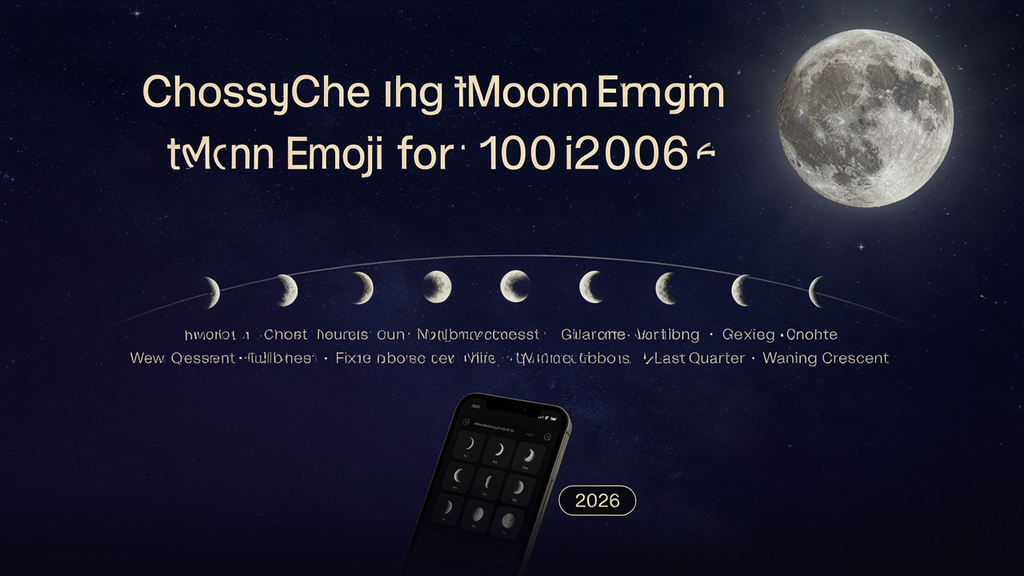
Choosing a Moon emoji depends on what you want to communicate. If you need astronomical accuracy, check a current lunar calendar for your location; if you want mood or visual style, choose the symbol that best matches your message.
🌑 Choose the new Moon emoji when your message focuses on darkness, fresh starts, quietness, or the beginning of a new lunar cycle. It creates a subtle and mysterious visual impression. 🌌
🌒 Use the waxing crescent when you want to suggest growth or gradual progress. Its increasing illumination makes it a natural visual metaphor for something developing over time. 🌱
🌓 Select the first-quarter symbol when discussing a major stage or turning point. It can work especially well in educational posts explaining the lunar cycle or captions about decisions. ✨
🌔 The waxing gibbous is ideal when you want to show that something is approaching completion. It visually communicates increasing brightness and anticipation before the full Moon. 🌕
🌕 Choose the full Moon emoji for bright nighttime scenes, Moon photography, completion themes, or beautiful sky captions. It is one of the easiest Moon symbols for readers to recognize.
🌖 Use the waning gibbous when your message relates to reflection after a peak. It can represent gratitude, slowing down, or transitioning from a busy period into a calmer one. 🍂
🌗 Select the last-quarter Moon for balance and transition themes. It is useful when discussing the later stages of the lunar cycle or writing reflective social media content.
🌘 The waning crescent works well for quiet endings and peaceful nighttime aesthetics. Its thin shape creates a delicate visual effect that suits minimalist captions and reflective writing. 🌙
🌙 Choose the standard crescent Moon when you simply mean nighttime. Unlike phase-specific symbols, it is commonly understood as a general evening, sleep, or dreamy symbol.
🌝 Use the full moon face when you want humor or personality. It is less suitable for precise astronomy because its facial expression changes the message from scientific to playful. 😄
🌚 The dark moon face can add mystery or humor. Because people interpret expressive emojis differently, use it when the surrounding text clearly establishes the intended playful tone. 😏
🌛 A moon face can make a caption feel whimsical. It works well for casual social media posts, jokes, nostalgic content, and messages where personality matters more than astronomical accuracy.
🌜 Another moon-face option can create a vintage or playful nighttime aesthetic. Pair it with stars or sparkles when you want a decorative rather than scientific appearance. ✨
🔭 Add a telescope when your content is specifically about astronomy or observation. This helps readers understand that the Moon symbol refers to sky watching rather than only nighttime mood.
📅 Add a calendar when discussing lunar dates. This is particularly helpful in educational articles, astronomy schedules, and content explaining how the Moon changes throughout the month.
📸 Use a camera with the Moon when sharing photography. It immediately signals that the lunar or nighttime image is the central subject of your post.
❤️ Choose a heart with a Moon when the purpose is emotional rather than astronomical. The surrounding words should provide the context because the combination can mean affection, friendship, or simple aesthetic preference.
💤 Pair the Moon with a sleeping emoji for bedtime content. This is one of the clearest combinations for good-night messages, sleep reminders, and nighttime routines.
🌌 Use the Milky Way symbol when your topic extends beyond the Moon. It works well for stargazing, astronomy travel, dark-sky destinations, and broader night-sky photography.
✨ When uncertain, choose the Moon symbol that matches your message rather than forcing an exact astronomical meaning. For precise phase information, compare the emoji with a reliable lunar calendar for your date and location. 🌙
FAQs
What is the current moon phase emoji?
There is no single official emoji that automatically updates to match the Moon’s real-time phase. Moon phase emojis are fixed Unicode characters, so they provide visual representations rather than live astronomical information.
What does 🌓 mean?
The 🌓 emoji represents a first-quarter moon. It can be used literally for the lunar phase or symbolically for balance, transition, decisions, progress, and nighttime imagery.
What does 🌕 mean?
🌕 represents a full moon. People commonly use it for full-Moon nights, astronomy, nighttime photography, beauty, completion, celebration, and atmospheric social media captions.
What does 🌑 mean?
🌑 represents a new moon. It can describe the lunar phase or symbolize darkness, quietness, fresh beginnings, mystery, and a new cycle.
What does 🌙 mean in texting?
🌙 commonly represents nighttime, sleep, dreams, evening, calmness, or a good-night message. Its exact emotional meaning depends on the surrounding conversation.
Can Moon emojis show today’s actual Moon phase?
Not reliably. Emoji designs are fixed symbols and do not automatically change according to the current date or location. For today’s actual Moon phase, use a reliable astronomical or lunar-calendar source.
What is the difference between waxing and waning Moon emojis?
Waxing means the illuminated portion of the Moon is increasing, while waning means it is decreasing. Moon phase emojis can visually represent these stages in a simplified way.
What does a Moon emoji mean from a girl?
There is no universal meaning based solely on the sender’s gender. A Moon emoji from a girl may indicate nighttime, sleep, affection, aesthetics, humor, or astronomy depending on the conversation.
What does a Moon emoji mean from a boy?
A Moon emoji from a boy also has no fixed hidden meaning. The surrounding words, relationship, communication habits, and conversation topic are more useful for understanding what the sender intended.
Which Moon emoji is best for Instagram captions?
The best choice depends on the caption. 🌙 works well for general nighttime posts, 🌕 for full-Moon imagery, 🌌 for stargazing, and combinations such as 🌙✨ for dreamy or aesthetic content.
Conclusion
Moon emojis make it easy to bring the beauty of the night sky into everyday digital communication. Whether you are discussing lunar phases, writing a good-night message, sharing a travel photograph, or creating an aesthetic social post, the right symbol can add visual meaning in seconds.
The Current Moon Phase Emoji is best understood as a visual communication tool rather than a real-time astronomical indicator. For accurate lunar information in 2026, compare the emoji with a reliable lunar calendar and your local date and time. Used thoughtfully, the Current Moon Phase Emoji can connect astronomy, travel, photography, relationships, and everyday conversations through one simple symbol.
All Encompassing Synonyms List (With Simple Examples) 2026