If you’ve recently seen IDTS Meaning in Text appear in a message, social media post, or online chat, you’re probably wondering what it actually means. Internet slang changes quickly, and abbreviations like IDTS can have different meanings depending on the conversation, making them confusing for many people.
Understanding IDTS Meaning in Text helps you communicate more naturally in today’s digital world. Whether you’re texting friends, chatting on social media, or reading online comments, knowing when and how to use this acronym can prevent misunderstandings and make your conversations smoother.
What Does IDTS Mean in Text?
Internet abbreviations are designed to make conversations quicker and more convenient. Among these abbreviations, IDTS is becoming increasingly common across messaging apps and social media platforms. Although its meaning depends on context, it is most commonly understood as “I Don’t Think So.” People use it to politely disagree, express uncertainty, or respond negatively without sounding overly harsh.
💬 The most common meaning of IDTS is “I Don’t Think So.” It offers a short and casual way to disagree while keeping the conversation friendly. 😊
📱 When someone asks if you’ll attend an event, replying with IDTS politely suggests that you probably won’t. It sounds more relaxed than simply saying “No.” 👍
🤔 IDTS can also express uncertainty when you are not completely sure about something. It leaves room for the conversation to continue naturally. 💭
💙 Friends often use IDTS during casual chats because it’s fast, easy to type, and widely understood among younger internet users. It keeps texting simple and conversational. 😊
✨ Instead of giving a direct rejection, IDTS softens your response and makes disagreements feel less confrontational. That’s one reason it remains popular online. 🌟
📲 Many people first encounter IDTS on Snapchat, Instagram, TikTok, or WhatsApp. Learning its meaning helps you understand modern online conversations more easily. 🚀
😊 IDTS works best in informal conversations with friends or family. It is generally not recommended in professional emails or business communication. 💼
🌍 The popularity of IDTS shows how internet language continues evolving every year. New abbreviations appear regularly as digital communication becomes faster. 📡
💡 If someone texts, “Do you think it will rain?” replying with IDTS politely communicates that you don’t believe it will. It keeps the reply brief and natural. ☀️
😄 Many users prefer IDTS because it saves time without changing the intended meaning. Short abbreviations have become a normal part of everyday texting. 📱
💭 Context is always important when reading IDTS. While “I Don’t Think So” is the most common interpretation, surrounding messages help confirm its intended meaning. 🔍
🌟 Teenagers and young adults frequently use IDTS because they are familiar with texting shortcuts. However, people of all ages may encounter it online today. 😊
📚 Learning internet slang like IDTS improves your ability to understand comments, memes, and group chats. It also helps you communicate with greater confidence. 🚀
🤝 Using IDTS respectfully keeps conversations friendly, especially when expressing a different opinion. Tone still matters even in short text messages. 💙
📢 If the other person may not know internet abbreviations, writing the complete phrase “I don’t think so” is often the better choice. Clear communication always comes first. 😊
🔥 Social media trends help popularize abbreviations such as IDTS. As more users adopt them, these shortcuts become part of everyday online language. 🌐
💬 Understanding IDTS makes reading online discussions much easier because you can quickly recognize the speaker’s opinion without confusion. 📖
🌈 Short forms like IDTS reduce typing effort while maintaining the original message. This convenience explains why they remain popular across messaging platforms. 📲
⭐ Before using IDTS, consider who you’re talking to. Friends may understand it immediately, while older relatives or coworkers might appreciate the full phrase instead. 😊
🚀 Mastering common abbreviations like IDTS improves your digital communication skills and helps you participate confidently in modern online conversations. Every new acronym becomes easier to understand with practice. ✨
Common Meanings of IDTS Across Different Platforms
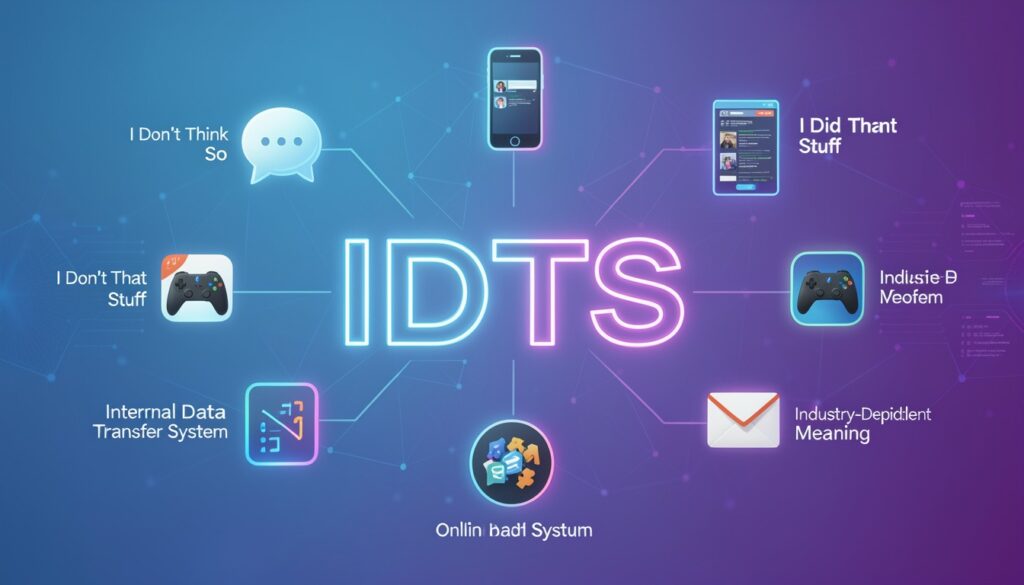
Although “I Don’t Think So” is the most recognized interpretation, the exact meaning of IDTS can vary slightly depending on where you see it. Social media platforms, gaming communities, and private messaging apps often develop their own communication styles. Understanding the platform and conversation helps you interpret the abbreviation correctly and avoid misunderstandings.
📱 On Snapchat, IDTS usually means “I Don’t Think So” when responding quickly to friends. It keeps conversations casual and saves valuable typing time. 😊
💬 Instagram users often include IDTS in comment sections to express polite disagreement without creating unnecessary conflict. It keeps discussions light and respectful. 🌸
🎮 In gaming chats, IDTS may be used when players disagree with strategies or predictions. The abbreviation allows quick communication during fast-paced gameplay. ⚡
📲 WhatsApp conversations frequently include IDTS among close friends because short responses make everyday chats faster and more convenient. 👍
🌐 On X (formerly Twitter), IDTS appears in replies where users disagree with opinions while staying brief due to character limitations. ✍️
😊 Facebook users sometimes use IDTS in family conversations or community groups, although many still prefer writing the complete phrase for clarity. 💙
💡 In Reddit discussions, IDTS often introduces a respectful disagreement supported by additional explanation. It helps maintain a conversational tone. 📖
✨ TikTok comment sections regularly feature abbreviations like IDTS because users prefer quick reactions while engaging with trending videos. 🎥
🤔 Messaging apps encourage abbreviations because they make conversations feel natural and spontaneous. IDTS fits perfectly into this style of communication. 📱
🌟 Group chats often contain many abbreviations at once, including IDTS, LOL, and IMO. Knowing these terms helps you follow discussions effortlessly. 💬
📚 Different online communities sometimes create unique interpretations of abbreviations. Always read nearby messages before deciding what IDTS means. 🔍
🚀 Professional platforms such as LinkedIn rarely use IDTS because complete sentences appear more polished and appropriate for business communication. 💼
💙 Family members who are unfamiliar with internet slang may misunderstand IDTS. Writing the full phrase can prevent unnecessary confusion. 😊
🌈 Younger audiences generally recognize IDTS immediately because internet abbreviations have become part of their everyday digital vocabulary. 📲
🔥 Online gaming communities value speed, making abbreviations like IDTS practical during competitive matches where every second counts. 🎮
💭 Texting culture continues evolving, introducing new abbreviations while older ones remain widely recognized. IDTS has earned a place among commonly used texting shortcuts. 📱
🤝 Knowing platform-specific language improves your confidence when joining online conversations. Understanding IDTS helps you communicate naturally across multiple apps. 🌍
📢 If you’re uncertain about an abbreviation, politely asking for clarification is always better than making incorrect assumptions. Clear communication builds stronger conversations. 😊
⭐ Context remains the most reliable clue for interpreting IDTS accurately. The surrounding discussion usually reveals the intended meaning without much difficulty. 🔍
🚀 As digital communication continues growing, abbreviations like IDTS will remain valuable tools for expressing ideas quickly while keeping conversations friendly and engaging. ✨
How to Use IDTS Correctly in Everyday Conversations
Using IDTS correctly is all about understanding the situation and your audience. Since it usually means “I Don’t Think So,” it works best in casual conversations with friends, classmates, siblings, or people who are familiar with internet slang. Avoid using it in formal emails, business communication, or conversations where clarity is especially important.
💬 Use IDTS when chatting with close friends who already understand common texting abbreviations. It keeps conversations quick while sounding relaxed and natural. 😊
📱 If someone asks, “Are you coming tonight?” replying with IDTS politely suggests that you probably won’t attend. It feels softer than giving a direct “No.” 👍
🤔 IDTS is perfect when you’re unsure about something instead of making a firm statement. It leaves room to change your opinion if new information appears. 💭
🌟 Remember that tone matters even in text messages. Pairing IDTS with a friendly emoji can make your response feel warmer and less dismissive. 😊✨
💙 Use IDTS only when you’re confident the other person understands internet slang. Otherwise, writing the complete phrase avoids unnecessary confusion. 📖
📲 IDTS works naturally in text messages, group chats, and social media comments where short responses are common. It helps conversations flow more smoothly. 🚀
😊 When disagreeing politely, IDTS sounds less harsh than immediately rejecting someone’s opinion. It shows respect while expressing your own thoughts. 🤝
🌈 If you’re talking to a teacher, client, or employer, avoid abbreviations like IDTS. Full sentences create a more professional and respectful impression. 💼
💡 You can combine IDTS with a brief explanation for added clarity. This helps the other person understand your reasoning without making the conversation feel abrupt. 📚
📢 Never assume everyone knows what IDTS means. When speaking with someone unfamiliar with internet slang, spell out the full phrase instead. 😊
🚀 IDTS fits naturally into quick conversations where people exchange ideas rapidly. It saves time without changing the meaning of your response. 📱
💬 If your message could be misunderstood, avoid relying only on abbreviations. Adding a complete sentence makes your intention much clearer. 🔍
🌍 Every online community has its own communication style. Watching how others use IDTS helps you learn the most appropriate situations for using it. ✨
💭 A respectful disagreement often starts with IDTS followed by a thoughtful explanation. This approach encourages healthy conversations instead of arguments. 💙
⭐ Internet slang should make communication easier, not more confusing. Choose IDTS only when it improves readability and matches the tone of the discussion. 😊
📖 Reading plenty of online conversations helps you recognize how IDTS is used naturally. Experience builds confidence when using digital abbreviations. 🌟
🎯 Keep your audience in mind before typing IDTS. Friends may understand it instantly, while family members might appreciate complete words. 🤗
📲 Texting shortcuts are useful because they reduce typing without removing meaning. IDTS is one of many abbreviations that simplify casual conversations. 🚀
🤝 Good communication is about clarity as much as speed. Use IDTS thoughtfully so your message remains friendly, understandable, and respectful. 💬
✨ Learning when to use IDTS correctly helps you sound more confident in online conversations. Small communication habits often make a big difference over time. 🌈
Tips for Understanding Internet Acronyms Like IDTS
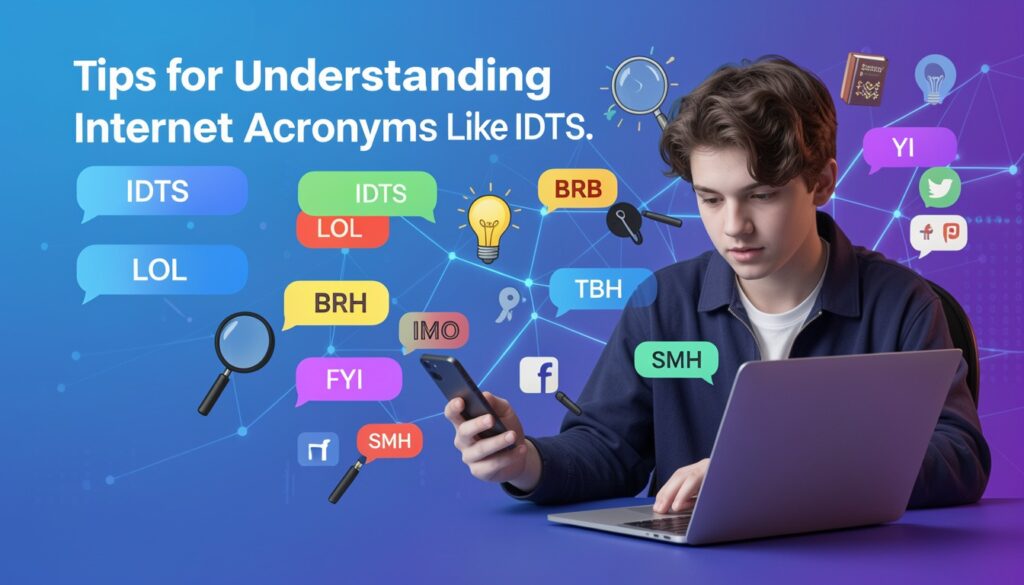
The internet is filled with thousands of abbreviations that can seem confusing at first. Learning how to understand acronyms like IDTS becomes much easier when you focus on context, audience, and the overall conversation. A few simple habits can help you recognize new internet slang with confidence.
🔍 Always read the messages before and after an acronym. Context often reveals the intended meaning without needing to search for a definition. 📖
💬 Don’t assume every abbreviation has only one meaning. Many internet acronyms change depending on the platform and conversation. 🤔
📱 Pay attention to who is sending the message. Friends, coworkers, and online communities may use the same abbreviation differently. 😊
🌐 Social media trends introduce new slang every year. Staying curious helps you keep up with modern digital communication. 🚀
💡 If you’re unsure what IDTS means, politely ask the sender for clarification. Most people are happy to explain internet slang. 🤝
📚 Reading blogs and online slang dictionaries can help you understand popular abbreviations more quickly. Learning a few each week builds confidence over time. 🌟
😊 Notice how experienced users naturally include acronyms in conversations. Observing real examples is one of the fastest ways to learn. 👀
🎯 Focus on commonly used abbreviations before trying to memorize every internet shortcut. Mastering the basics makes future learning much easier. 📲
💭 Remember that emojis often provide clues about the tone behind an abbreviation. Combining both helps you understand the message more accurately. 😊✨
🌈 Practice using new abbreviations only after you understand their meaning completely. Correct usage builds confidence and prevents awkward misunderstandings. 💙
📢 Online conversations move quickly, but taking a moment to understand unfamiliar terms improves communication. Accuracy is always more valuable than speed. 📖
🚀 Many abbreviations become popular because they’re convenient rather than complicated. Learning them gradually makes digital conversations feel more natural. 📱
🤝 If someone misunderstands your message, explain the abbreviation kindly instead of assuming they already know it. Patience encourages better communication. 😊
🔥 Different generations use internet slang differently. Being flexible helps you communicate effectively with a wider range of people. 🌍
📖 Reading comments, forums, and group chats exposes you to new abbreviations in real situations. Practical experience strengthens your understanding. 💬
⭐ Avoid overusing acronyms in every sentence. A balanced mix of abbreviations and complete words keeps conversations clear and enjoyable. 😊
💙 Internet language changes constantly, so staying open to learning new expressions keeps your communication skills up to date. 🌟
📲 Confidence comes from practice rather than memorization. The more online conversations you read, the easier acronyms like IDTS become to understand. 🚀
💬 Clear communication should always be the goal. If an abbreviation creates confusion, writing the complete phrase is often the smarter choice. 📚
✨ Understanding internet acronyms is a valuable digital skill that improves texting, social media interactions, and online friendships. Learning one abbreviation at a time makes the process enjoyable. 🌈
Why Understanding IDTS Improves Digital Communication
Digital conversations move quickly, and abbreviations like IDTS help people communicate more efficiently. Knowing what IDTS means and when to use it improves both your reading and writing skills online. It also reduces misunderstandings, making your interactions on social media, messaging apps, and group chats clearer and more enjoyable.
💬 Understanding IDTS helps you reply with confidence instead of guessing what someone meant. Clear communication builds stronger conversations and prevents unnecessary confusion. 😊
📱 Recognizing common abbreviations saves time while reading text messages and social media comments. You can focus on the conversation instead of stopping to search every unfamiliar term. 🚀
🤝 Knowing when to use IDTS politely expresses disagreement without sounding rude. It helps maintain friendly relationships, even when opinions differ. 💙
🌟 Digital communication becomes smoother when everyone understands common internet slang. Learning IDTS allows you to participate naturally in modern online discussions. ✨
📖 Reading online forums becomes easier because abbreviations no longer interrupt your understanding. Familiarity with IDTS lets you follow conversations more comfortably. 😊
💡 Understanding internet language improves your confidence across different platforms. Whether you’re texting or commenting online, you’ll communicate more naturally. 📲
🌍 Every online community has its own style of communication. Knowing IDTS helps you adapt quickly while respecting the tone of each conversation. 🤗
📢 Good communication depends on clarity, not just speed. Using IDTS correctly keeps messages short while preserving their intended meaning. 💬
😊 Learning internet abbreviations encourages better digital literacy. Small improvements like understanding IDTS make online experiences much more enjoyable. 🌈
🚀 When you recognize common acronyms instantly, conversations feel more natural and engaging. You spend less time interpreting messages and more time participating. 📱
💭 Understanding abbreviations also reduces the chance of replying incorrectly. Reading the context alongside IDTS helps you respond more accurately. 🔍
🌸 Knowing popular texting shortcuts strengthens your overall communication skills. It becomes easier to understand younger audiences and active social media users. 📚
📲 IDTS teaches the importance of context in online conversations. The surrounding discussion often provides valuable clues about the intended meaning. 🤔
💙 Better digital communication creates stronger friendships and more productive conversations. Simple abbreviations become useful tools when used thoughtfully. 😊
⭐ Understanding internet slang also helps when reading memes, captions, and viral posts. You enjoy online content without missing important meanings. 🎉
📖 Every new abbreviation you learn expands your digital vocabulary. Over time, navigating online conversations becomes faster and much less confusing. 🌟
🤝 Respectful communication includes choosing words your audience understands. Knowing when to use IDTS demonstrates awareness of different communication styles. 💬
🌐 Online language continues evolving every year. Staying familiar with terms like IDTS helps you remain connected to current digital trends. 🚀
📱 Improved communication reduces misunderstandings and creates more meaningful conversations. Understanding abbreviations contributes to a smoother online experience for everyone. 😊
✨ Mastering abbreviations like IDTS strengthens your confidence in today’s digital world. Small language skills often have a surprisingly positive impact on everyday communication. 🌈
Common Mistakes People Make When Using IDTS

Although IDTS is simple once you know its meaning, many people use it incorrectly or in situations where it may confuse others. Avoiding these common mistakes helps your messages remain clear, respectful, and easy to understand. Paying attention to context and audience makes all the difference.
⚠️ One common mistake is assuming everyone knows what IDTS means. Not all readers are familiar with internet abbreviations, so clarity should always come first. 😊
💬 Using IDTS in formal emails or professional messages can appear too casual. Complete sentences create a stronger and more professional impression. 💼
🤔 Some people use IDTS without understanding its actual meaning. Learning the correct definition prevents embarrassing misunderstandings during conversations. 📚
📱 Overusing abbreviations can make messages difficult to read. Mixing complete words with internet slang creates better communication. 🌟
💙 Ignoring the context is another frequent mistake. The surrounding conversation often determines whether IDTS truly means “I Don’t Think So.” 🔍
🌈 Responding with only IDTS may sometimes sound too brief. Adding a short explanation makes your message feel friendlier and more helpful. 😊
🚀 Copying internet slang without considering your audience can create confusion. Different age groups understand abbreviations at different levels. 👥
📖 Misreading someone’s tone because of an abbreviation happens often. Looking at the entire conversation provides a clearer understanding of their intent. 💭
🤝 Some users assume every abbreviation has only one interpretation. Remember that online language can vary across platforms and communities. 🌍
💡 Using IDTS too frequently may make conversations feel repetitive. Variety in your language keeps your messages more engaging and natural. ✨
📢 Forgetting that emojis affect tone is another mistake. A friendly emoji can make a short reply appear warmer and more approachable. 😊
📲 Many beginners confuse IDTS with other similar abbreviations. Taking time to learn common internet slang prevents unnecessary mistakes later. 📚
🌟 Assuming everyone communicates the same way online can lead to misunderstandings. Respecting different communication styles improves every conversation. 🤗
💬 Some people avoid asking for clarification because they feel embarrassed. Politely asking what an abbreviation means is always better than guessing. 👍
🔍 Reading only one message instead of the full conversation often leads to incorrect interpretations. Context remains the most reliable guide. 📖
🌸 Using abbreviations in serious or sensitive discussions may reduce clarity. Writing complete sentences shows greater care and consideration. 💙
📱 Internet slang should simplify communication, not complicate it. If IDTS creates confusion, using the full phrase is the wiser choice. 😊
🚀 New users sometimes imitate trending abbreviations without understanding them. Learning first and using them naturally leads to better communication. 🌐
🤝 Good digital etiquette includes choosing language appropriate for the situation. Thoughtful communication helps build trust and positive relationships. 💬
✨ Avoiding these common mistakes allows you to use IDTS confidently and effectively. Clear, respectful communication always leaves a better impression than unnecessary shortcuts. 🌈
Examples of IDTS in Real Text Conversations
The easiest way to understand IDTS is by seeing it used in real conversations. Practical examples show how the abbreviation fits naturally into everyday texting while keeping messages short and friendly. These situations demonstrate why IDTS is so popular in casual digital communication.
💬 Friend: “Do you think it’ll rain today?” You: “IDTS, the forecast looks clear.” This response sounds casual, polite, and keeps the conversation moving naturally. 🌤️
📱 Friend: “Are you joining us for dinner?” You: “IDTS, I have to finish some work first.” It expresses uncertainty without sounding cold or dismissive. 😊
🤔 Sibling: “Will our team win tonight?” You: “IDTS, but I hope they surprise everyone.” This answer shares an opinion while leaving room for optimism. ⚽
🎉 Friend: “Do you think the movie will be good?” You: “IDTS. The reviews haven’t been very positive.” Adding a reason makes your reply more thoughtful. 🍿
💙 Classmate: “Is the homework due tomorrow?” You: “IDTS. I think it’s due on Friday.” A short explanation helps avoid confusion. 📚
📲 Friend: “Will you stay online tonight?” You: “IDTS, I’m feeling tired.” The abbreviation keeps the response brief while remaining friendly. 😴
🌟 Coworker (informal chat): “Think we’ll finish early?” You: “IDTS, there’s still a lot left to do.” It communicates realistic expectations politely. 💼
😊 Friend: “Do you think they’ll cancel the trip?” You: “IDTS. The weather looks much better now.” The reply sounds natural and conversational. 🌤️
🚀 Gaming teammate: “Can we beat this level on the first try?” You: “IDTS, but let’s give it our best shot!” It balances honesty with encouragement. 🎮
💡 Friend: “Will the tickets sell out today?” You: “IDTS. There still seem to be plenty available.” The response shares an opinion without sounding absolute. 🎟️
📖 Family member: “Do you think Grandma already knows?” You: “IDTS. Nobody has told her yet.” A calm explanation makes the message clearer. ❤️
🤝 Friend: “Should we leave now?” You: “IDTS. Waiting another ten minutes might help us avoid traffic.” This keeps the discussion constructive. 🚗
🌈 Group chat: “Is everyone coming tonight?” You: “IDTS. A few people said they were busy.” It politely shares your understanding of the situation. 👥
📢 Friend: “Will this trend last long?” You: “IDTS. Online trends usually change pretty quickly.” The answer feels natural in social media discussions. 📱
⭐ Classmate: “Did the teacher cancel the quiz?” You: “IDTS. I haven’t seen any announcement yet.” This avoids spreading incorrect information. 📝
💭 Friend: “Think they’ll respond today?” You: “IDTS. They usually reply the next morning.” A realistic expectation keeps the conversation honest. 📧
📲 Sibling: “Will Dad agree to our plan?” You: “IDTS, but it’s still worth asking.” This combines honesty with a positive attitude. 😊
🌍 Friend: “Do you think this app will stay free?” You: “IDTS. Many apps eventually add paid features.” The response sounds balanced and practical. 💡
💬 Teammate: “Will we finish before lunch?” You: “IDTS. We still have several tasks remaining.” It communicates expectations without discouraging others. 🍽️
✨ Friend: “Do you think they’ll notice?” You: “IDTS. It’s probably not a big deal anyway.” The reply keeps the tone relaxed and reassuring. 😊
Similar Texting Acronyms You Should Know
IDTS is just one of many abbreviations that make texting faster and more convenient. Learning similar acronyms helps you understand online conversations more easily and communicate with greater confidence. These common shortcuts appear regularly across messaging apps, forums, and social media platforms.
💬 LOL means “Laugh Out Loud.” It’s commonly used to show amusement or react to something funny without typing a longer response. 😂
📱 BRB stands for “Be Right Back.” It lets others know you’re stepping away from the conversation for a short time. ⏳
😊 IMO means “In My Opinion.” It politely introduces a personal viewpoint without suggesting that everyone should agree. 💭
🌟 IMHO stands for “In My Humble Opinion.” It expresses an opinion while adding a tone of humility and respect. 🤝
💙 TBH means “To Be Honest.” It’s often used before sharing a sincere opinion or honest feeling during a conversation. ✨
🚀 FYI stands for “For Your Information.” It introduces useful information without expecting an immediate response. 📖
📚 BTW means “By The Way.” It smoothly introduces an additional point or changes the topic in a casual conversation. 💬
🤔 IDK stands for “I Don’t Know.” It’s one of the most common internet abbreviations for expressing uncertainty or lack of information. 📲
👍 IKR means “I Know, Right?” It shows enthusiastic agreement with something another person has said. 😄
🌈 SMH stands for “Shaking My Head.” It’s used to express disappointment, disbelief, or frustration in a lighthearted way. 🙄
📢 OMG means “Oh My God” or “Oh My Gosh.” People use it to react to surprising or exciting news. 😲
💡 TMI stands for “Too Much Information.” It’s often used humorously when someone shares more details than expected. 😅
🎯 NP means “No Problem.” It provides a quick and friendly response after someone says thank you or asks for help. 😊
💌 TTYL stands for “Talk To You Later.” It politely ends a conversation while suggesting you’ll chat again soon. 👋
📲 DM means “Direct Message.” It refers to private conversations on social media instead of public comments. 🔒
🌍 AFK stands for “Away From Keyboard.” It’s especially common in gaming and online communities when someone temporarily leaves. 🎮
💬 NVM means “Never Mind.” It’s used when a question has already been answered or is no longer important. 🌟
📖 IRL stands for “In Real Life.” It distinguishes offline experiences from online interactions in a simple and familiar way. 😊
🤝 GTG means “Got To Go.” It’s a quick and polite way to tell someone you’re ending the conversation. 🚪
✨ Learning abbreviations like IDTS, LOL, IDK, and IMO makes online conversations easier to understand. A strong knowledge of common texting acronyms improves both confidence and communication. 📱
Final Thoughts on IDTS Acronym Meaning

IDTS may look like just another internet abbreviation, but understanding it can make a noticeable difference in how you communicate online. Since it most commonly means “I Don’t Think So,” it offers a quick and polite way to express disagreement or uncertainty. Like any piece of internet slang, the key to using IDTS successfully is paying attention to the context and choosing the right audience.
💬 IDTS is a simple abbreviation, but it carries a clear message when used correctly. Learning it helps you communicate more naturally in everyday digital conversations. 😊
📱 Short texting abbreviations save time without changing the meaning of your message. IDTS is a great example of efficient and friendly online communication. ✨
🤝 Respectful communication always matters, even in text messages. Using IDTS thoughtfully allows you to disagree politely while maintaining positive relationships. 💙
🌟 Internet language continues to evolve every year. Staying familiar with abbreviations like IDTS helps you remain confident in modern online discussions. 🚀
📖 The best way to master internet slang is through regular practice. Reading and participating in online conversations makes abbreviations feel more natural over time. 😊
💡 Context should always guide your interpretation of IDTS. Looking at the surrounding messages prevents misunderstandings and improves communication. 🔍
🌍 Digital literacy includes understanding both complete language and common abbreviations. Learning IDTS is one small step toward becoming a more confident online communicator. 📲
😊 Clear communication is always more important than using trendy slang. If someone may not understand IDTS, writing the full phrase is often the better option. 💬
📢 Social media platforms encourage quick conversations, making abbreviations especially useful. IDTS fits naturally into this fast-paced communication style. 🌈
🚀 Knowing internet slang improves your ability to join discussions without feeling left behind. Every new abbreviation strengthens your digital vocabulary. 📚
💭 A thoughtful response is always more valuable than the shortest one. Use IDTS only when it genuinely makes your message clearer and more efficient. 🤔
📱 Internet abbreviations should support communication, not replace meaningful conversations. Balance short replies with thoughtful explanations whenever necessary. 💙
🌸 The popularity of IDTS reflects how language adapts to technology. As communication changes, new expressions continue shaping online interactions. ✨
🤝 Learning abbreviations also improves your understanding of memes, comments, and online communities. It becomes easier to follow conversations without confusion. 😊
📖 Strong communication skills include knowing when to use complete sentences instead of abbreviations. Flexibility helps you connect with different audiences. 🌟
💬 Even experienced internet users continue learning new slang. Staying curious keeps your communication skills current and effective. 🚀
📲 Every abbreviation has a purpose, and IDTS works best for casual, friendly conversations. Choosing the right situation makes your messages more natural. 👍
🌍 Respecting different communication styles creates better online experiences for everyone. Understanding IDTS is part of becoming a thoughtful digital communicator. 💖
⭐ Small language skills often make a big difference in everyday conversations. Recognizing abbreviations quickly helps you engage with confidence and clarity. 📱
✨ Mastering IDTS is about more than learning one acronym. It represents your ability to adapt, communicate clearly, and participate comfortably in today’s digital world. 🌈
Frequently Used Situations Where IDTS Fits Best
Although IDTS is versatile, it works best in casual situations where speed and simplicity matter. From friendly text messages to social media comments, knowing when to use the abbreviation helps your responses feel natural without sacrificing clarity. Choosing the right setting ensures your message is both effective and easy to understand.
💬 Use IDTS when chatting casually with close friends who understand internet slang. It keeps conversations short while maintaining a relaxed and friendly tone. 😊
📱 IDTS works well in group chats where participants exchange quick opinions. Short responses help conversations move efficiently without losing meaning. 🚀
🤔 When someone asks for your opinion and you politely disagree, IDTS provides a soft and respectful response. It avoids sounding unnecessarily harsh. 💙
🌟 Social media comments are another ideal place for IDTS. The abbreviation fits naturally into fast-moving discussions on popular platforms. 📲
📖 Casual family conversations can also include IDTS if everyone understands internet abbreviations. Otherwise, writing the complete phrase is a better choice. 😊
💡 IDTS is useful when expressing uncertainty rather than making absolute statements. It leaves room for additional discussion if needed. 💭
🤝 Friendly debates become more respectful when you disagree politely. IDTS helps express a different opinion without escalating the conversation. 🌈
🚀 Gaming chats often require quick communication during matches. IDTS allows players to respond rapidly while staying focused on the game. 🎮
📢 Text messaging remains one of the most common places to use IDTS. The abbreviation saves time without sacrificing clarity. 📱
😊 Online communities frequently rely on abbreviations to simplify communication. Understanding when to use IDTS helps you fit naturally into these conversations. 🌍
💬 Avoid using IDTS in professional emails or formal documents. Complete words create a stronger impression in workplace communication. 💼
📚 Student group chats often include abbreviations like IDTS during homework discussions and event planning. They make conversations faster and more convenient. ✨
🌸 Casual conversations about entertainment, sports, or hobbies are perfect situations for IDTS. The tone remains light and conversational. ⚽
📲 If you’re unsure whether the other person knows internet slang, write “I don’t think so” instead. Clear communication should always come first. 🤗
🌟 Using IDTS thoughtfully demonstrates that you understand both digital language and your audience. Choosing the right moment improves every conversation. 💙
🤔 Quick reactions to questions are easier with abbreviations like IDTS. They reduce typing while preserving your intended meaning. 📱
💖 Friends who text regularly often appreciate brief responses because they keep conversations flowing naturally. IDTS fits perfectly in this environment. 😊
🌍 Remember that every conversation is different. Consider the relationship, platform, and purpose before deciding whether IDTS is appropriate. 📖
📢 Good communication balances speed with understanding. Use IDTS when it improves clarity instead of creating confusion. 👍
✨ Choosing the right situation for IDTS ensures your message feels friendly, natural, and easy to understand. Thoughtful communication always leaves a positive impression. 🌈
FAQs
What does IDTS mean in text?
IDTS most commonly stands for “I Don’t Think So.” It is used in casual conversations to politely express disagreement, doubt, or uncertainty.
Is IDTS a positive or negative abbreviation?
IDTS is generally neutral. While it often expresses disagreement, it usually does so in a polite and conversational way rather than sounding rude.
Where is IDTS commonly used?
You’ll often see IDTS in text messages, Snapchat, Instagram, TikTok, WhatsApp, Discord, Reddit, and other social media platforms.
Can IDTS have more than one meaning?
Yes. Although “I Don’t Think So” is the most common meaning, abbreviations can occasionally have different meanings depending on the platform or context.
Should I use IDTS in professional communication?
No. In business emails, workplace chats, or formal writing, it’s better to write the complete phrase instead of using internet slang.
Is IDTS commonly used by teenagers?
Yes. Teenagers and young adults frequently use IDTS, but people of all ages may encounter it while texting or using social media.
How can I tell what IDTS means in a conversation?
Read the surrounding messages carefully. Context is the best way to determine the intended meaning of any internet abbreviation.
What are some similar abbreviations to IDTS?
Common alternatives include IDK (I Don’t Know), IMO (In My Opinion), TBH (To Be Honest), LOL (Laugh Out Loud), and BRB (Be Right Back).
Can I use emojis with IDTS?
Absolutely. A friendly emoji can soften the tone of your message and make your response feel warmer and more approachable.
Why is learning abbreviations like IDTS useful?
Understanding internet slang helps you communicate more effectively, avoid misunderstandings, and participate confidently in modern digital conversations.
Conclusion
Learning IDTS Meaning in Text is more than simply memorizing another internet abbreviation. It helps you understand modern online conversations, respond appropriately, and communicate with greater confidence across messaging apps and social media platforms. By paying attention to context and your audience, you can use IDTS naturally while keeping your messages clear, friendly, and respectful.
As digital language continues to evolve, knowing IDTS Meaning in Text gives you an advantage in everyday communication. Whether you’re texting friends, reading online discussions, or joining social media conversations, understanding this simple acronym makes it easier to connect with others and avoid confusion. The more familiar you become with internet slang, the more comfortable and effective your digital communication will be.
Read More 200+ Long Love Messages for My Wife to Make Her Cry With Love