If you have received a message containing “PMO,” you may have wondered what the person actually meant. The PMO meaning in text can change depending on the conversation, tone, and platform. In casual texting, PMO is commonly used as slang, especially when someone wants another person to introduce, recommend, or explain something.
The PMO meaning in text is most often connected with phrases such as “put me on” or “piss me off,” but context is essential. A friend asking for a recommendation may use PMO very differently from someone expressing frustration. This guide explains the common meanings, examples, uses, and ways to respond naturally.
PMO Meaning in Text and Chat
PMO is a short internet abbreviation that can have more than one meaning. In everyday texting and social media conversations, “put me on” is one of the most common uses, especially when someone asks to be introduced to something new. Another common meaning is “piss me off,” usually when discussing anger or annoyance.
- 💬 “PMO” can mean “put me on” when someone wants a recommendation. For example, “PMO some good songs” means “Put me on to some good songs.” 🎵
- 🔥 When a friend says, “PMO to that new show,” they may be asking you to introduce them to the show. It is a casual way to request a recommendation.
- 😎 “PMO” can make a message shorter and more relaxed. Instead of writing “Can you recommend something good?” someone might simply type, “PMO.”
- 🎧 If someone texts, “PMO your playlist,” they are probably asking you to share music they may enjoy. The expression is especially common among people who use casual online slang.
- 😂 Context can completely change the meaning of PMO. If someone says, “This is really PMO,” they may mean “piss me off,” rather than “put me on.”
- 📱 PMO is commonly seen in quick messages, comments, captions, and direct messages. Its meaning usually becomes obvious when you consider what the people were discussing immediately before it appeared.
- ✨ “PMO” may sound confusing to someone unfamiliar with texting abbreviations. Like many slang terms, its meaning depends more on conversational context than on the letters alone.
- 🎮 A gamer might write, “PMO some good games,” meaning “Put me on to some good games.” Here, PMO is functioning as a recommendation request rather than an expression of anger.
- 😤 Someone saying “You PMO sometimes” is likely using PMO to mean “piss me off.” The emotional tone and surrounding words make this interpretation much more likely.
- 💡 If you are unsure what PMO means, look at the complete sentence before responding. A recommendation-related sentence and an angry sentence will usually point toward different definitions.
- 🌟 PMO is an example of how internet language continues to make communication faster. People often shorten familiar expressions because their friends already understand the intended meaning.
- 🗣️ In casual conversation, “PMO” may replace a longer phrase without changing the basic message. This makes texting faster while keeping the tone informal and conversational.
- 📲 Social media users may use PMO differently from older texting abbreviations. The slang often develops within online communities, where short expressions spread quickly through comments and messages.
- 🎶 “PMO some artists” is a natural example of the recommendation meaning. The person is essentially asking you to introduce them to musicians or songs they have not discovered yet.
- 😠 “That really PMO” has a completely different emotional meaning. In that situation, PMO generally expresses irritation and is shorthand for “piss me off.”
- 🔎 The safest way to interpret PMO is to examine the surrounding words. Slang abbreviations rarely have one universal definition, so context should always come before assumptions.
- 💻 PMO is primarily informal language. It generally works better in texts, chats, comments, and DMs than in professional emails, academic writing, or formal business communication.
- 🤝 Friends may use PMO because it feels natural and familiar within their group. Someone unfamiliar with internet slang may need the phrase explained before understanding the intended meaning.
- 🌐 The abbreviation can appear across different online communities. However, the exact frequency and preferred meaning can vary between platforms, age groups, and individual social circles.
- ✅ Overall, PMO is a context-dependent abbreviation. When it appears in a casual conversation, first determine whether the speaker is asking for a recommendation or expressing frustration.
PMO as “Put Me On”
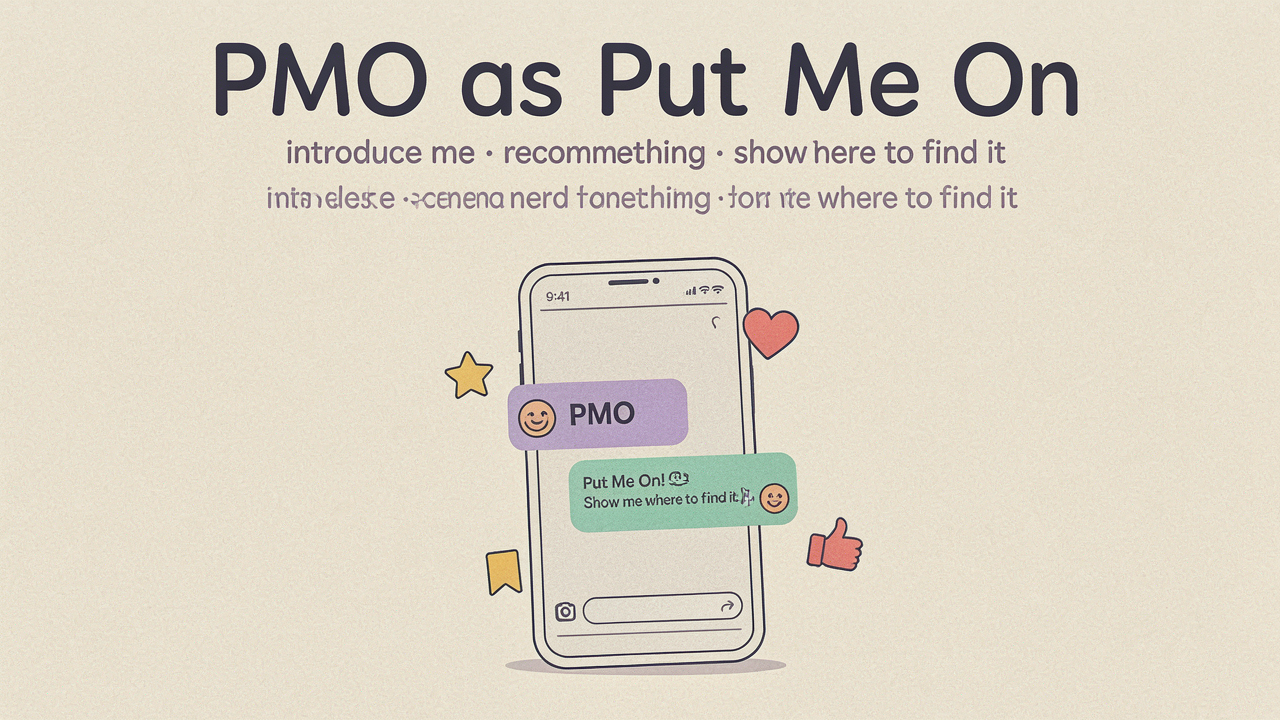
One of the most useful meanings of PMO in modern texting is “put me on.” In this sense, the speaker wants another person to introduce them to something interesting. It may involve music, movies, restaurants, fashion, games, creators, products, or almost anything worth discovering.
- 🎵 “PMO some new music” is a simple way to ask someone for song recommendations. The speaker wants you to introduce them to artists or tracks they may not know yet.
- 🍿 If someone says, “PMO a good movie,” they are asking you to recommend something worth watching. The phrase keeps the request casual, friendly, and suitable for a quick chat.
- 👟 “PMO those sneakers” can mean “Tell me where you got those sneakers” or introduce the speaker to a similar style. Context determines exactly what the person wants.
- 🍔 A friend might text, “PMO a good food spot.” In this situation, PMO means they want you to recommend a restaurant or place you think they should try.
- 🎮 “PMO some fun games” is another natural example. The speaker is asking someone to introduce them to games they might enjoy playing.
- 📚 If a person writes, “PMO a good book,” they are looking for recommendations. It is similar to saying, “Put me onto a good book I probably have not read.”
- 🎧 “PMO your favorite artist” is an informal request for discovery. The person wants you to share an artist, song, or style that you personally enjoy.
- ✨ The phrase “put me on” often has a friendly sense of discovery. It can suggest that you know something interesting and the other person wants to learn about it.
- 👀 Someone may write simply, “PMO.” When used alone, the speaker may be asking you to introduce them to whatever you were just discussing.
- 🌍 “PMO some places to visit” means the person wants recommendations for destinations or interesting locations. It is especially natural when friends are discussing travel plans.
- 🎬 A movie fan could say, “PMO to some underrated films.” This means they want recommendations that are less obvious or less mainstream.
- 💄 “PMO your skincare routine” can be a request to share products or advice. The speaker is essentially asking you to introduce them to what works for you.
- 🎨 The recommendation meaning can apply to hobbies too. “PMO some artists I should follow” asks someone to introduce the speaker to creators they may enjoy.
- 🧢 “PMO your clothing brands” can mean the person wants information about brands or stores they have not discovered. It is casual language often used between friends.
- 📱 On social media, “PMO” can appear under a post about something interesting. A commenter may use it to ask the original poster for more recommendations.
- 🤩 “PMO this artist” may be written after someone hears a name they do not recognize. The speaker wants enough information to discover whether that artist is worth exploring.
- 🗨️ The phrase usually feels more casual than “recommend.” That relaxed quality explains why PMO can appear frequently in informal messages and online conversations.
- 🎯 When someone uses PMO as “put me on,” the phrase is generally positive or curious. They are interested in discovering something rather than complaining about it.
- 🔥 A person can also say, “You have to PMO me.” This can mean they want you to introduce them to something you know about and they currently do not.
- 🌟 In short, “put me on” is one of the most important PMO slang meanings to recognize. Look for recommendation words such as music, food, movies, games, clothes, or places.
PMO as “Piss Me Off”
Another common meaning of PMO is “piss me off.” This usage expresses irritation, anger, or frustration. It is generally stronger and more emotional than the recommendation meaning, so the surrounding sentence is especially important when interpreting it.
- 😤 “That really PMO” usually means “That really pisses me off.” The speaker is expressing frustration about something that has happened or something they have just seen.
- 😠 If someone texts, “You PMO sometimes,” they are probably saying that another person’s behavior makes them angry or annoyed. The tone is informal and can range from joking irritation to genuine frustration.
- 💢 “This situation PMO” can express annoyance with circumstances rather than with a specific person. The speaker may be frustrated because something did not happen as expected.
- 🙄 A friend might say, “People who do that PMO.” This means those behaviors annoy or anger the speaker, although the seriousness depends on the broader conversation.
- 🔥 “Stop PMO me” is a stronger expression of frustration. It generally means “Stop pissing me off,” so it may be inappropriate in formal or sensitive conversations.
- 😑 If someone says, “That comment PMO,” they likely disliked the comment. Their use of PMO communicates irritation without writing the full phrase.
- 💬 The abbreviation can make an angry message look shorter and more conversational. However, the underlying phrase is still rude or blunt in many situations.
- 😅 Friends sometimes use “PMO” jokingly when pretending to be annoyed. The surrounding tone, relationship, and emojis can help show whether the frustration is serious.
- 🚫 “You are PMO me right now” generally communicates immediate annoyance. It suggests that something happening in the current moment is frustrating the speaker.
- 😤 Someone might write “This app PMO” after experiencing a technical problem. In this context, PMO is an emotional reaction rather than a request for information.
- 🗣️ The “piss me off” meaning is more likely when PMO appears next to words describing anger, irritation, mistakes, arguments, or unpleasant situations.
- 📲 Social media comments may use PMO when users react strongly to controversial or annoying content. The expression can communicate frustration in just a few characters.
- 😒 “That always PMO” means something repeatedly causes irritation. The phrase “always” strengthens the idea that the speaker has experienced the problem more than once.
- 💥 “You really PMO sometimes” can be playful between close friends, but it can also sound genuinely hostile. Tone and relationship matter greatly when interpreting this expression.
- 🧠 Because PMO has multiple meanings, readers should avoid automatically interpreting every occurrence as “piss me off.” A recommendation-related conversation points toward the other meaning.
- ⚠️ When using PMO to express anger, remember that some people may not know the abbreviation. They might misunderstand the message or interpret it differently from what you intended.
- 😮 “That PMO so bad” is an exaggerated informal expression of frustration. It communicates that the speaker was particularly annoyed by whatever happened.
- 💭 A person may also use PMO when describing something that happened earlier. The abbreviation does not necessarily mean the speaker is angry at the exact moment of writing.
- 🔥 In casual texting, PMO can function almost like an emotional reaction. The exact intensity depends on whether the person is joking, mildly annoyed, or genuinely angry.
- ✅ When PMO appears in a sentence about frustration, arguments, or annoyance, “piss me off” is usually the most logical interpretation. Always consider the complete message before deciding.
PMO Meaning in Social Media Slang
PMO is part of the broader world of social media slang, where abbreviations help users communicate quickly. Its meaning can vary between communities, but “put me on” and “piss me off” remain important interpretations. Context, audience, and platform culture all matter.
- 📱 Social media users often shorten phrases to make comments quicker. PMO fits naturally into this style because three letters can replace a longer expression.
- 💬 A commenter might write “PMO” under a music recommendation. In that context, the person is likely asking for more suggestions rather than expressing anger.
- 🎵 “PMO some artists” is especially natural in music discussions. It asks another user to introduce the speaker to musicians they may not know.
- 😤 A completely different post might receive the comment “This PMO.” There, the user is likely expressing irritation with the content or situation.
- 🔎 Hashtags, captions, comments, and DMs can all contain informal abbreviations. However, not every community uses PMO with exactly the same frequency or meaning.
- 🌐 Internet slang changes quickly because users constantly create, shorten, and popularize expressions. A term that feels obvious in one community may be unfamiliar in another.
- 👀 If you encounter PMO on a social platform, read the surrounding comments when possible. Other replies may reveal whether people are discussing recommendations or frustration.
- 🎬 A user discussing television could write “PMO some good series.” The likely meaning is “put me on,” because the speaker is asking for something new to watch.
- 😠 A user reacting to disappointing content might write “That PMO.” Here, the emotional context points strongly toward “piss me off.”
- 📲 Social media encourages short communication, which makes abbreviations useful. PMO allows users to express a recognizable idea without typing a longer sentence.
- 🤝 Slang can also create a sense of community. People who understand PMO immediately may feel that the abbreviation fits the casual language used within their online group.
- ✨ Not every abbreviation is universal. If your audience includes people from different age groups or backgrounds, writing the full phrase may sometimes be clearer.
- 🎮 Gaming communities can use PMO for recommendations. A player might ask another gamer to “PMO some good games” after discussing their favorite titles.
- 👟 Fashion communities may use PMO when asking where an item came from. The phrase can function as an informal request for information or recommendations.
- 🍜 Food discussions provide another example. “PMO a good restaurant” is a casual way to ask someone for a place worth trying.
- 😅 Emojis can provide useful context around slang. A playful emoji may suggest that an expression is joking, while an angry reaction may reinforce frustration.
- 🗣️ Social media slang is usually informal by nature. PMO should therefore be used carefully when communicating with people who may prefer clear, conventional language.
- 🔥 Popular slang can spread from one platform to another. A person may encounter PMO in a comment, then begin seeing it in group chats or direct messages.
- 💡 The safest interpretation comes from context rather than platform alone. Knowing that a message appeared on social media does not automatically determine what PMO means.
- 🌟 Overall, PMO is a flexible piece of online slang. Its social media meaning is best understood by examining the topic, emotional tone, and words surrounding the abbreviation.
PMO Meaning on Snapchat, Instagram, and TikTok
PMO can appear across major social platforms, including Snapchat, Instagram, and TikTok. The abbreviation does not necessarily have a separate dictionary definition on each platform. Instead, users generally carry the same slang meanings into different online spaces.
- 👻 On Snapchat, a friend might write “PMO some songs.” Because the conversation involves music, the likely meaning is “put me on” or introduce me to some songs.
- 📸 An Instagram user might comment “PMO” beneath a fashion post. In that situation, the person may be asking the poster to share brands, products, or sources.
- 🎵 On TikTok, “PMO some artists” can naturally mean “recommend some artists.” Short slang like this fits the quick, conversational style of comments.
- 😤 If a Snapchat message says “You PMO,” the likely meaning is “you piss me off.” The direct and emotional wording points away from the recommendation meaning.
- 💬 Instagram DMs often use casual abbreviations because conversations are usually informal. PMO can therefore appear naturally between friends or followers who understand internet slang.
- 🎥 TikTok comments can provide clues through the content itself. A comment under a recommendation video may use PMO to request additional suggestions.
- 🔥 If the video is about an annoying situation, “PMO” may instead express frustration. The topic of the video can therefore help determine the intended definition.
- 👀 Snapchat conversations are often highly contextual. Since messages can be very short, the previous few messages may be essential for understanding what PMO means.
- ✨ Instagram users may write “PMO your routine” when asking another person to share how they do something. This can involve fashion, beauty, fitness, food, or another interest.
- 🎧 A TikTok user might say “PMO your playlist.” The speaker is probably asking the creator to introduce them to songs they may enjoy.
- 😒 “This PMO” under an Instagram post generally sounds like an expression of annoyance. The post’s subject and the rest of the comments can confirm that interpretation.
- 📱 Different platforms may have different slang cultures, but abbreviations frequently overlap. PMO does not need a completely new definition simply because it appears somewhere else.
- 🤳 On Snapchat, a user could say “PMO where you got that.” The speaker may be asking for the source of clothing, accessories, food, or another item.
- 🎬 On TikTok, “PMO to this creator” can mean “introduce me to this creator.” It expresses curiosity and a desire to discover more content.
- 💡 If someone sends you PMO on Instagram without context, asking “Do you mean put me on or piss me off?” can prevent an unnecessary misunderstanding.
- 😅 Friends may understand each other’s preferred slang automatically. New followers or acquaintances may not, especially when the abbreviation has several possible interpretations.
- 🌍 International audiences may interpret PMO differently because internet slang is not equally familiar everywhere. Clear wording is often better when communicating with a broad audience.
- 🔎 Search results and social posts may use PMO in different contexts. Seeing one meaning online does not prove that every person uses the abbreviation the same way.
- 🤝 The relationship between users can also influence interpretation. Close friends may use PMO playfully, while strangers may use it more literally or expect clarification.
- ✅ Whether you see PMO on Snapchat, Instagram, or TikTok, focus on the conversation rather than the platform name. Context remains the strongest clue to the intended meaning.
PMO Texting Examples in Everyday Conversations
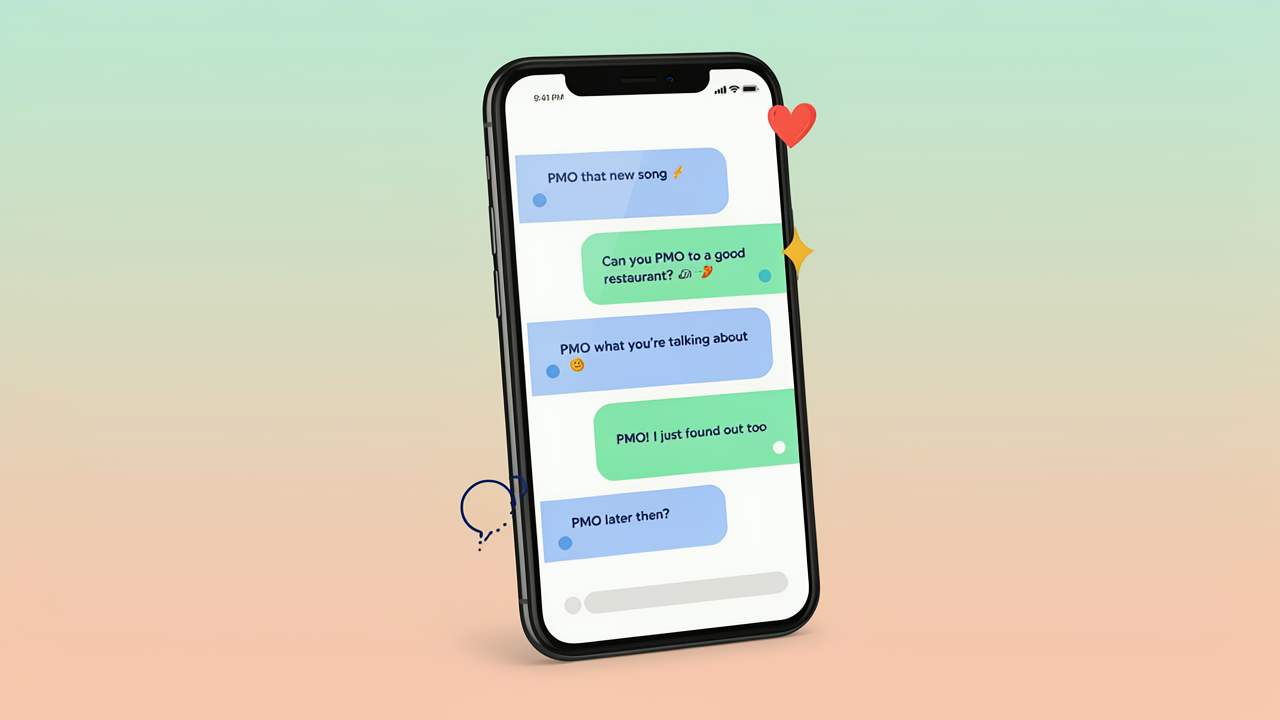
Examples make slang much easier to understand because they show how PMO works naturally inside complete conversations. The same abbreviation can communicate curiosity, recommendations, frustration, or annoyance depending on the words around it.
- 🎵 Friend: “I need new music.” You: “PMO some artists you like.” Here, PMO means “put me on” and asks the friend to recommend musicians.
- 🍿 Friend: “I’m bored tonight.” You: “PMO a good movie then.” The speaker wants the other person to recommend something entertaining to watch.
- 😤 Friend: “He canceled again.” You: “That would PMO me too.” In this example, PMO means “piss me off” and expresses agreement with the frustration.
- 🎮 Friend: “What game should I play?” You: “PMO.” The short response means “Put me on,” inviting the friend to recommend a game.
- 👟 Friend: “Where did you get those shoes?” You: “PMO?” The speaker may be asking for information about the shoes or where to buy them.
- 📚 Friend: “I want something interesting to read.” You: “PMO a book you love.” The abbreviation works as a casual request for a recommendation.
- 😠 Friend: “My internet stopped working again.” You: “That PMO.” Here, PMO communicates frustration with the situation.
- 🎧 Friend: “Your playlist is always good.” You: “PMO your favorite tracks.” The phrase asks the other person to introduce you to music they enjoy.
- 🍔 Friend: “I’m hungry.” You: “PMO a good food place.” In this context, the speaker is asking for a restaurant or food recommendation.
- 📱 Friend: “Did you see that post?” You: “Yeah, it PMO.” The abbreviation expresses irritation with the content or situation shown in the post.
- 🎬 Friend: “Any underrated shows?” You: “PMO some.” The meaning is “put me on to some,” or recommend some underrated shows.
- 😅 Friend: “You forgot my birthday.” You: “Okay, okay, don’t PMO.” Here, PMO refers to anger and is used in a playful or apologetic exchange.
- 🎨 Friend: “I want to follow new artists.” You: “PMO some creators.” The speaker is requesting introductions to artists worth following.
- 😒 Friend: “He keeps interrupting me.” You: “That would PMO anyone.” The abbreviation expresses understandable irritation with someone’s repeated behavior.
- 🌍 Friend: “I want to travel somewhere new.” You: “PMO some places.” The speaker is asking for destination recommendations.
- 💬 Friend: “Why are you annoyed?” You: “That message PMO me.” In this case, PMO clearly means that the message made the speaker angry.
- 🎶 Friend: “I only listen to pop music.” You: “PMO some other genres.” The abbreviation means “introduce me to” something outside the person’s usual choices.
- 🔥 Friend: “This update ruined the app.” You: “Seriously, it PMO me too.” Here, PMO communicates shared frustration about the update.
- 👀 Friend: “You know a lot of good creators.” You: “PMO?” The short message asks the friend to recommend or introduce some creators.
- ✨ Friend: “I don’t understand this slang.” You: “Context matters with PMO.” This example highlights why the abbreviation cannot always be interpreted from the three letters alone.
How to Use PMO in a Text Message
Using PMO correctly depends on knowing which meaning you intend. If you mean “put me on,” use it when asking someone to recommend or introduce you to something. If you mean “piss me off,” use it only in informal situations where the emotional tone is appropriate.
- 🎵 Use “PMO” when asking for music recommendations, such as “PMO some new songs.” This keeps the message short while clearly showing that you want suggestions.
- 🎬 You can say “PMO a good movie” when asking a friend for something to watch. The recommendation meaning is easy to understand from the topic.
- 🍔 “PMO a restaurant” works naturally when you need food recommendations. It is especially suitable for casual conversations with friends who already understand online slang.
- 🎮 Gamers can use “PMO” to request recommendations. A message such as “PMO some multiplayer games” clearly suggests that the speaker wants new gaming ideas.
- 👟 “PMO that brand” may ask someone to introduce you to a brand they are wearing or discussing. The exact meaning can depend on the surrounding conversation.
- 📚 When discussing books, “PMO a good author” can mean “recommend a good author.” It sounds informal and friendly rather than formal or academic.
- 😤 If you intend the angry meaning, a sentence such as “That really PMO me” communicates irritation. Remember that this expression includes profanity and may sound rude.
- ⚠️ Avoid PMO in formal workplace communication unless you are certain the audience understands the slang. A clear phrase such as “Could you recommend something?” is usually safer.
- 💬 Before using PMO, consider whether the person knows internet abbreviations. If they do not, writing the full expression may prevent confusion.
- 😅 Friends may use PMO jokingly, but tone can be misunderstood in text. Emojis or additional words can sometimes make your intended emotion clearer.
- 🎧 “PMO your favorite playlist” is a natural casual request. It invites someone to share music while keeping the conversation relaxed.
- ✨ “PMO some ideas” may work when you are asking someone to introduce you to possibilities. However, clearer wording is better if the subject is complicated or important.
- 📱 Keep PMO primarily within informal digital conversations. It is best suited to texts, DMs, comments, group chats, and casual online exchanges.
- 🤝 If you are speaking with someone for the first time, consider spelling out your meaning. Not everyone recognizes PMO immediately.
- 😠 When PMO means “piss me off,” avoid using it toward someone you do not know well. The phrase can sound confrontational even when you intended it casually.
- 🔎 If you are using PMO as “put me on,” make the request specific when possible. “PMO some horror movies” is clearer than sending only “PMO.”
- 🎯 Specific wording helps the reader understand your request immediately. Adding the topic after PMO removes much of the ambiguity surrounding the abbreviation.
- 🌟 Slang is most effective when it matches the tone of the conversation. PMO can feel natural among friends but awkward in professional or formal settings.
- 🗣️ If someone responds as though they misunderstood you, clarify what you meant rather than assuming they know the abbreviation. A quick explanation can resolve the confusion.
- ✅ The best rule is simple: use PMO only when the context makes your intended meaning reasonably clear. When clarity matters more than casual style, write the complete phrase.
How to Respond to PMO in Chat
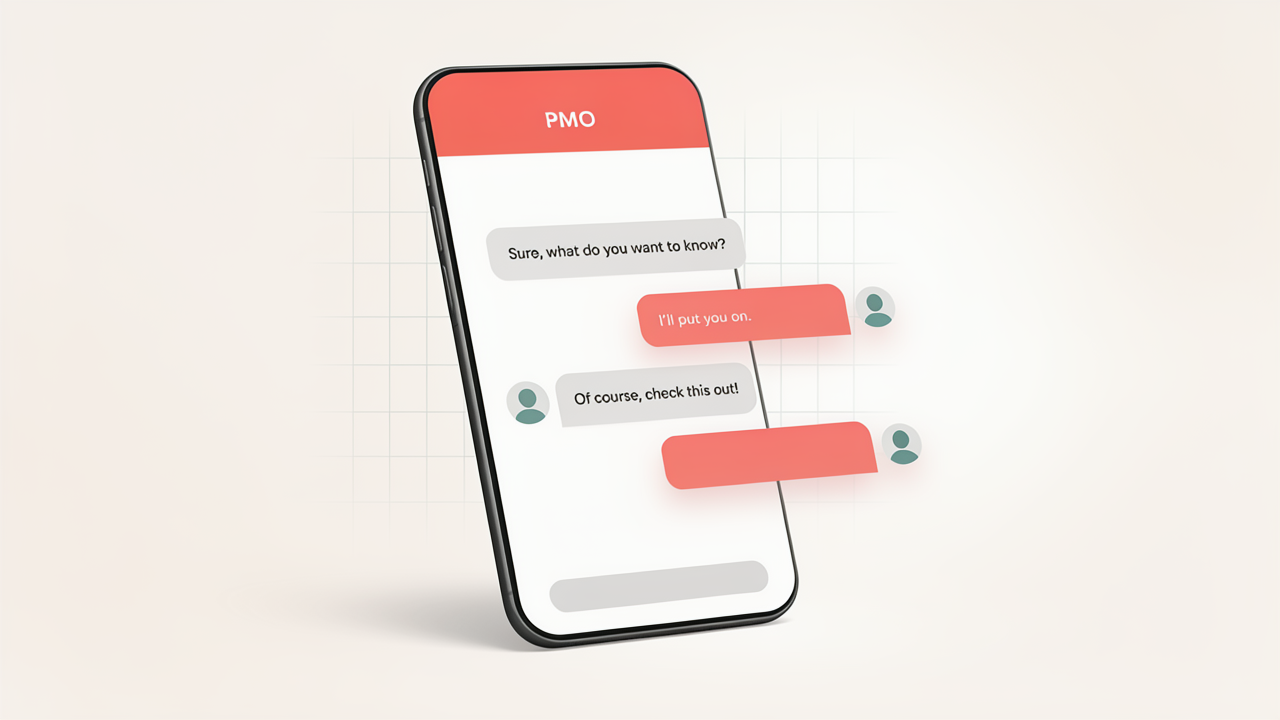
Your response to PMO should depend on what the sender means. If they are asking you to “put them on,” give them a recommendation or ask what type of recommendation they want. If they mean “piss me off,” respond according to the emotional situation.
- 🎵 If someone says “PMO some songs,” you can answer with a few artists or tracks you genuinely enjoy. Asking about their preferred genre can make your recommendations more useful.
- 🍿 When someone texts “PMO a movie,” you might respond with one or two titles. Adding a short description helps them choose something that matches their mood.
- 🎮 If they ask “PMO some games,” ask whether they want mobile, console, PC, multiplayer, or single-player recommendations. A little context can make your response much better.
- 😤 If someone says “You PMO me,” do not automatically joke back. First consider whether they are genuinely upset and whether something you did caused the frustration.
- 💬 If the meaning is unclear, simply ask, “What do you mean by PMO?” This is often the safest response when there is not enough context.
- 👀 You can also ask, “Do you mean put me on?” when the conversation involves recommendations. This confirms the intended meaning without creating unnecessary confusion.
- 😅 If a close friend clearly uses PMO jokingly, you can respond playfully. However, avoid assuming that every angry-looking message is a joke.
- 🍔 If someone says “PMO a food spot,” you could recommend a restaurant you trust. Mentioning the type of food can help them decide whether it suits their preferences.
- 🎧 “PMO your favorite artist” can be answered with a musician you genuinely enjoy. You can also send a song that represents why you like that artist.
- 😠 If someone says something PMO them, acknowledge their frustration when appropriate. A response such as “I get why that annoyed you” can be more helpful than immediately changing the subject.
- 📱 In group chats, context is particularly important. Several conversations may happen simultaneously, so check the surrounding messages before deciding which meaning applies.
- ✨ If someone sends only “PMO,” ask what they want recommendations for. A simple question such as “PMO what?” can quickly clarify their request.
- 🤝 If a friend uses PMO in a way you do not understand, there is nothing wrong with asking them to explain it. Slang varies widely between people and communities.
- 🔎 When responding online, avoid overinterpreting a short abbreviation. The best response usually comes from the actual topic rather than assumptions about what the sender intended.
- 🎬 If they ask for movie recommendations, consider their favorite genres before suggesting something. A personalized recommendation feels more useful than a random popular title.
- 😮 If PMO is clearly being used to express anger, you may want to ask what happened. This can turn a confusing message into a meaningful conversation.
- 💡 You can respond to slang without copying it. If PMO feels unnatural to you, simply use normal language while still understanding what the other person means.
- 🌍 When talking with people from different backgrounds, remember that internet abbreviations may not have identical meanings everywhere. Clarification is often better than guessing.
- 🗣️ A good response matches the sender’s tone without unnecessarily escalating it. If the message sounds frustrated, staying calm can prevent a minor disagreement from becoming larger.
- ✅ Ultimately, responding to PMO is easy once you identify the intended meaning. Recommendation requests deserve recommendations, while frustration deserves an appropriate emotional response.
PMO Meaning in Different Online Contexts
PMO can appear in many types of online conversations, and the topic often provides the strongest clue. Music, movies, food, fashion, and hobbies generally suggest “put me on,” while complaints and arguments often point toward “piss me off.”
- 🎵 In music conversations, PMO usually suggests “put me on.” A person asking about artists or songs is likely looking for recommendations rather than expressing anger.
- 🎬 In movie discussions, “PMO some films” is naturally interpreted as a request for suggestions. The topic itself makes the intended meaning relatively clear.
- 🍔 In food chats, PMO can mean “recommend a place.” Someone looking for restaurants, recipes, or dishes may use the abbreviation as a casual request for ideas.
- 👟 In fashion discussions, PMO may ask someone to share a brand or source. For example, “PMO those jeans” could mean the speaker wants information about them.
- 🎮 In gaming conversations, PMO commonly works as “put me on.” A player may ask another person to recommend games, creators, or communities.
- 📚 In book conversations, PMO can introduce readers to authors or titles. The phrase works naturally when someone wants suggestions from another person’s reading list.
- 😤 In arguments, PMO is more likely to mean “piss me off.” Words describing anger or frustration provide strong clues about the intended definition.
- 📱 In social media comments, PMO can be ambiguous because messages are often very short. Looking at the original post can help determine what the commenter means.
- 💬 In private chats, previous messages are usually the best clue. If the conversation was about recommendations, “put me on” makes sense; if it was about conflict, “piss me off” may fit better.
- 👀 In memes, PMO can sometimes be used humorously. The surrounding joke and the user’s relationship with the audience should be considered before interpreting it literally.
- 🎧 In playlists, PMO often functions as a request to share or recommend music. It can be directed toward a friend, creator, or social media user.
- 🍿 In entertainment discussions, PMO can cover movies, television, documentaries, or online creators. The broad recommendation meaning makes it useful across many subjects.
- 😒 In complaint posts, PMO may express annoyance. A user reacting negatively to an experience might use the abbreviation instead of typing the complete phrase.
- 🌐 In online communities, local slang conventions matter. One group may use PMO constantly, while another may prefer full phrases or different abbreviations.
- 🗣️ In direct conversation, people sometimes carry texting slang into speech. However, PMO is primarily recognized as an informal abbreviation rather than standard formal English.
- 🔎 Searchers may encounter different definitions because PMO is not limited to one expression. Always compare the abbreviation with the context in which you found it.
- ✨ In casual group chats, PMO can make messages feel shorter and more conversational. The abbreviation works best when everyone understands the slang being used.
- ⚠️ In professional contexts, the ambiguity of PMO makes it less suitable. Clear language is preferable when misunderstandings could affect work, instructions, or important decisions.
- 🤝 Among friends, PMO may feel completely natural because the group already understands the intended slang. Familiarity reduces the risk of misunderstanding.
- 🌟 The biggest lesson is that PMO does not have one universal interpretation. Topic, tone, relationship, and surrounding words all help determine which meaning is intended.
PMO vs Similar Texting Abbreviations
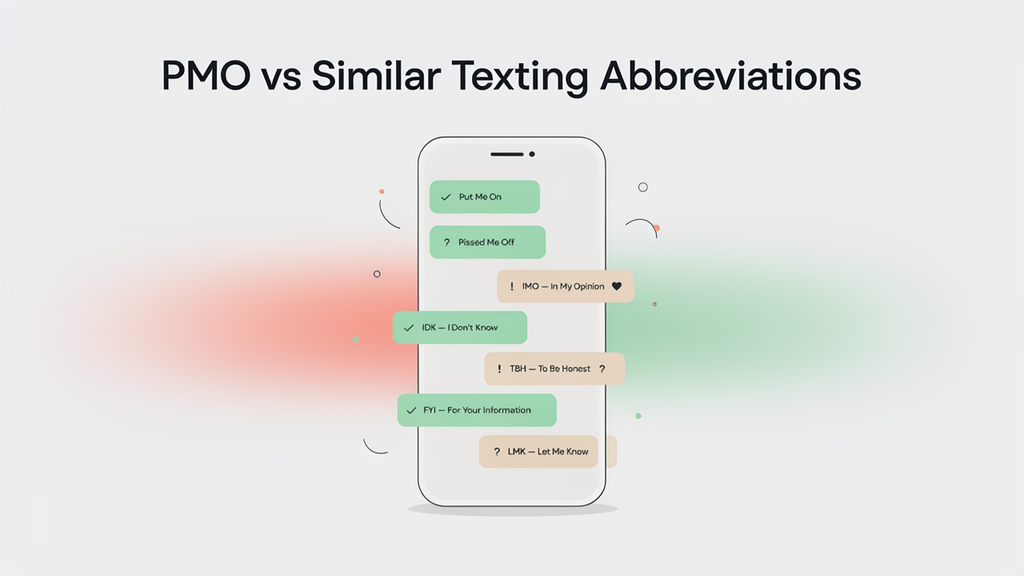
Understanding PMO becomes easier when you compare it with similar slang. Expressions such as “put me on,” “recommend,” “annoy me,” and other informal phrases can communicate related ideas, but they do not always carry the same tone or meaning.
- 💬 “PMO” as “put me on” is more casual than simply saying “recommend something.” It feels like an invitation to introduce someone to something interesting or unfamiliar.
- 🎵 “Put me on” and “recommend” can overlap, especially in music conversations. However, “put me on” can carry a stronger sense of discovering something through another person’s knowledge.
- 😤 “PMO” as “piss me off” is an expression of frustration. It is stronger and more informal than simply saying “annoy me.”
- 😠 Saying “That annoys me” is clearer and more neutral than “That PMO.” The slang version is more appropriate for casual conversations where informal language is expected.
- 👀 “PMO” can be ambiguous, while a phrase such as “recommend a song” is immediately clear. Specific wording is therefore better when communicating with unfamiliar audiences.
- 📱 Text abbreviations are designed for speed and convenience. PMO follows the same general pattern as many other internet expressions that shorten longer phrases.
- ✨ “Put me on” often sounds enthusiastic or curious. When used as a recommendation request, it can suggest that the speaker trusts the other person’s taste.
- 😅 “Piss me off” communicates stronger emotion than “bother me.” A person choosing PMO may be intentionally emphasizing their frustration in a casual way.
- 🎬 “PMO a show” is different from simply saying “What should I watch?” Both request recommendations, but PMO sounds more like informal internet slang.
- 🤝 Friends may understand PMO immediately because they share similar texting habits. New acquaintances may prefer clearer phrases until they become familiar with each other’s communication style.
- 🔎 When reading unfamiliar slang, compare the word with the entire sentence. This approach is more reliable than searching for a single fixed definition.
- 🗣️ Contextual interpretation is especially important for abbreviations with multiple meanings. PMO demonstrates why internet slang cannot always be translated word-for-word.
- 🎧 In music discussions, “put me on” may sound more natural than “recommend.” It emphasizes discovering something new through another person’s taste.
- 😒 In frustration-related conversations, “PMO” can sound sharper than “I don’t like that.” The emotional intensity should therefore be considered before using it.
- 📚 Clear language remains valuable even in casual communication. If there is a chance that PMO will confuse the reader, spelling out the intended phrase is a better choice.
- 🌐 Different generations may understand internet abbreviations differently. Someone who spends significant time online may recognize PMO immediately, while another person may not.
- 💡 Slang is not automatically better than standard language. PMO is useful when it matches the audience and tone, but clarity should remain the priority.
- 🎯 If you want to sound casual with friends, PMO may fit naturally. If you are writing professionally, a complete phrase is usually more appropriate.
- 🔥 The recommendation and frustration meanings have completely different emotional effects. Identifying which one is intended prevents awkward or potentially offensive interpretations.
- ✅ PMO is best understood as flexible internet shorthand rather than a formal English term. Its meaning becomes clear when you compare it with the surrounding conversation.
Common Questions and Mistakes About PMO
Because PMO has multiple meanings, people can easily misunderstand it. The most common mistake is assuming that every occurrence has the same definition. Good interpretation requires attention to the sentence, conversation topic, emotional tone, and relationship between the speakers.
- ❓ One common mistake is assuming PMO always means “piss me off.” In recommendation conversations, it can instead mean “put me on,” which has a completely different meaning.
- 🔎 Another mistake is interpreting the abbreviation without reading the surrounding message. A single three-letter abbreviation rarely provides enough information by itself.
- 💬 Some people assume PMO has one official slang definition. Internet language is flexible, and multiple meanings can exist simultaneously depending on community and context.
- 📱 Users may also assume that PMO has a completely different definition on every social platform. Usually, the same core slang meanings can travel between platforms.
- 😅 Misunderstanding PMO can create awkward replies. If someone asks for a recommendation and you interpret their message as anger, your response may make little sense.
- 😤 The opposite misunderstanding can also happen. If someone says “You PMO me” and you interpret it as “put me on,” you may completely miss their frustration.
- 🎵 Recommendation topics are a major clue. Music, movies, food, fashion, books, and games commonly suggest that PMO means “put me on.”
- 😠 Anger-related words provide a different clue. Complaints, arguments, annoyance, and frustration often indicate that PMO means “piss me off.”
- 🗣️ Another mistake is using PMO with everyone. Slang works best when the audience understands informal internet language and the relationship supports that tone.
- ⚠️ Using PMO in a professional email can make your message look unclear or overly casual. Standard wording is usually safer for workplace communication.
- 🌍 People from different countries or age groups may not recognize the abbreviation. When clarity matters, spelling out the phrase avoids unnecessary confusion.
- 💡 If you do not understand PMO, asking for clarification is perfectly reasonable. Slang is constantly evolving, so no one is expected to know every abbreviation.
- 👀 Looking at the previous message is often enough to identify the intended meaning. This simple habit can prevent many misunderstandings.
- 🎯 Do not assume that capitalization changes the meaning. “PMO,” “pmo,” and similar forms can be used casually, although individual users may have their own preferences.
- 📲 Do not assume that every person uses internet slang consistently. Someone may use PMO one way while another person uses it differently.
- 🤝 Relationship matters too. A close friend may use an abbreviation jokingly, while a stranger using the same words may sound more serious.
- ✨ Emojis can sometimes provide additional clues. A laughing emoji may suggest playful usage, while an angry emoji may reinforce frustration.
- 🔥 Another mistake is overusing slang simply to sound trendy. Natural communication is more effective when the language matches your normal style.
- 📚 If you are writing an educational article about PMO, explain both major meanings rather than presenting only one definition. This gives readers a more accurate understanding.
- ✅ The best approach is simple: identify the topic, read the complete sentence, consider the tone, and then choose the most logical PMO definition.
Final Guide to Understanding PMO
PMO is a flexible texting abbreviation with two especially important slang meanings: “put me on” and “piss me off.” The first is commonly connected with recommendations and discovery, while the second expresses annoyance or anger. Context is the key to telling them apart.
- 🌟 If PMO appears in a conversation about music, it probably means “put me on.” The speaker is likely asking you to recommend artists, songs, albums, or playlists.
- 🎬 If the topic is movies or television, PMO may similarly request recommendations. The speaker wants you to introduce them to something they have not watched before.
- 😤 If PMO appears during an argument, it is more likely to mean “piss me off.” The surrounding emotional language can make this interpretation clear.
- 🍔 Food conversations can strongly suggest the recommendation meaning. “PMO a good restaurant” naturally asks another person to introduce you to a place worth trying.
- 🎮 Gaming is another context where “put me on” works naturally. Players may ask friends or followers to recommend games, creators, or communities.
- 📱 On Snapchat, Instagram, and TikTok, PMO generally follows the same contextual rules. The platform itself does not automatically determine which meaning the user intended.
- 💬 In direct messages, previous conversation is often the strongest clue. Always read what came immediately before the abbreviation before deciding what it means.
- 👀 When someone sends only “PMO,” the message may be incomplete without context. Asking what they want can quickly clarify the intended request.
- ⚠️ Remember that the “piss me off” interpretation contains profanity. Although common in casual slang, it may not be suitable for every audience or situation.
- 🤝 The “put me on” interpretation is generally friendlier. It communicates curiosity, discovery, and a desire to learn about something through another person’s recommendation.
- ✨ PMO is not formal English. It is primarily an informal abbreviation suited to texting, social media, group chats, comments, and private conversations.
- 🌐 Slang changes over time, especially online. Meanings can become more popular, less popular, or more specialized within particular communities.
- 🔎 When searching for PMO’s definition, remember that multiple meanings can appear in dictionaries, slang sites, forums, and social media discussions. Context remains essential.
- 🎵 “PMO some music” and “That PMO” demonstrate the two major interpretations clearly. The first asks for recommendations, while the second expresses frustration.
- 😅 Friends may use PMO playfully, so emotional tone matters. A message that looks angry on paper may actually be an inside joke between people who know each other well.
- 🗣️ If you are unsure, ask instead of guessing. Clarifying the intended meaning is usually easier than responding to the wrong interpretation.
- 💡 When using PMO yourself, add enough context to make your meaning obvious. “PMO some horror movies” is clearer than sending only “PMO.”
- 📚 Understanding slang is useful because abbreviations appear frequently in modern online communication. Learning context-based meanings can make texts and social media posts easier to understand.
- 🎯 The best way to remember PMO is to associate it with two major ideas: discovery through “put me on” and frustration through “piss me off.”
- ✅ Ultimately, PMO is simple once you know how to read the context. Check the topic, tone, surrounding words, and relationship before choosing the intended meaning.
Frequently Asked Questions
What does PMO mean in text?
PMO commonly means “put me on” or “piss me off” in informal texting. “Put me on” is usually used when requesting recommendations, while “piss me off” expresses irritation or anger. The surrounding context determines which meaning applies.
What does PMO mean in texting slang?
In texting slang, PMO has multiple meanings, with “put me on” and “piss me off” being two important interpretations. The recommendation meaning is common when discussing music, movies, games, fashion, food, or other interests.
What does PMO mean on social media?
On social media, PMO can mean “put me on” when someone asks for recommendations. It can also mean “piss me off” when someone is expressing frustration. The post, comment, and surrounding conversation provide useful clues.
What does PMO mean on Snapchat?
On Snapchat, PMO can be used to mean “put me on,” especially when someone wants recommendations or information. It can also mean “piss me off” when used in a complaint or frustrated message.
What does PMO mean on Instagram?
On Instagram, PMO commonly appears in casual comments and direct messages. Depending on context, it may ask someone to recommend something or express annoyance about a person, post, or situation.
What does PMO mean on TikTok?
On TikTok, PMO may mean “put me on” when users request recommendations for creators, music, trends, or other content. In negative reactions, it may instead mean “piss me off.”
Is PMO a bad word?
PMO itself is an abbreviation, but one of its common meanings, “piss me off,” contains profanity. Because of that, it can sound rude or inappropriate in formal situations. The “put me on” meaning is generally harmless and informal.
How do I know which PMO meaning someone intends?
Look at the surrounding conversation. Recommendations about music, movies, food, games, or fashion usually suggest “put me on,” while complaints, arguments, and frustration often suggest “piss me off.”
How do you use PMO in a sentence?
You can use PMO casually in sentences such as “PMO some good songs” when asking for recommendations. For the frustration meaning, someone might write “That really PMO me.” Always consider whether the audience understands the slang.
What should I reply when someone says PMO?
If they are asking for recommendations, provide a suggestion or ask what they want to discover. If PMO appears in an angry message, respond to the frustration. If the meaning is unclear, simply ask what they mean.
Conclusion
PMO is a useful example of how modern internet language can make one short abbreviation carry different meanings. The most important interpretations are “put me on,” commonly used for recommendations, and “piss me off,” commonly used to express frustration. Reading the full conversation makes the intended meaning much easier to identify.
Understanding PMO meaning in text can help you interpret messages, comments, and social media conversations without unnecessary confusion. Whether someone wants a recommendation or is expressing annoyance, context provides the strongest clue. If you are using PMO yourself, keep the audience and tone in mind so your message remains clear.
Read More 50 Brilliant Synonyms for Gold to Enrich Your Vocabulary 2026