
Understanding the once in a blue moon idiom meaning is useful for anyone learning natural English, especially when reading conversations, stories, social media posts, or everyday expressions. This popular idiom describes something that happens very rarely, rather than something that occurs regularly or frequently. 🌙
The phrase is common in casual and conversational English because it gives a colorful way to describe unusual events. Learning the once in a blue moon idiom meaning also helps English learners understand how native speakers use figurative language naturally in sentences and real-life situations.
Once in a Blue Moon Idiom Meaning and Definition
The once in a blue moon idiom meaning refers to something that happens very rarely or only on unusual occasions. It does not literally mean that an event happens during a particular moon. Instead, the phrase emphasizes that an occurrence is uncommon, infrequent, or separated by long periods of time.
🌙 Seeing my childhood friend happens once in a blue moon because we now live in different cities. We still care about each other, but our busy lives make regular meetings difficult. 💙
✨ I eat dessert once in a blue moon when I am trying to maintain healthy eating habits. A special piece of cake occasionally makes the treat feel even more enjoyable. 🍰
🌟 Our entire family manages to have dinner together once in a blue moon. Everyone has different schedules, so those rare evenings become especially meaningful. ❤️
☕ My brother visits our hometown once in a blue moon because his job keeps him traveling. Whenever he returns, everyone tries to spend quality time together.
📚 I read printed newspapers once in a blue moon because I usually get my news online. However, holding a physical newspaper sometimes brings back pleasant memories. 📰
🎉 We organize a large family celebration once in a blue moon. Most gatherings are small, but special occasions bring relatives together from different places.
🚗 My father drives long distances once in a blue moon because he prefers traveling by train. When he does take the car, he carefully plans the entire journey.
🌧️ It rains heavily in our area once in a blue moon. Because heavy rain is unusual there, people often become excited when a strong storm finally arrives.
🎬 I watch an old movie once in a blue moon instead of choosing something new. Nostalgic films feel special because I associate them with earlier stages of my life.
🏡 My cousins stay overnight at our house once in a blue moon. Their visits are rare, but we usually spend the evening talking, laughing, and remembering childhood stories.
🎸 He performs at local events once in a blue moon. Although music is his hobby, his professional responsibilities leave little time for public performances.
💌 I receive a handwritten letter once in a blue moon nowadays. Most communication happens through messaging apps, which makes handwritten notes feel surprisingly personal.
🌿 We travel to the countryside once in a blue moon to escape our normal routine. Those quiet weekends give everyone a chance to relax and reconnect.
🥳 My friends surprise me once in a blue moon, but their unexpected gestures always make me smile. Rare surprises often feel more memorable than frequent ones.
🍕 I order fast food once in a blue moon because I usually cook at home. Having it occasionally makes the experience feel like a small reward.
📸 My family takes professional photographs once in a blue moon. We normally use our phones, so formal pictures feel especially important during major celebrations.
🌌 I stay awake until midnight once in a blue moon. Most nights I prefer sleeping early, but sometimes a special event keeps me awake.
🎁 She buys expensive gifts once in a blue moon because she prefers thoughtful, simple presents. When she chooses something luxurious, everyone knows the occasion is important.
🏖️ We visit that beach once in a blue moon because it is several hours away. The long journey makes every visit feel like a small adventure.
😊 My quiet neighbor joins community events once in a blue moon. Although he rarely attends, his presence always makes the occasion more enjoyable.
What Does Once in a Blue Moon Mean in Everyday English?
In everyday English, once in a blue moon means “very rarely.” People use it when an action or event happens occasionally but not often enough to be considered normal or regular. The expression is informal and works particularly well in conversations and personal examples.
🗣️ “I go shopping once in a blue moon” means shopping is something the speaker does very rarely. The phrase makes the statement sound more natural and expressive than simply saying “rarely.”
🌙 If someone says they visit restaurants once in a blue moon, they mean dining out is unusual for them. They probably eat at home most of the time. 🍽️
🎮 “I play video games once in a blue moon” suggests gaming is not part of the speaker’s regular routine. They might play only when they have unexpected free time.
☕ “She drinks coffee once in a blue moon” means coffee is an uncommon choice for her. Perhaps she normally prefers tea, water, or another beverage.
✈️ “We travel abroad once in a blue moon” describes international travel as a rare event. It may happen only after saving money, arranging schedules, or finding a special opportunity.
📞 “He calls me once in a blue moon” means his calls are infrequent. The statement can sound neutral, humorous, or slightly disappointed depending on the surrounding conversation.
🎵 “My parents listen to modern music once in a blue moon” means they rarely choose contemporary songs. Their normal listening habits probably involve older or more familiar music.
🍦 “I eat ice cream once in a blue moon” suggests that ice cream is an occasional treat. The speaker may enjoy it but does not have it as part of a regular diet.
🛍️ “She buys new clothes once in a blue moon” indicates that shopping for clothing happens very infrequently. She may prefer using what she already owns rather than constantly buying new items.
🌳 “We visit the park once in a blue moon” tells listeners that park visits are unusual. It does not mean they visit exactly once during a particular lunar event.
📖 “He reads fiction once in a blue moon” means fictional books are not a regular part of his reading routine. He may prefer biographies, news, or educational material instead.
🧳 “My uncle travels for pleasure once in a blue moon” emphasizes how uncommon his vacations are. Work or family responsibilities may prevent him from traveling frequently.
🎂 “They host parties once in a blue moon” suggests that parties are rare in their home. When they do organize one, guests may consider it a special occasion.
🧹 “I clean the garage once in a blue moon” humorously suggests that garage cleaning is neglected. The phrase can make a simple admission sound playful rather than overly serious.
📺 “She watches television once in a blue moon” means television is rarely part of her entertainment routine. She may prefer reading, exercising, socializing, or spending time outdoors.
🚲 “I ride my bicycle once in a blue moon” tells someone that cycling happens only occasionally. The speaker may own a bicycle without using it very often.
🥘 “We cook this traditional dish once in a blue moon” means the recipe is prepared only on rare occasions. Special ingredients or preparation time may explain why.
🎤 “He sings karaoke once in a blue moon” suggests that public singing is unusual for him. If he suddenly takes the microphone, friends may be pleasantly surprised.
🌄 “I wake up early to watch the sunrise once in a blue moon” means sunrise watching is a rare activity. Most mornings, the speaker probably sleeps through the early hours.
❤️ “We meet our old classmates once in a blue moon” expresses the rarity of those reunions. Despite the long gaps, meeting again can bring back strong memories.
Once in a Blue Moon Examples in Sentences
Examples make an idiom easier to understand because they show how it behaves in natural sentences. Once in a blue moon can describe habits, visits, activities, experiences, and events. It generally appears after the subject or near the end of a sentence.
🌙 I visit the museum once in a blue moon because it is far from my home. Still, every visit teaches me something interesting about history and culture.
🍳 My family eats breakfast at a restaurant once in a blue moon. We usually prepare breakfast at home because it is faster and more convenient.
📱 She posts pictures online once in a blue moon. Her friends often become curious whenever a new photograph suddenly appears on her profile.
🎻 My cousin plays the violin once in a blue moon now. He used to practice regularly, but university responsibilities have changed his routine.
🌲 We go camping once in a blue moon because everyone has demanding schedules. When we finally manage a trip, we try to disconnect from everyday distractions.
🎞️ He watches black-and-white movies once in a blue moon. Although they are not his usual choice, he appreciates their atmosphere and storytelling style.
🍪 I bake cookies once in a blue moon, usually when relatives visit. My kitchen becomes busy, but everyone enjoys the fresh smell and homemade taste.
🚌 My sister takes the bus once in a blue moon because she normally walks. She uses public transportation mainly when the weather makes walking inconvenient.
🎨 They visit art galleries once in a blue moon. Their interests lie elsewhere, but they occasionally enjoy exploring exhibitions with friends.
🌊 I swim in the ocean once in a blue moon because I live far from the coast. Each visit feels refreshing and different from my normal routine.
🕯️ We light candles at dinner once in a blue moon. It is a simple way to make an ordinary evening feel calmer and more special.
🎤 My father sings at family gatherings once in a blue moon. Everyone laughs warmly because he usually prefers listening to other people perform.
📷 I use an old camera once in a blue moon. Most of my photographs come from my phone, but the camera creates a different feeling.
🥾 She goes hiking once in a blue moon because she prefers indoor activities. However, she always enjoys the scenery when friends convince her to join.
🍵 My grandparents visit our home once in a blue moon. Their visits are uncommon, so we usually prepare their favorite meals beforehand.
🧁 I make homemade desserts once in a blue moon. When I finally have enough free time, I enjoy experimenting with different recipes.
🎧 He listens to classical music once in a blue moon. His everyday playlist is mostly modern music, although he occasionally enjoys older compositions.
🌃 We explore the city at night once in a blue moon. Most evenings are spent at home, making nighttime walks feel unusually exciting.
📦 She reorganizes her storage room once in a blue moon. The task takes several hours, so she tends to postpone it until absolutely necessary.
🤝 Our former coworkers meet once in a blue moon. Everyone has moved into different careers, but occasional reunions keep the old friendship alive.
How to Use Once in a Blue Moon Correctly

Correct usage is straightforward because the phrase normally describes an action that happens very infrequently. It can be placed at the beginning or end of a sentence, and it usually works with verbs describing repeated activities or occasional events.
✍️ “I visit them once in a blue moon” is a natural sentence because the expression describes an infrequent repeated action. The structure is simple and commonly heard in conversation.
🌙 “Once in a blue moon, I visit them” is also correct. Placing the idiom first gives extra emphasis to how unusual the visit is.
🗣️ In casual conversation, you might say, “I cook that recipe once in a blue moon.” The phrase sounds natural when discussing habits that occur only occasionally.
📚 In writing, the idiom can add a conversational tone. “She writes poetry once in a blue moon” sounds more colorful than simply saying she writes poetry rarely.
🏠 The expression can describe household activities naturally. For example, “We repaint the house once in a blue moon” clearly communicates that repainting is uncommon.
🎉 It can describe special experiences as well as habits. “I attend concerts once in a blue moon” communicates that concerts are unusual events in the speaker’s life.
⏳ Avoid interpreting the phrase as a precise schedule. It does not normally tell readers exactly how many months or years pass between two events.
💬 The idiom works well in friendly conversations because it is informal. In highly technical writing, a direct word such as “infrequently” may be more precise.
🌿 “He visits the countryside once in a blue moon” is grammatically natural. The expression modifies the frequency of his visits rather than describing the countryside itself.
🎓 English learners can practice the phrase by creating sentences about personal routines. Choose an activity you rarely do and place “once in a blue moon” with it.
🍕 “We order pizza once in a blue moon” works because ordering pizza can happen repeatedly over time. The idiom simply indicates that those occasions are unusual.
📞 “She calls once in a blue moon” is another natural example. The subject and verb remain ordinary while the idiom communicates the frequency.
🌧️ The phrase can describe uncommon weather experiences in informal language. “It snows here once in a blue moon” suggests snowfall is extremely unusual in that location.
🚲 You can use the expression with hobbies that have become occasional. “I ride my bike once in a blue moon” clearly contrasts with riding regularly.
💡 When teaching the idiom, pair it with words such as “rarely” and “infrequently.” Comparing them helps learners understand that the idiom expresses low frequency.
📝 Avoid adding unnecessary words inside the idiom. The standard expression is “once in a blue moon,” rather than changing its internal wording.
😊 The expression can sound humorous when used for everyday habits. Saying you clean your room once in a blue moon may intentionally exaggerate how rarely you do it.
🌍 The idiom is especially useful for conversational English because native speakers often use figurative expressions. Learning it can make spoken English sound more natural and expressive.
🎯 Use the phrase when rarity is the main idea. If something happens every week or month, a more specific frequency expression will usually communicate the meaning better.
✨ Remember that context determines the exact feeling. “Once in a blue moon” can sound neutral, humorous, nostalgic, or slightly critical depending on the sentence.
Once in a Blue Moon vs. Rarely, Seldom, and Occasionally
Several English words express low frequency, but their strength and style can differ. Once in a blue moon is especially colorful and conversational. Words such as “rarely,” “seldom,” and “occasionally” are more direct and may fit formal writing better.
🌙 “Rarely” and “once in a blue moon” both describe uncommon events. However, the idiom is more vivid and conversational, while “rarely” is shorter and more direct.
📖 “Seldom” also means not often, but it can sound somewhat formal or literary. The blue-moon expression generally feels warmer and more conversational.
🔄 “Occasionally” usually suggests something happens from time to time. It may describe a more frequent activity than something described as happening once in a blue moon.
🗣️ In casual speech, “I travel once in a blue moon” can sound more expressive than “I rarely travel.” Both communicate low frequency, but the idiom adds personality.
✍️ In a formal report, “rarely” may be clearer than the idiom. Formal writing often benefits from direct language when exact meaning matters.
🎈 The idiom adds imagery to ordinary statements. Saying someone visits “once in a blue moon” creates a more memorable impression than simply saying they visit rarely.
⏰ “Occasionally” does not necessarily mean extremely rarely. If an activity happens several times a year, “occasionally” may describe it more naturally.
🌿 “Seldom” and “rarely” are frequency adverbs, while “once in a blue moon” is an idiomatic expression. Their grammatical roles are slightly different even when meanings overlap.
💬 Friends may naturally use the idiom when discussing habits. “I go dancing once in a blue moon” sounds relaxed and personal in everyday conversation.
🎓 English learners should understand all these expressions because real conversations contain different levels of formality. Knowing their differences helps you choose language that fits the situation.
📚 “Infrequently” is another alternative that sounds more formal. It is useful in professional or academic contexts where colorful idioms may be unnecessary.
😊 “Once in a blue moon” can make a statement feel playful. “I eat spicy food once in a blue moon” sounds less clinical than “I infrequently consume spicy food.”
🌌 The phrase emphasizes unusual rarity without providing an exact number. That flexibility makes it useful when speakers do not want to give precise statistics.
🧠 Remembering synonyms together can strengthen vocabulary. Pair “once in a blue moon” with “rarely,” “seldom,” “infrequently,” and “occasionally” during English practice.
🏡 “We visit relatives occasionally” and “we visit relatives once in a blue moon” may describe different frequencies. The second statement generally creates a stronger impression of rarity.
📱 Social media captions often benefit from colorful expressions. A phrase such as “I post once in a blue moon” can sound casual and relatable.
🎯 Choose “rarely” when you want directness and “once in a blue moon” when you want conversational flavor. Both can be correct without carrying exactly the same tone.
🌟 The idiom is memorable because it connects rarity with unusual imagery. That makes it particularly useful for vocabulary learners who remember expressions through pictures.
🗨️ In everyday dialogue, context often makes the intended frequency clear. Listeners usually understand that the speaker means “very rarely” rather than an exact calendar interval.
❤️ Good vocabulary involves more than knowing definitions. Understanding tone, context, and frequency helps you use similar expressions naturally instead of treating them as interchangeable in every situation.
Once in a Blue Moon Meaning in Conversations and Texting

In conversations and texting, once in a blue moon is usually friendly, informal, and easy to understand. People may use it when talking about habits, visits, hobbies, social activities, or anything that occurs much less frequently than normal.
📱 “I see him once in a blue moon” is a natural text-message statement. It tells the reader that meetings are rare without requiring a precise explanation of the schedule.
💬 A friend might text, “We go out once in a blue moon 😂.” The emoji can make the statement playful, especially when both people know they are usually too busy.
🌙 Someone might say, “I post here once in a blue moon.” This communicates that their social media activity is irregular and infrequent.
☕ “We grab coffee once in a blue moon” sounds natural between friends. It suggests that busy routines prevent them from meeting regularly despite maintaining a friendly relationship.
🎮 A gamer might write, “I play this game once in a blue moon.” The message tells others that gaming is now an occasional activity rather than a regular hobby.
❤️ “I talk to my old classmates once in a blue moon” can carry a nostalgic feeling. The phrase highlights both the rarity of communication and the continuing connection.
🥳 “We have parties once in a blue moon!” can express excitement about an unusual event. The exclamation mark makes the statement sound more energetic and celebratory.
📞 “He calls once in a blue moon” may sound slightly disappointed depending on the conversation. The idiom itself is neutral, but surrounding words can create an emotional tone.
🌧️ A person might text, “It rains like this once in a blue moon.” Here, the idiom emphasizes that the current weather is unusually uncommon.
🍕 “I eat pizza once in a blue moon” can be used when explaining an unusual food choice. It shows that the speaker enjoys pizza occasionally rather than regularly.
🎵 “I listen to that artist once in a blue moon” tells a friend that the artist is not part of the speaker’s usual playlist. It does not necessarily mean the speaker dislikes the music.
🚗 “I drive downtown once in a blue moon” can explain why someone is unfamiliar with parking or traffic there. The phrase provides a quick explanation without detailed background.
📚 “I read novels once in a blue moon these days” suggests that the speaker used to read more frequently. The expression can naturally fit conversations about changing routines.
🌍 “I travel internationally once in a blue moon” communicates that overseas trips are unusual. Friends may then ask about the speaker’s most recent destination.
🎁 “She sends gifts once in a blue moon, but they are always thoughtful.” This shows that rarity does not necessarily mean lack of care or affection.
🌌 “I watch the stars once in a blue moon” creates a peaceful, reflective tone. The phrase can work particularly well when discussing hobbies that require special circumstances.
🏃 “I exercise outdoors once in a blue moon” means outdoor workouts are uncommon. The person may still exercise regularly through indoor activities.
💌 “We exchange letters once in a blue moon” sounds nostalgic and personal. The expression emphasizes how unusual handwritten communication has become.
😄 “My brother cooks once in a blue moon!” can be humorous when cooking is normally someone else’s responsibility. The expression helps make the message playful.
✨ In texting, the idiom is usually understood without explanation. Its familiar meaning makes it useful for short messages where the writer wants to express rarity naturally.
Once in a Blue Moon Idiom Meaning for English Learners
For English learners, this idiom is valuable because it demonstrates how English often communicates ideas indirectly. Instead of saying only “very rarely,” speakers can use a memorable expression to make everyday language more colorful and natural.
🎓 English learners should memorize the complete phrase “once in a blue moon.” Changing individual words can make the expression sound unnatural or alter its established form.
🌙 The easiest definition to remember is “very rarely.” Whenever something happens only occasionally after long gaps, this idiom may be appropriate.
📚 Create personal examples to practice the phrase. For instance, choose an activity you rarely do and describe it using “once in a blue moon.”
🗣️ Say the expression aloud several times while practicing. Hearing its natural rhythm can make it easier to recognize when native speakers use it.
✍️ Write five different sentences using the idiom. Change the subjects and activities so you learn how flexible the expression can be.
🎧 Listen for the phrase in English conversations, shows, podcasts, or videos. Real examples can help you understand tone and pronunciation more effectively.
💡 Do not translate every word literally when learning idioms. The phrase has a figurative meaning, so understanding the complete expression is more useful than analyzing each word separately.
🌌 Picture an unusual moon-related event when remembering the phrase. Visual associations can help connect the unusual image with the idea of rarity.
😊 Practice using the idiom in relaxed conversations. It is particularly suitable for discussing hobbies, routines, visits, food, travel, and social activities.
📝 Compare it with “rarely” and “seldom.” This helps learners understand that several expressions can communicate similar ideas while having different tones.
🗨️ Use natural sentence patterns such as “I ___ once in a blue moon.” This simple structure allows beginners to practice without worrying about complicated grammar.
🎯 Pay attention to frequency. The phrase suggests something is quite uncommon, so using it for an activity that happens every day would not make sense.
🌿 Remember that the expression does not provide an exact measurement. It communicates an impression of rarity rather than a precise number of occurrences.
📖 Reading idioms in context is often easier than studying isolated definitions. Examples reveal how speakers naturally position the phrase within sentences.
🧠 Make vocabulary cards with the phrase on one side and “very rarely” on the other. Add a personal example to make the meaning easier to remember.
📱 Practice texting with the expression. Short messages such as “I watch movies once in a blue moon” provide simple, realistic language practice.
🌟 Learn the phrase as one unit rather than translating each word independently. Idioms often become easier once their overall meaning is memorized.
🤝 Use it when speaking with language partners. Asking them to correct your examples can help you develop a more natural understanding of frequency expressions.
🔄 Replace “rarely” with “once in a blue moon” in practice sentences. This exercise helps you recognize situations where the idiom fits naturally.
❤️ Most importantly, focus on meaning and context rather than memorization alone. Understanding when the phrase feels natural will make your English more fluent and expressive.
Common Mistakes When Using Once in a Blue Moon
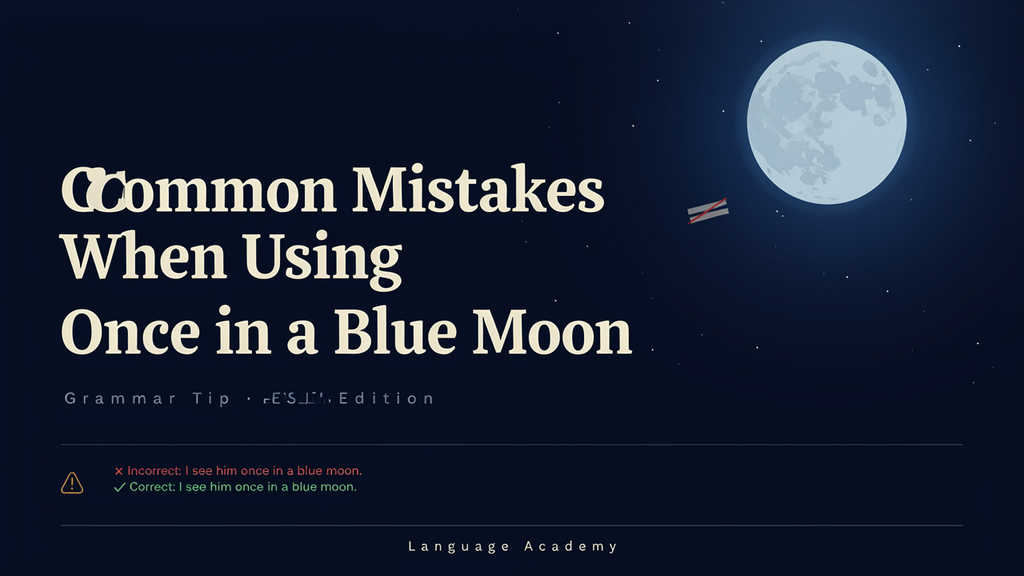
Although the idiom is simple, learners sometimes misuse it by changing its wording, treating it literally, or applying it to frequent activities. Understanding these common mistakes makes the expression easier to use accurately in speech and writing.
❌ Saying “once on a blue moon” is incorrect in standard usage. The established expression is “once in a blue moon,” so learners should memorize the complete phrase.
🌙 Do not assume the phrase means something happens exactly once during a blue-colored moon. It is an idiom describing rarity rather than a literal lunar schedule.
🚫 Avoid using the expression for daily activities. Saying “I brush my teeth once in a blue moon” would normally create a humorous or intentionally exaggerated statement.
✍️ Do not randomly replace “blue” with another color. The established idiom has a fixed form, and changing it removes the familiar expression.
🗣️ Be careful with formal contexts. The idiom is understandable, but “rarely” or “infrequently” may be more appropriate for technical or highly formal writing.
🎯 Do not treat “once in a blue moon” as an exact frequency measurement. The phrase communicates general rarity rather than a scientifically measurable interval.
📚 Avoid explaining the phrase word by word to someone who asks for its meaning. The important point is the complete figurative meaning: something happens very rarely.
🔄 Do not confuse “once in a blue moon” with “once a month.” The first indicates uncommon frequency, while the second gives a regular calendar-based frequency.
💬 Remember that context matters. “He visits once in a blue moon” could sound humorous or slightly critical depending on what the conversation is about.
🌿 Avoid adding unnecessary modifiers that change the natural rhythm. The basic phrase is already strong enough to communicate rarity clearly.
📱 In texting, do not assume every reader will interpret the phrase literally. Most fluent English users recognize it as an idiom, especially in casual communication.
🧠 Learners sometimes believe “once in a blue moon” means something impossible. It does not mean impossible; it means that something happens very rarely.
⏳ Do not use the phrase when you need exact data. If an activity happens twice each year, giving the actual frequency may be clearer in a factual report.
🎓 Students should avoid replacing the phrase with literal translations from their first language. Learning the English expression directly usually produces more natural results.
😊 Using the idiom humorously is possible, but tone should be considered. Exaggerating rarity can be funny among friends but confusing in serious contexts.
📖 Do not assume every synonym has exactly the same strength. “Occasionally” can imply more frequent activity than “once in a blue moon.”
🌟 Avoid overusing the idiom in the same paragraph. Even a correct expression can sound repetitive when repeated unnecessarily.
📝 Check whether the activity can logically happen repeatedly. The phrase generally works best with actions or events that can occur more than once.
🗨️ Pay attention to sentence placement. “Once in a blue moon, I visit them” and “I visit them once in a blue moon” are both natural.
✅ The safest approach is simple: use the established phrase when you want to emphasize that something happens very rarely. Keep the wording intact and let context provide the exact nuance.
Origin and Background of the Blue Moon Expression
The phrase has an interesting history because blue moon has been used in English to describe something unusual or rare. Over time, “once in a blue moon” developed into a familiar idiom for events that happen infrequently, while its modern figurative use does not require a literal blue moon.
🌙 The expression connects rarity with the unusual idea of a blue moon. This imagery helped make the phrase memorable and eventually useful for everyday descriptions of uncommon events.
📜 Historical explanations of “blue moon” have developed over time, and different accounts discuss different uses of the phrase. The idiom’s modern meaning, however, is clearly associated with rarity.
🌌 A literal blue-looking moon can sometimes occur because particles in the atmosphere affect how moonlight appears. Such atmospheric effects are uncommon, contributing to the phrase’s association with unusual events.
📚 Language changes gradually through repeated everyday use. Expressions can move from literal descriptions toward figurative meanings as speakers adopt them in different contexts.
🗣️ “Once in a blue moon” eventually became established as a way to say that something happens very rarely. Today, most speakers use it without thinking about lunar science.
🌕 The moon imagery gives the expression a stronger visual quality than a simple word such as “rarely.” This is one reason idioms can remain popular across generations.
⏳ The phrase illustrates how cultural language can preserve older imagery. Modern speakers may use the expression even when they know little about the historical background of “blue moon.”
✨ Idioms often survive because they are memorable. The unusual combination of “once,” “blue,” and “moon” creates an image that is easy to recognize and remember.
🌍 English has many expressions connected with nature, weather, animals, and the sky. “Once in a blue moon” is a clear example of natural imagery becoming part of ordinary vocabulary.
📖 Historical language research can contain competing explanations for particular idioms. Readers should distinguish documented linguistic evidence from simplified stories repeated online.
🔭 Modern astronomy and everyday idiomatic language are separate contexts. A scientific discussion of lunar events should not automatically be interpreted through the figurative meaning of the idiom.
🌙 The phrase is now familiar internationally among English speakers and learners. Its figurative meaning is generally understood even when the speaker has never seen an actual blue-looking moon.
🎓 Learning an idiom’s background can make vocabulary more memorable. The unusual moon image gives learners a useful mental connection to the concept of rarity.
📝 Writers often use expressions like this because they make simple ideas more vivid. Instead of writing only “rarely,” they can choose an image that adds personality to the sentence.
💬 The phrase works especially well in storytelling. A character who does something “once in a blue moon” immediately appears to do that activity only occasionally.
🌌 The sky-related imagery also gives the phrase a gentle, poetic quality. That makes it suitable for casual writing, conversations, captions, and personal reflections.
🔎 When studying idiom origins, it is wise to compare reputable historical sources rather than accepting one simplified explanation. Language histories can be more complicated than popular summaries suggest.
📚 The modern meaning remains more important for everyday learners than memorizing every historical detail. Knowing that it means “very rarely” allows accurate practical use.
🌟 The expression demonstrates how language turns unusual images into useful concepts. Speakers no longer need to explain the moon imagery for the idiom to communicate rarity.
❤️ Today, “once in a blue moon” remains a familiar English expression. Its combination of simple vocabulary and figurative meaning makes it a useful phrase for learners at many levels.
Once in a Blue Moon Idiom Meaning in Modern English
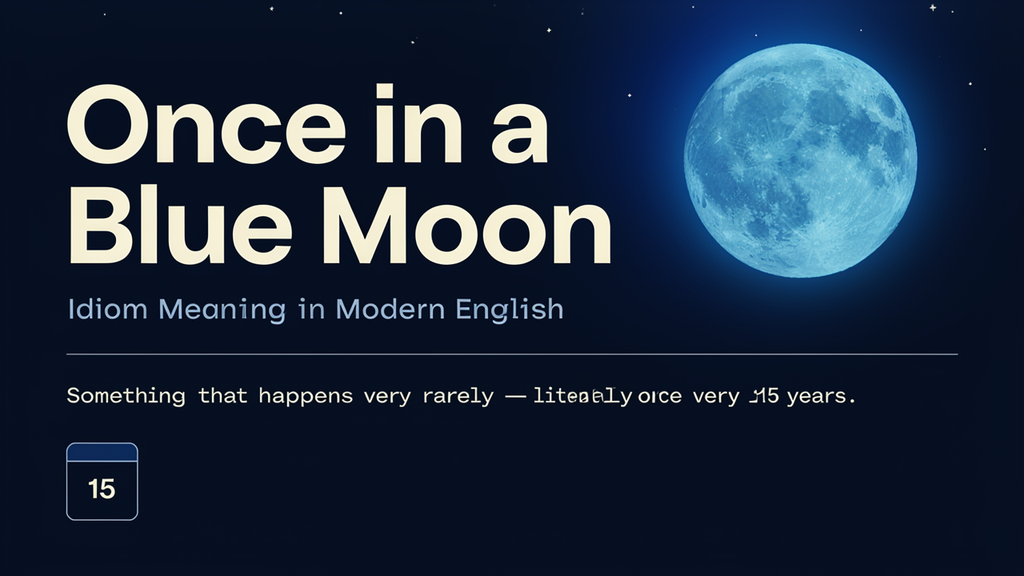
Modern English continues to use once in a blue moon in conversations, articles, social media, storytelling, and everyday descriptions. Its meaning remains stable: something occurs very rarely. The expression is informal, recognizable, and useful when a speaker wants more personality than a plain frequency word provides.
🌙 In modern conversations, “once in a blue moon” remains an easy way to describe rare habits. People use it naturally when discussing food, hobbies, travel, family, entertainment, and work.
📱 Social media users may write the phrase when explaining infrequent posting. “I post here once in a blue moon” immediately tells followers that updates will not appear regularly.
💬 In workplace conversations, the idiom can describe uncommon tasks. For example, someone might say they attend a particular meeting only once in a blue moon.
📝 Bloggers can use the expression to create a friendly, conversational tone. It can make personal experiences sound less formal and more relatable to readers.
🎓 English teachers can introduce the idiom when teaching frequency expressions. Comparing it with “always,” “often,” “sometimes,” and “rarely” helps students understand different levels of frequency.
🌟 In storytelling, the phrase can quickly establish that an event is unusual. This saves words while giving the sentence a familiar figurative quality.
🏡 Families might use it to describe traditions that happen only occasionally. The expression can therefore appear naturally in conversations about reunions, celebrations, trips, and special meals.
🎨 Creative writers sometimes prefer idioms because they add personality. “Once in a blue moon” can make a character’s dialogue sound relaxed and familiar.
📚 In educational content, the phrase provides a useful example of figurative language. Learners can see how the literal words create an idea that differs from their dictionary meanings.
🌌 The expression is also useful in reflective writing. Someone discussing an old friendship, childhood place, or forgotten hobby may use it to describe rare encounters with the past.
☕ Modern speakers can combine the idiom with ordinary routines. Drinking coffee, meeting friends, watching films, cooking, exercising, and traveling can all be described with the phrase.
😊 Its tone is usually casual rather than highly formal. That makes it particularly comfortable in personal conversations, messages, captions, and informal articles.
🔄 The idiom can describe activities that used to be common but are now rare. This makes it useful when talking about changing lifestyles, responsibilities, and personal priorities.
🎯 Modern usage generally does not require knowledge of the phrase’s historical background. Most speakers understand the intended meaning simply from context.
🌿 The expression can make language feel warmer because it avoids overly technical frequency terms. A personal sentence often sounds more conversational with an idiom.
📖 Learners encountering the phrase in books or online discussions should recognize it as a frequency expression. This prevents confusion when the surrounding topic has nothing to do with astronomy.
💡 The phrase is flexible enough for positive, neutral, or mildly negative situations. Its emotional effect depends mostly on the subject and context surrounding the statement.
🗣️ Pronunciation practice can help learners use the phrase confidently. Listening to natural speakers can show where stress falls and how the words flow together.
✨ Despite its age, the expression continues to feel understandable in modern English. Its meaning is simple, memorable, and relevant to everyday situations.
❤️ For anyone improving English vocabulary, learning “once in a blue moon” provides more than one new phrase. It also demonstrates how idiomatic English can express ordinary ideas creatively and naturally.
FAQs
What does once in a blue moon mean?
“Once in a blue moon” means something happens very rarely or infrequently. It is an idiomatic expression rather than a literal reference to a moon.
Is once in a blue moon an idiom?
Yes. It is a common English idiom used to describe something that happens very rarely.
Is once in a blue moon formal or informal?
The expression is generally informal and conversational. In formal or technical writing, “rarely” or “infrequently” may be more suitable.
Can once in a blue moon mean occasionally?
It can overlap with “occasionally,” but it generally suggests greater rarity. “Occasionally” can describe something that happens from time to time without necessarily being extremely uncommon.
Can I use once in a blue moon in a sentence?
Yes. For example: “I visit that restaurant once in a blue moon.” This means the speaker visits the restaurant very rarely.
Does once in a blue moon mean exactly once?
No. The phrase does not provide an exact number or schedule. It simply emphasizes that something happens very rarely.
What is another word for once in a blue moon?
Common alternatives include “rarely,” “seldom,” “infrequently,” and sometimes “occasionally,” depending on the intended frequency and context.
Can once in a blue moon be used in texting?
Yes. It is commonly understandable in casual messages and can make texting sound natural and conversational.
Is there a literal blue moon?
The term “blue moon” has literal astronomical and historical uses, but the idiom “once in a blue moon” is figurative and means something happens very rarely.
Why is the phrase once in a blue moon used?
The expression uses unusual moon imagery to represent rarity. Over time, it became established in English as a familiar way to say that something happens very infrequently.
Conclusion
The once in a blue moon idiom meaning is simple: something happens very rarely or infrequently. It is a useful expression for everyday English because it adds personality and imagery to statements about uncommon habits, visits, experiences, and events.
Once you understand the once in a blue moon idiom meaning, you can use it confidently in conversations, texts, captions, stories, and informal writing. Remember that it is figurative, does not indicate an exact schedule, and generally works best when you want to emphasize that something happens only on rare occasions.
Read More Biting Finger Emoji Meaning: What It Signals 2026