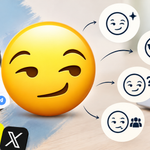
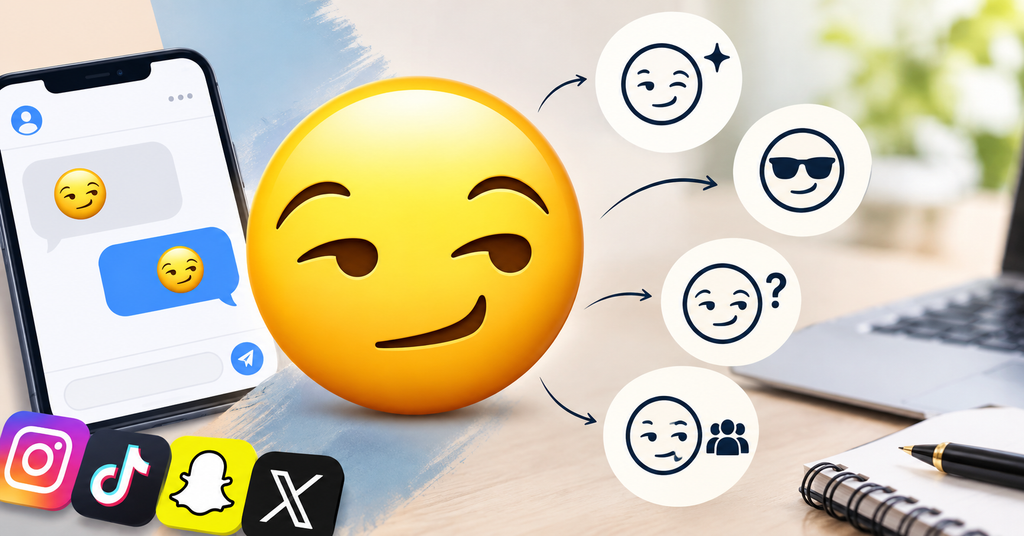
The Smirking Face Emoji Meaning can change depending on the words around it, the relationship between two people, and the situation in which it appears. The 😏 emoji often suggests confidence, teasing, sarcasm, flirtation, or a knowing attitude, but it does not always carry a romantic message.
Understanding the Smirking Face Emoji Meaning is especially useful in texting, dating, group chats, and social media because a tiny facial expression can completely change the tone of a sentence. Below, you will find practical examples that explain how people commonly use this emoji and what they may intend to communicate.
What Does the Smirking Face Emoji Mean?
The 😏 smirking face usually represents a knowing smile, confidence, playful teasing, or a slightly mischievous attitude. It can suggest that someone knows something you do not, is joking around, or wants their message to sound bold and self-assured.
😏 The smirking face can show that someone feels confident about what they just said. It often adds a playful sense of certainty, especially when the person expects you to understand the hidden message. ✨
😉 When used after a teasing comment, 😏 can make the message feel deliberately playful. The sender may be joking rather than making a serious statement, particularly when both people already share a friendly communication style.
😏 A smirk can suggest, “I know something you do not.” The expression creates a knowing tone that may hint at an inside joke, secret information, or confidence about what will happen next. 🤫
😂 Sometimes people use 😏 to make an ordinary sentence sound humorous. Instead of directly saying they are being clever, they use the expression to communicate a little attitude and invite the other person to play along.
😎 The emoji can communicate self-assurance without requiring a long explanation. Someone might use it after achieving something, winning an argument, or making a confident prediction about a situation. 🏆
😏 In friendly conversations, the emoji may simply mean playful mischief. It can soften a cheeky comment while making it clear that the sender intentionally chose a slightly provocative tone.
🙃 The meaning can become sarcastic when 😏 follows an exaggerated statement. In that situation, the sender may not literally mean what they wrote and expects the reader to recognize the irony.
😏 A smirk can also create a competitive feeling. After saying, “Just wait and see,” someone may add the emoji to suggest confidence, challenge, or certainty that they will prove their point.
🧠 The expression often communicates an attitude rather than a specific emotion. Its exact meaning depends heavily on the conversation, because the same emoji can sound funny, flirty, sarcastic, or arrogant.
😏 Someone may use it to show that they are pleased with themselves. It can communicate a small victory, clever decision, or successful move without making the message sound completely serious.
✨ The smirking face can add personality to otherwise plain text. A short sentence may feel more playful or mysterious once the emoji is added, making the reader wonder about the sender’s real intention.
😏 When friends understand each other’s humor, this emoji can work almost like verbal punctuation. It signals that the sentence should be read with a raised eyebrow, half-smile, or playful attitude.
😄 The emoji may indicate lighthearted teasing rather than hostility. If the surrounding conversation is warm and friendly, the smirk is often meant to make the exchange more entertaining rather than uncomfortable.
😏 A person can use the emoji to show they are deliberately being cheeky. The expression says, in effect, “Yes, I said that on purpose,” while leaving enough ambiguity for the other person to respond playfully.
🔥 In some conversations, 😏 makes a compliment sound more suggestive. The emoji does not automatically make the statement romantic, but context can give it a stronger flirty or attractive undertone.
😏 The expression may also communicate mild arrogance. If someone uses it repeatedly after bragging or correcting others, the emoji can make their confidence feel more like superiority than friendly humor.
🤭 A smirk can accompany an inside joke that outsiders might not understand. The sender assumes the recipient knows the background and uses the emoji as a quick signal of shared understanding.
😏 In online communication, the emoji can replace facial expression and body language. Since text lacks vocal tone, people often use emojis to indicate how a sentence should emotionally be interpreted.
💬 The safest way to understand 😏 is to read the entire message instead of focusing on the emoji alone. The words, relationship, timing, and previous conversation usually reveal the intended tone.
😏 Overall, the smirking face is best understood as an expression of attitude. It commonly communicates confidence, teasing, irony, flirtation, or a knowing mood rather than one fixed emotion. 🌟
Smirking Face Emoji Meaning in Texting and Messages
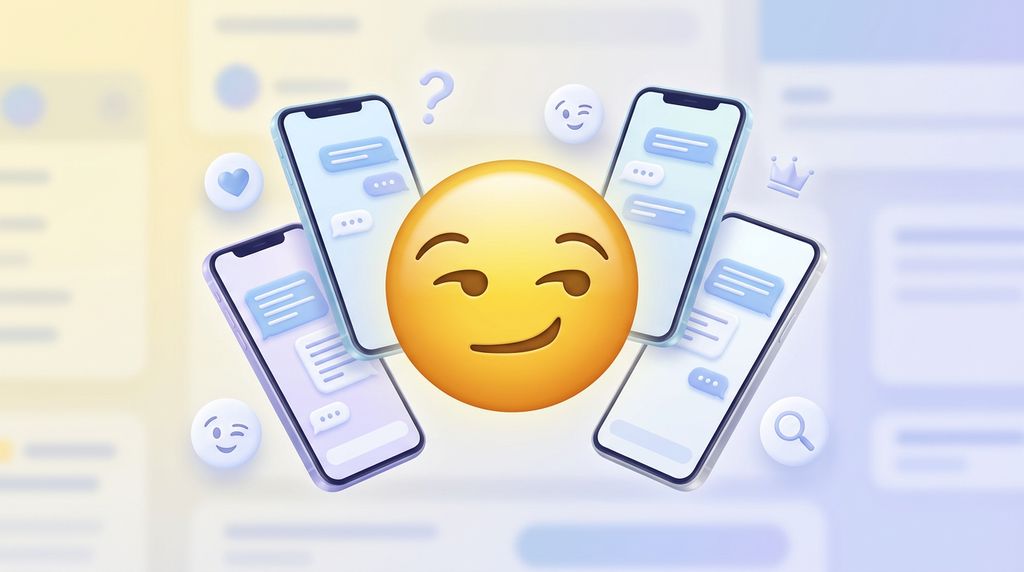
In texting, 😏 can be difficult to interpret because there are no facial expressions or vocal cues. A message such as “Sure, I believe you 😏” can sound playful, sarcastic, doubtful, or teasing depending on the relationship and earlier conversation.
📱 “Sure, I believe you 😏” may not be a straightforward statement of trust. The emoji can suggest that the sender is jokingly skeptical and expects the other person to recognize the playful doubt.
😏 “You really think you can beat me?” becomes more competitive with the smirk. It suggests confidence and playful challenge rather than genuine anger, especially between friends who regularly tease each other.
😂 “Nice excuse 😏” can be friendly banter when two people have an established joking relationship. The emoji tells the recipient that the comment is probably not intended as a serious accusation.
😏 “I knew you would say that” can sound knowingly confident with the emoji. The sender may be suggesting they predicted the response and are enjoying the fact that their prediction came true.
🤔 “Interesting choice 😏” can carry several meanings. It might be genuine curiosity, playful judgment, or subtle teasing, so the surrounding conversation is important before deciding what the sender intended.
😏 “Maybe I was right after all” can communicate quiet confidence. The smirk gives the sentence a slightly cheeky quality, suggesting that the sender enjoys having their prediction or argument confirmed.
🙄 “Whatever you say 😏” can become sarcastic when used during disagreement. It may indicate that the sender does not completely accept the explanation but prefers to express that doubt indirectly.
😏 “You looked pretty confident yesterday” may sound like simple observation, but the emoji can add teasing or flirtatious energy. Whether it is romantic depends on the relationship and the rest of the exchange.
💬 “So, that was your plan all along? 😏” can communicate amused suspicion. The sender may be impressed, teasing, or pretending to investigate while already believing they understand what happened.
😏 “I have a feeling I know what you mean” creates a knowing tone. The sender may be suggesting that they understand an indirect message, especially when the conversation contains jokes or subtle hints.
🫢 “You didn’t tell me everything, did you? 😏” can sound playful and curious. The emoji adds a mischievous edge, making the question feel less like a serious confrontation and more like friendly teasing.
😏 “Don’t worry, I remember” can sound mysterious when paired with the smirk. The sender may be reminding someone about a previous promise, joke, challenge, or conversation without explaining further.
😎 “I told you I could do it 😏” communicates confidence after a successful result. The emoji makes the statement playful, preventing it from sounding quite as serious or boastful as it might otherwise feel.
😏 “That’s what you went with?” may express amused disbelief. Depending on the relationship, it can be harmless teasing between friends or a more pointed sarcastic comment during an argument.
✨ “Well, well, well 😏” is commonly used to create a dramatic or playful reaction. It can suggest that the sender has noticed something interesting and is preparing to tease the other person.
😏 “You sure about that?” can sound like a challenge when followed by the smirk. The sender may believe they know the answer already and wants the other person to reconsider their confident statement.
😂 “Nice try 😏” can be encouraging and playful rather than dismissive. Friends may use it after a joke, failed prank, or competitive attempt to keep the conversation light.
😏 “I won’t say anything” can carry a humorous secretive tone. The emoji may imply that the sender knows something interesting but is intentionally choosing not to reveal it yet.
🧐 “That sounds convenient 😏” often has a skeptical or sarcastic tone. It may suggest that the sender thinks the explanation is suspicious, although close friends can use it purely as playful banter.
😏 Text messages depend strongly on context because written words cannot communicate facial expressions naturally. The smirk therefore acts as a tone marker, helping the recipient decide whether the message is playful, sarcastic, confident, or suggestive.
Smirking Face Emoji Meaning in Chat Conversations
Chat conversations move quickly, so people often use 😏 as a shortcut for tone. In group chats, private messages, and casual conversations, it can signal humor, confidence, teasing, or a hidden joke without requiring additional explanation.
💬 In a group chat, 😏 may signal that someone has noticed an amusing detail. The sender could be inviting others to recognize the joke without directly explaining it, creating a shared moment of humor.
😏 If a friend says, “I know what you did,” the emoji can make the statement sound teasing. It suggests playful suspicion rather than a serious accusation, particularly among people who joke together often.
😂 A smirk after a funny observation can show that the sender is pleased with their own joke. It adds personality and gives the conversation a slightly mischievous rhythm.
😏 When someone writes, “You’re finally admitting it,” the emoji may communicate playful victory. The sender could be teasing the other person about something they previously denied, without intending genuine criticism.
🙃 In an argument, 😏 may become passive-aggressive. If the conversation is already tense, the same facial expression can make a message feel dismissive or condescending instead of humorous.
😏 A friend might write, “I saved the screenshots.” The emoji can turn a simple statement into playful teasing, especially when both people know that the screenshots relate to an embarrassing or funny conversation.
🤫 “I could tell you, but…” followed by 😏 creates suspense. The sender may be jokingly withholding information, suggesting that there is more to the story than they are currently willing to reveal.
😏 “Someone seems interested” can sound teasing when sent after noticing another person’s behavior. The emoji signals that the sender is intentionally drawing attention to a possible romantic or social situation.
😎 “Leave it to me 😏” communicates confidence. It can suggest that the sender feels capable of handling the situation and enjoys showing a little self-assurance.
😏 “We both know the answer” can create a sense of shared understanding. The sender may be referring to an inside joke, mutual opinion, or obvious conclusion that does not need to be explained.
🤭 In a close friendship, the emoji can accompany an embarrassing joke without making the exchange uncomfortable. It can signal that the sender is laughing at the situation rather than seriously judging anyone involved.
😏 “Interesting timing” can express suspicion or amusement. The sender may have noticed that two events happened together and is playfully suggesting there could be a connection.
😂 “You really said that in the group chat 😏” can be a humorous reaction to a bold comment. The smirk highlights the sender’s amusement and encourages the recipient to laugh at their own decision.
😏 The emoji can make a short response feel less neutral. “Okay 😏” might indicate teasing, skepticism, confidence, or a hidden message, depending entirely on what happened immediately before it.
🔍 “I noticed that 😏” may imply that the sender caught a subtle detail. It can be innocent curiosity or playful teasing, so the recipient should consider the relationship before assuming romantic intent.
😏 “You don’t have to explain yourself” can be supportive in one conversation and sarcastic in another. The emoji adds ambiguity, which is why tone should always be judged alongside the surrounding words.
🗣️ In fast-moving chats, emojis help replace facial cues that would normally be visible during face-to-face conversation. The smirk can therefore communicate an attitude that would otherwise require several additional words.
😏 A person may use the emoji after making a deliberately obvious joke. It signals that they know the joke is cheeky and expect the other person to respond in the same playful spirit.
🤝 Shared history matters greatly in chat communication. Friends who frequently tease one another may use 😏 positively, while strangers or coworkers might interpret the exact same message as overly suggestive or rude.
😏 The best interpretation comes from the whole conversation. Look at the words, timing, relationship, previous jokes, and emotional atmosphere before deciding whether the smirk is friendly, sarcastic, flirty, or challenging.
Smirking Face Emoji Meaning in Love, Dating, and Flirting
In dating conversations, 😏 is often associated with flirtation because its expression can look confident and suggestive. However, the emoji itself does not prove romantic interest; the surrounding words and relationship provide the stronger clues.
❤️ “You looked amazing tonight 😏” can carry a flirty undertone because the compliment is paired with a knowing expression. The sender may be intentionally making the attraction more obvious without stating it directly.
😏 “Maybe I’ll see you there” can sound playful in a dating conversation. The emoji may suggest that the sender hopes to meet the other person and is enjoying the possibility.
🔥 “You clean up nicely 😏” is often more suggestive than a plain compliment. The smirk can signal attraction, confidence, and playful interest without making the message explicitly romantic.
😏 “Don’t tempt me” can become flirtatious when exchanged between people who are already attracted to one another. The emoji gives the phrase a mischievous quality that may not exist in a neutral friendship.
💕 “You know exactly what you’re doing 😏” can suggest that the sender finds the other person’s behavior attractive or intentionally teasing. Context is important because the same phrase can also be used jokingly between friends.
😏 “I might have to take you up on that” can communicate interest when discussing a date or invitation. The smirk adds playful confidence and can make the acceptance feel more teasing than formal.
✨ “You’re trouble, aren’t you? 😏” is commonly understood as playful flirting. The sender is not necessarily criticizing the person; instead, they may be showing attraction through lighthearted teasing.
😏 “That smile is dangerous” can sound romantic when sent after a photo or personal compliment. The emoji reinforces the idea that the sender is intentionally being a little bold.
🥰 A smirk paired with affectionate language can create mixed emotional signals. If someone writes something loving followed by 😏, the emoji may add playful attraction rather than replacing the affectionate meaning.
😏 “So when are you taking me out?” can become confidently flirtatious with the emoji. The sender may be expressing interest while keeping the question light enough to avoid sounding overly serious.
💫 “I have a feeling we’d have fun together 😏” can suggest romantic curiosity. The smirk makes the message more suggestive, although the exact meaning depends on how well the two people know each other.
😏 “You keep looking at me like that” can be a playful acknowledgment of attraction. It may invite the other person to admit their interest while maintaining a teasing tone.
❤️ “I could get used to this 😏” can indicate that someone enjoys the attention they are receiving. In a romantic conversation, the phrase may suggest growing attraction without directly declaring feelings.
😏 “Careful, you’re making me curious” can be flirtatious because it creates a subtle invitation to continue the conversation. The emoji adds confidence and a slightly mischievous edge.
🔥 “That outfit definitely got my attention 😏” is a more direct example of suggestive flirting. Because the message comments on appearance, the smirk can strengthen the romantic or physical attraction implied by the words.
😏 “Maybe you should prove it” can sound like a playful challenge in dating. The phrase leaves room for interpretation and may encourage the other person to respond with confidence or another joke.
💕 “I think you already know my answer 😏” can communicate mutual attraction. The sender may be suggesting that their feelings are obvious without stating them directly.
😏 A smirk from a dating partner often needs to be interpreted with the complete conversation. If the discussion already includes romantic compliments, playful challenges, or plans to meet, the emoji is more likely to carry flirtatious meaning.
🫶 The emoji does not automatically mean someone wants a relationship. People use 😏 casually, so assuming romantic interest from one emoji alone can easily create an unnecessary misunderstanding.
😏 In dating, the smirk usually works as a tone amplifier. It can make a confident or playful sentence feel more suggestive, but the person’s actual words and behavior remain more reliable signs of attraction.
Smirking Face Emoji Meaning From a Guy
When a guy sends 😏, the meaning depends on his personality, relationship with the recipient, and the message itself. It may show confidence, teasing, sarcasm, attraction, or simple amusement rather than one guaranteed romantic intention.
😏 If a guy sends the emoji after a compliment, he may be adding playful confidence to his words. In a dating context, that can suggest attraction, but the surrounding conversation should still be considered.
🔥 A guy who writes, “You looked really good today 😏,” may be intentionally making his compliment slightly flirtatious. The emoji can signal that he knows the compliment has romantic or suggestive energy.
😏 If he uses it after winning an argument, the emoji may simply show confidence. He could be playfully celebrating his point rather than communicating anything romantic or personal.
😂 A guy might send 😏 after teasing a friend because he knows the joke is slightly cheeky. In that situation, the emoji reflects friendship and humor rather than attraction.
❤️ If the emoji appears alongside repeated compliments, personal questions, and invitations to spend time together, it may be one small sign of romantic interest. Look at the overall pattern rather than one message.
😏 “I knew you’d say that” followed by a smirk can suggest that he feels confident about understanding you. It may be affectionate teasing, especially when the two of you already share inside jokes.
🤫 If he uses 😏 after saying he knows a secret, he may simply be creating suspense. The expression communicates that he enjoys making you curious rather than necessarily implying romantic interest.
😏 “Maybe you’ll find out” can feel flirtatious when exchanged during a personal conversation. The ambiguity is intentional, allowing him to tease without fully explaining what he means.
😎 A guy may use the emoji after describing an achievement because it communicates self-assurance. The message could be completely unrelated to dating, even if the expression initially feels suggestive.
😏 If he sends the emoji after a playful challenge, he may be signaling competitive confidence. For example, “You won’t beat me this time 😏” is usually about the challenge itself.
💬 When a guy sends 😏 repeatedly, the meaning becomes more dependent on his usual texting style. Some people naturally use expressive emojis, while others reserve them for flirting or teasing.
😏 A response such as “You already know 😏” can suggest shared understanding. If the conversation concerns attraction, the message may be romantic; if it concerns an inside joke, it may be purely friendly.
😂 “Nice try 😏” usually signals playful teasing. The sender may be laughing at a friend’s failed attempt rather than expressing anger or criticism.
❤️ If he uses 😏 after discussing a future date, the emoji can add anticipation and romantic energy. Still, the clearest evidence of interest comes from consistent effort and direct communication.
😏 “Don’t make me prove it” can be a confident teasing response. Its interpretation depends heavily on the subject being discussed, especially because the phrase can be innocent or suggestive.
🧐 A smirk after a skeptical statement can indicate that he is unconvinced. For example, “That’s your excuse? 😏” often carries playful disbelief rather than affection.
😏 If he sends the emoji immediately after a personal compliment, it may be worth noticing the pattern. Combined with other signs of interest, the expression can reinforce a flirtatious tone.
🤝 Between longtime friends, 😏 can be completely normal. Shared history and established humor can make a potentially suggestive emoji feel harmless and familiar.
😏 The emoji alone cannot reveal someone’s feelings with certainty. Avoid treating one facial expression as proof of attraction, especially when there is little other context.
💕 The most reliable interpretation comes from his communication as a whole. Consider whether he initiates conversations, remembers details, compliments you, makes plans, and communicates consistently rather than analyzing one emoji in isolation.
Smirking Face Emoji Meaning From a Girl
A girl may use 😏 to communicate teasing, confidence, sarcasm, flirtation, or playful curiosity. Like any emoji, its meaning is shaped by the conversation, personal texting habits, and relationship between the people involved.
😏 If a girl sends the emoji after teasing you, she may simply be enjoying the joke. The expression can communicate a playful “I know exactly what I’m doing” attitude without romantic intent.
💕 A message such as “You looked good today 😏” may carry flirtatious energy. The emoji can make a straightforward compliment feel more confident and intentionally suggestive.
😏 “I knew you’d notice” can indicate playful confidence. She may be acknowledging your reaction while teasing you about it rather than making a serious romantic statement.
😂 A girl may use 😏 with friends after making a cheeky joke. In that situation, the emoji often works as a humorous facial expression rather than a signal of attraction.
🔥 If the emoji appears after comments about appearance, attraction, or dating, it may strengthen a flirtatious interpretation. Still, the surrounding words provide more information than the emoji itself.
😏 “Maybe I will, maybe I won’t” can create a playful sense of mystery. The sender may be teasing you about a decision and enjoying the uncertainty of the conversation.
🤭 A smirk can accompany a private joke or slightly embarrassing observation. It can show that she expects you to understand the humor without needing the entire context explained.
😏 “You think you’re funny?” may be affectionate teasing between friends or romantic partners. The emoji makes the statement less formal and can invite a playful comeback.
❤️ If she sends 😏 after agreeing to meet, it can suggest excitement or playful anticipation. However, the invitation itself is more meaningful than the emoji when judging romantic interest.
😏 “You don’t know me that well yet” can sound teasing and mysterious. The expression may encourage the other person to keep asking questions and continue getting to know her.
✨ A girl may use the emoji after a confident statement to emphasize self-assurance. For example, “I told you I could handle it 😏” is more about confidence than romance.
😏 “That’s what you noticed?” can carry playful surprise. Depending on the topic, she may be teasing the recipient for noticing something she expected them to notice.
😂 “Good luck with that 😏” often communicates playful skepticism. She may doubt someone’s plan while keeping the conversation friendly and humorous.
💫 If she combines 😏 with affectionate messages, the overall tone may become more romantic. The emoji can add a mischievous quality to an otherwise warm conversation.
😏 “Maybe you should ask nicely” can sound flirtatious when the topic involves a date, favor, or invitation. The smirk suggests playful negotiation rather than a strict refusal.
🫶 The same emoji can mean something very different between close friends. A familiar friendship may include teasing language that would sound romantic if taken out of context.
😏 If she uses the emoji after a joke about attraction, it may signal that she understands the implication. It still does not necessarily mean she wants to pursue anything beyond playful conversation.
🔍 Look for repeated behavior rather than isolated emojis. Consistent conversation, genuine curiosity, invitations, and personal attention can provide stronger evidence of interest than 😏 alone.
😏 If her message seems ambiguous, avoid immediately assuming romantic intent. A simple follow-up question or natural continuation of the conversation can reveal the intended tone more accurately.
💕 Ultimately, a girl sending 😏 may be flirting, joking, teasing, or simply expressing confidence. The relationship, words, timing, and communication pattern should guide your interpretation rather than the emoji by itself.
Smirking Face Emoji Meaning on Instagram, TikTok, Snapchat, and WhatsApp
On social platforms, 😏 can take on different tones because users communicate through captions, comments, stories, reactions, and direct messages. The platform does not create one official meaning; community habits and context influence interpretation.
📸 On Instagram, 😏 may appear in comments beneath a confident photo. It can suggest admiration, playful teasing, or attraction depending on the relationship between the commenter and the person posting.
😏 An Instagram caption ending with the emoji can create a confident or mysterious mood. The creator may want followers to wonder about the story behind the post without providing every detail.
🔥 In an Instagram comment, 😏 can sometimes communicate attraction. However, comments are public, so users may also employ the emoji simply as playful internet language rather than a serious romantic signal.
🎵 On TikTok, 😏 can accompany a funny or suggestive trend. The expression often reinforces the joke or adds a knowing reaction to a video’s punchline.
😏 TikTok creators may use the emoji when revealing a twist or teasing upcoming content. It can create anticipation and encourage viewers to keep watching or check the comments.
😂 A TikTok comment such as “We all noticed that 😏” can signal a shared observation. The sender may be pointing out a subtle detail that viewers understand without directly explaining it.
👻 On Snapchat, 😏 may feel more personal because many interactions happen through private messages or temporary content. It can therefore carry teasing, friendly, or flirtatious meaning depending on the sender.
😏 A Snapchat reply to a selfie can be interpreted as attraction when paired with a compliment. Yet close friends may also use the same expression simply to tease each other.
💬 On WhatsApp, the emoji frequently appears in one-to-one chats and group conversations. Its meaning depends strongly on the existing relationship and the words immediately surrounding it.
😏 In a WhatsApp group, the smirk can be used after someone makes a bold claim. Other members may understand it as playful skepticism, especially if the group has an established joking culture.
📱 Social media users often rely on emojis because digital communication removes facial expressions and vocal cues. 😏 can therefore function as a quick signal that a message has an extra layer of attitude.
😏 On Instagram Stories, the emoji can work as a reaction to a particular photo or statement. Its interpretation may be friendly, admiring, teasing, or flirtatious depending on the content.
🔥 A smirk beneath a fashion or lifestyle post may communicate confidence or attraction. The public setting makes it important not to assume a private romantic meaning without additional evidence.
😏 On TikTok, internet culture can make emojis more exaggerated. Users sometimes choose a facial expression because it fits a meme or trend rather than because they are expressing a literal emotion.
😂 Snapchat users may use 😏 as part of playful banter. The temporary nature of the platform can encourage quick, informal messages where tone is conveyed through emojis rather than lengthy explanations.
💕 In dating-related DMs, the smirk can become more suggestive. If the conversation already contains compliments, romantic questions, or plans to meet, the emoji may reinforce the flirtatious atmosphere.
😏 A social media reaction should always be interpreted alongside the content. The same emoji under a comedy video, personal selfie, political joke, or romantic post can communicate completely different things.
🌐 Internet slang changes quickly, so emoji habits can also evolve. What feels strongly flirtatious in one online community may be ordinary playful language in another.
😏 Public comments can be especially ambiguous because the sender may be performing for an audience. A person could be joking with friends, participating in a meme, or genuinely expressing attraction.
📲 Across Instagram, TikTok, Snapchat, and WhatsApp, 😏 has no universal hidden code. The safest interpretation comes from context, relationship, platform culture, and the exact wording accompanying the emoji.
Smirking Face Emoji Meaning in Friendship and Casual Conversations
Among friends, 😏 often creates a playful atmosphere. It can signal teasing, inside jokes, confidence, harmless mischief, or friendly competition, especially when both people already understand each other’s humor.
😏 Friends often use the smirk after making a joke that is intentionally cheeky. It communicates that the sender knows the comment has a little attitude and expects the recipient to laugh.
😂 “I knew you’d do that 😏” can be friendly teasing between people who know each other’s habits. The emoji emphasizes that the sender is amused rather than genuinely criticizing the friend’s behavior.
🤝 A smirk can strengthen an inside joke because it signals shared understanding. Friends may use it as a shortcut for a story or reference that does not need to be explained.
😏 “Nice move” followed by the emoji can celebrate a friend’s clever decision. The tone is often supportive while still maintaining a playful edge.
🏆 After winning a game, someone might write, “Told you I had this 😏.” The emoji makes the victory celebration cheeky rather than overly serious or boastful.
😏 “You’re impossible” can be affectionate when used between close friends. The smirk may communicate amusement with someone’s personality instead of genuine frustration.
😂 “That was your big plan? 😏” can be a humorous response to a friend’s failed idea. The message invites playful debate rather than creating serious conflict.
😏 Friends may use the emoji to pretend they have discovered a secret. The exaggerated knowing expression can make ordinary conversations more entertaining.
🙌 “Look who’s finally on time 😏” can be a playful greeting when someone usually arrives late. The humor depends on familiarity and should not automatically be interpreted as criticism.
😏 A friend might write, “I won’t tell anyone,” with a smirk. The expression can turn a simple promise of confidentiality into a playful secret-sharing moment.
🤭 “You really posted that?” can sound teasing when followed by 😏. Friends may use it after an embarrassing photo or bold social media post while still showing affection.
😏 Friendly teasing works best when both people are comfortable with the communication style. The same phrase can feel rude if the relationship is new or the recipient does not enjoy sarcastic humor.
😂 “Here we go again 😏” can be a playful reaction when a friend repeats a familiar habit. The emoji helps communicate amusement instead of irritation.
😏 “You thought I wouldn’t notice?” can express friendly awareness. The sender may be teasing a friend who attempted a joke, prank, or subtle change.
🫶 Close friends may use 😏 alongside supportive messages to keep serious conversations from becoming too formal. The emoji can add warmth when both people understand the humor.
😏 A smirk after a compliment can also be friendly rather than romantic. Friends sometimes use expressive emojis simply because they want the conversation to feel lively and personal.
🎯 “You almost got me 😏” can acknowledge a successful joke or prank. The sender is admitting that the other person was clever while maintaining a playful competitive attitude.
😏 Friends can also use the emoji after making a bold prediction. It communicates confidence while inviting the other person to wait and see whether the prediction becomes true.
😂 If someone is unsure about the meaning of a friend’s smirk, previous conversations provide valuable clues. A consistent pattern of jokes and teasing usually indicates the emoji is part of their normal friendship style.
😏 In friendships, the smirk is often less about a hidden secret and more about shared humor. It works best when the people involved understand each other’s boundaries, personalities, and communication habits.
Smirking Face Emoji Meaning as Sarcasm, Irony, or Passive-Aggressive Tone
Although 😏 can be playful, it can also communicate sarcasm or passive-aggressive frustration. This is especially likely when the message involves disagreement, criticism, disbelief, or a statement that clearly conflicts with the surrounding context.
🙃 “Sure, because that worked so well last time 😏” is strongly sarcastic. The sender is unlikely to be sincerely praising the previous attempt and is instead pointing out its failure.
😏 “Great idea” can become sarcastic when the situation is obviously going badly. The emoji adds a knowing expression that suggests the sender means the opposite of the literal words.
🧐 “Interesting explanation 😏” may communicate skepticism. The sender could be implying that the explanation does not seem convincing without directly saying that they think someone is lying.
😏 “Whatever makes you happy” can sound dismissive when paired with a smirk. In a tense conversation, it may communicate disagreement while avoiding an openly confrontational statement.
🙄 “You were totally right 😏” can be ironic if the sender previously disagreed. The emoji alerts the reader that the sentence may not be intended literally.
😏 “Nice timing” can be sarcastic when someone arrives after an event has already started. The phrase appears positive on the surface, while the context gives it a critical meaning.
😂 Sometimes sarcasm is genuinely humorous rather than hostile. Close friends may deliberately exaggerate criticism with 😏 because both people understand that no serious offense is intended.
😏 “Of course you remembered” may be passive-aggressive if the person actually forgot. The emoji can emphasize disappointment while disguising it behind an apparently playful expression.
🫠 “Everything is going perfectly 😏” can communicate irony when everything is clearly going wrong. The contrast between the words and the emoji creates the humorous effect.
😏 “That’s convenient” often suggests suspicion. Depending on the relationship, it can be light teasing or a more serious indication that the sender doubts the explanation.
🙃 “No worries, I’m not annoyed 😏” may actually communicate irritation. The contradiction between the words and tone is a common feature of sarcastic texting.
😏 A passive-aggressive smirk usually appears with other contextual clues. Short replies, criticism, delayed responses, or an ongoing disagreement can make the emoji feel much sharper.
🧐 “Whatever you say” followed by 😏 often suggests that the sender does not believe the other person’s statement. It may be humorous among friends but uncomfortable in a serious discussion.
😏 “Amazing job” can be either genuine praise or sarcasm. The surrounding circumstances determine the meaning, so readers should avoid interpreting the emoji independently.
😂 Sarcasm is particularly difficult to understand through text because vocal emphasis is missing. Emojis can help, but they can also make messages more ambiguous when the recipient does not know the sender’s humor.
😏 If a message feels insulting, do not automatically assume the sender intended harm. Consider whether the person commonly communicates through sarcasm and whether the relationship normally includes playful teasing.
🗣️ When sarcasm causes confusion, direct clarification is usually better than guessing. Asking what someone meant can prevent a small emoji misunderstanding from becoming a larger communication problem.
😏 The smirk can signal irony by creating emotional distance from the literal statement. It tells the reader to look beyond the surface words and consider the implied attitude.
🤝 Healthy relationships usually provide enough context to recognize playful sarcasm. When there is little trust or familiarity, the same emoji can easily be interpreted as disrespectful or passive-aggressive.
😏 Sarcastic use of the smirking face is therefore highly context-dependent. Pay attention to the words, situation, relationship, and emotional tension before deciding whether the sender is joking or genuinely being critical.
Smirking Face Emoji Meaning in Confidence, Attitude, and Humor
The 😏 emoji can communicate self-assurance, cleverness, boldness, or a playful attitude. It is often used when someone wants their message to sound confident without making the statement completely serious or formal.
😎 “I told you I could handle it 😏” communicates confidence after successfully completing something. The smirk makes the achievement feel playful and self-assured rather than like a serious boast.
🏆 “Wait until you see what I can do 😏” creates a confident challenge. The sender is signaling that they believe they have something impressive to show and wants to build anticipation.
😏 “Trust me, I’ve got a plan” can sound more confident with the emoji. It suggests that the sender feels comfortable with their decision and enjoys keeping a little mystery around it.
✨ “I knew this would happen 😏” can communicate satisfaction with being correct. The expression adds a cheeky quality that keeps the statement from sounding overly proud.
😏 Someone might use the emoji after making a bold prediction. It signals that they are confident enough to wait for the outcome and let their prediction speak for itself.
😂 “I may have slightly overestimated myself 😏” can use the smirk humorously. The sender is acknowledging a mistake while maintaining a playful attitude instead of taking the situation too seriously.
😏 “Challenge accepted” followed by the emoji can communicate competitive confidence. It suggests enthusiasm and determination while adding a mischievous edge to the response.
🔥 “You haven’t seen anything yet 😏” can be motivational, humorous, or flirtatious depending on context. The core message is confidence, while the emoji makes it sound more daring.
😏 “I have a few tricks left” can create a mysterious tone. The sender may be talking about a game, project, surprise, or joke rather than implying anything romantic.
🧠 “I already figured it out 😏” suggests cleverness and certainty. The smirk emphasizes that the sender is pleased with their ability to understand or solve the situation.
😏 “Don’t underestimate me” can communicate bold determination. The emoji softens the challenge slightly, making it feel playful rather than threatening.
🎯 “Just wait, I’ll prove it” paired with 😏 creates a confident tone. The sender is inviting the recipient to watch what happens rather than continuing the argument.
😏 “I know what I’m doing” can be reassuring in a casual conversation. The expression adds personality and can communicate that the sender is comfortable with their choices.
😂 “Look who’s suddenly impressed 😏” can combine confidence with humor. The sender is playfully acknowledging someone’s positive reaction without turning the moment into a serious boast.
😏 “You should have listened to me” may be playful after a correct prediction. The emoji turns the statement into teasing rather than making it sound like a harsh criticism.
💪 “I can handle it 😏” may communicate strong self-belief. Depending on the conversation, it can sound motivational, competitive, humorous, or slightly provocative.
😏 “I have my ways” is intentionally vague. The smirk gives the sentence a knowing attitude and invites the recipient to wonder what the sender means.
✨ Confidence expressed through 😏 does not necessarily mean arrogance. In many conversations, the emoji simply helps a person communicate self-assurance with humor and personality.
😏 The expression can also support clever banter. When someone makes a quick comeback and adds the smirk, they may be signaling satisfaction with their own joke or response.
😎 Overall, the confidence-related use of 😏 is about attitude. It can communicate “I know what I’m doing,” “I saw that coming,” or “I might have a surprise,” while keeping the tone playful.
How to Respond to the Smirking Face Emoji
Responding to 😏 depends on what you believe the sender means and how comfortable you are with the tone. You can answer playfully, ask for clarification, match the energy, or keep your response neutral when the meaning feels unclear.
😏 If the sender is clearly teasing you, matching the playful tone can keep the conversation natural. A confident response can show that you understand the joke without turning the exchange into something more serious.
😂 When a friend sends a smirk after a joke, you can respond with humor of your own. A playful comeback often works better than analyzing the emoji too literally.
😉 If the conversation feels lightly flirtatious and you are comfortable with that direction, a playful response can acknowledge the energy. Keep your wording natural rather than forcing a romantic tone.
🤔 If you genuinely cannot understand the message, simply ask what they mean. Clear communication is more reliable than trying to decode every possible hidden meaning behind an emoji.
😏 “What are you implying?” can be a playful response when the sender appears to be teasing. It invites them to explain themselves while maintaining the same lighthearted energy.
😂 “I know that look” can work between close friends. It suggests that you recognize the sender’s playful attitude and are willing to continue the joke.
😎 If the sender is challenging you, responding confidently can keep the exchange fun. A short answer such as “We’ll see who wins” communicates that you are comfortable with the competitive tone.
😏 You do not have to match a smirk with another smirk. If you are uncertain about the person’s intention, a normal response can keep the conversation neutral until the context becomes clearer.
🫶 If the emoji feels affectionate, you can respond warmly without assuming romance. A kind message lets the sender know you appreciate the interaction while leaving room for the relationship to develop naturally.
😏 If you think the message is sarcastic, avoid immediately becoming defensive. First consider whether the person is joking, especially if sarcasm is normal in your relationship.
🧐 When a smirk follows a questionable statement, you can ask for clarification. This is particularly useful at work, where assuming a sarcastic meaning can create unnecessary tension.
💬 In professional conversations, a neutral response is usually safest. If a coworker or manager uses 😏, focus on the actual words and task rather than assuming the emoji carries a personal message.
😏 If someone repeatedly sends suggestive messages that make you uncomfortable, you can clearly establish your boundaries. You do not need to respond in the same tone simply because the sender chose a playful emoji.
🤝 With close friends, a humorous comeback can strengthen the conversation. Shared humor often works because both people already understand each other’s communication style and boundaries.
❤️ In a romantic conversation, responding honestly is usually more useful than relying entirely on emojis. If you are interested, natural conversation can communicate attraction more clearly than symbolic guessing.
😏 If someone sends “You know what I mean,” you can answer, “I think I do.” This keeps the playful ambiguity alive without making assumptions about what the sender intends.
😂 “You’re being suspicious again” can be a fun response to a teasing smirk. It acknowledges the attitude without turning the conversation into a serious discussion.
🤫 If the smirk appears to accompany a secret, you can play along by asking what the sender knows. This can create a fun conversational opening without assuming the secret is romantic.
😏 If the message feels rude rather than playful, you can respond directly and calmly. Your comfort matters more than matching someone’s emoji style, especially when the conversation has become uncomfortable.
💬 The best response to 😏 is the one that matches the actual relationship and situation. Use humor when it feels natural, ask questions when the meaning is unclear, and communicate boundaries when the tone crosses a line.
Common Misunderstandings About the Smirking Face Emoji
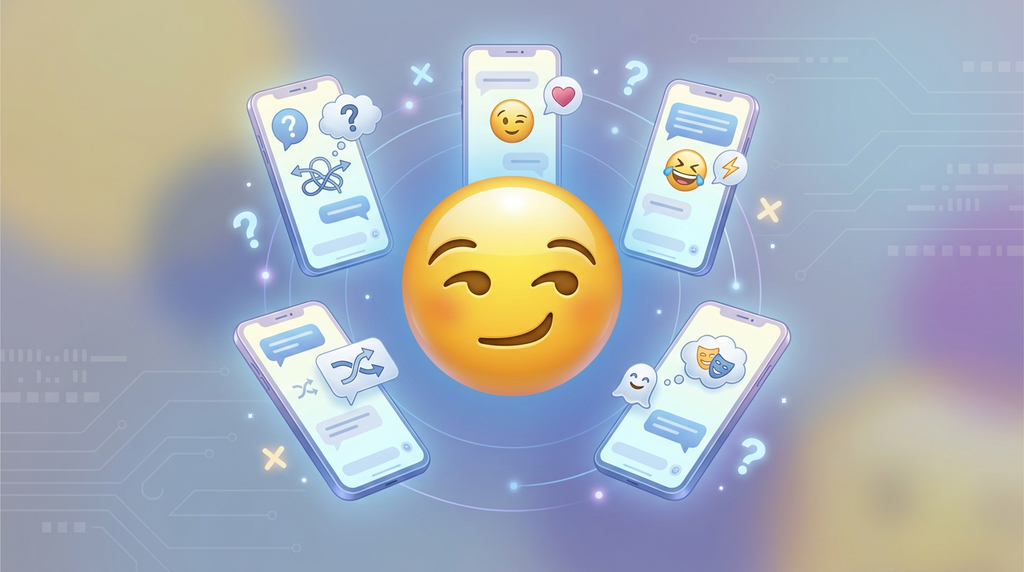
The biggest mistake people make with 😏 is assuming that it always means flirting. The emoji has several common uses, and its interpretation can shift dramatically depending on context, relationship, platform, and surrounding words.
😏 One common misconception is that the smirk always means sexual interest. While it can appear in suggestive conversations, people also use it for sarcasm, confidence, jokes, competition, and everyday teasing.
❤️ Another misunderstanding is assuming that 😏 proves someone has romantic feelings. An emoji cannot reliably establish attraction, so it should be considered only one small part of the conversation.
😂 Some people interpret every smirk as sarcasm. That is also inaccurate because friends frequently use it for playful banter without intending criticism or irony.
😏 The emoji does not have a completely different official meaning depending on whether a guy or girl sends it. Personal communication habits matter much more than gender when interpreting an emoji.
📱 People sometimes assume that the emoji has one universal meaning across every platform. Instagram comments, WhatsApp chats, TikTok videos, and Snapchat messages can all create different contexts.
😏 Another mistake is focusing only on the emoji while ignoring the words. “Good job 😏” and “You look amazing 😏” may create very different impressions because their surrounding meanings differ.
🤔 A smirk can also be misunderstood when someone is not familiar with the sender’s humor. Cultural background, age, online habits, and personal communication style can affect interpretation.
😏 Some readers interpret the emoji as arrogance every time they see it. Confidence and arrogance are not identical, however, and the sender may simply be expressing playful self-assurance.
😂 Others assume the emoji always signals an inside joke. While it often appears with shared humor, it can also be used by people who have no special shared history.
😏 The emoji is not a secret code that guarantees a hidden message. Its ambiguity is part of why it works so well in casual digital communication.
🧐 A sarcastic interpretation becomes more likely when the words contradict reality. If someone says “Everything went perfectly 😏” after a disaster, the context strongly suggests irony.
💕 A flirtatious interpretation becomes more likely when romantic clues already exist. Compliments, invitations, affectionate language, and repeated personal attention can provide stronger evidence than the emoji itself.
😏 A friendly interpretation becomes more likely when the conversation contains jokes and familiar teasing. Long-term friends often use expressive emojis in ways that would sound different between strangers.
🤝 Relationship history can change the emotional meaning of the same sentence. A smirk between partners may feel affectionate, while the same message from a stranger may feel overly familiar.
😏 Tone can also change over time. A person might use the emoji playfully in one conversation and sarcastically in another, depending on what is happening around them.
💬 Text communication naturally creates ambiguity because readers cannot hear voice inflection or see body language. Emojis reduce some uncertainty but can never eliminate it completely.
😏 Assuming intent too quickly can create unnecessary misunderstandings. If a message matters emotionally, it is better to consider the broader conversation before drawing a strong conclusion.
🫶 People also have different emoji habits. Someone who uses many facial expressions may send 😏 casually, while a person who rarely uses emojis may choose it more intentionally.
😏 The safest approach is to interpret the emoji as a possible tone indicator rather than definitive evidence. Consider several plausible meanings before deciding what the sender intended.
🌟 Ultimately, context is the key to understanding 😏. Words, relationship, timing, platform, previous messages, and communication style all work together to reveal whether the smirk is playful, sarcastic, confident, or flirty.
Smirking Face Emoji Examples and Best-Practice Usage
Seeing realistic examples makes the meaning of 😏 easier to understand. The following examples show how the same emoji can communicate different emotions when the surrounding words and circumstances change.
😏 “I knew you would change your mind.” Here, the emoji communicates confidence and a playful sense of being proven right rather than romantic interest.
😂 “You really thought that would work? 😏” This example suggests friendly teasing, especially when two friends are joking about an unsuccessful plan or attempt.
❤️ “You looked incredible tonight 😏.” In a dating context, the emoji adds a confident and flirtatious layer to the compliment.
🙃 “Sure, that sounds believable 😏.” The wording and situation may indicate sarcasm, particularly if the sender clearly doubts the explanation being offered.
🏆 “Another win for me 😏.” The smirk communicates playful confidence after success, making the statement feel humorous rather than excessively boastful.
😏 “I know something you don’t.” This creates mystery and a knowing attitude, especially if the sender intentionally wants the recipient to become curious.
🤭 “I saw that little reaction 😏.” The message can be playful teasing when someone has noticed a friend’s subtle response to a situation.
😎 “Relax, I’ve got this 😏.” The emoji reinforces confidence and suggests that the sender feels capable of handling the problem.
😏 “Maybe you should ask me nicely.” This can be playful or flirtatious depending on the relationship, showing why surrounding context matters so much.
😂 “Nice excuse 😏.” Among friends, this is usually light teasing, but in a serious disagreement it could sound skeptical or dismissive.
😏 “You already know my answer.” The smirk creates a knowing tone and may suggest that the sender believes the recipient understands the unstated meaning.
🔥 “Careful, you’re making this interesting 😏.” In a romantic conversation, the emoji can add flirtatious tension and signal that the sender enjoys the playful direction.
😏 “I told you not to underestimate me.” This example emphasizes confidence and challenge, especially in competitive conversations.
🧐 “Interesting timing 😏.” The expression may suggest suspicion, curiosity, or playful observation depending on why the timing seems unusual.
😏 “Don’t worry, I remember everything.” This can sound mysterious or teasing, particularly when the sender is referring to a previous joke, promise, or challenge.
😂 “You thought I wouldn’t notice? 😏” This is commonly used as playful teasing after someone tries to hide something funny or obvious.
😏 “Just wait until you see the result.” The emoji creates anticipation and confident mystery without necessarily suggesting romance.
💕 “Maybe we should do that together 😏.” In a dating conversation, this example can communicate interest while maintaining a playful and slightly suggestive tone.
😏 “That’s one way to look at it.” The smirk can signal that the sender has another opinion but is choosing to express it indirectly.
🌟 “I guess we’ll see who’s right 😏.” This is a good example of competitive confidence because it challenges the recipient while keeping the exchange lighthearted.
FAQs
What does the 😏 smirking face emoji mean?
The 😏 emoji commonly expresses confidence, teasing, sarcasm, flirtation, or a knowing attitude. Its exact meaning depends on the message, relationship, and situation rather than having one fixed interpretation.
Does 😏 always mean flirting?
No. Although 😏 is frequently used in flirtatious conversations, it can also mean playful teasing, confidence, sarcasm, irony, or friendly mischief. Context is essential when deciding whether a message is romantic.
What does 😏 mean from a guy?
A guy may use 😏 to show confidence, tease someone, make a joke, express sarcasm, or flirt. The emoji alone cannot prove romantic interest, so look at his overall communication pattern.
What does 😏 mean from a girl?
A girl may use 😏 to communicate playful teasing, confidence, sarcasm, curiosity, or flirtation. Her words, relationship with the recipient, and normal texting style provide better clues than the emoji alone.
What does 😏 mean in texting?
In texting, 😏 often acts as a tone indicator. It can tell the reader that a statement should be interpreted as cheeky, confident, teasing, sarcastic, mysterious, or potentially flirtatious.
Is 😏 a romantic emoji?
It can be romantic when used with compliments, attraction, dating plans, or suggestive conversation. However, it is not exclusively romantic and can be completely harmless in friendships and casual chats.
What does 😏 mean on Instagram?
On Instagram, 😏 can appear in comments, captions, Stories, or direct messages. Depending on the content, it may express admiration, confidence, teasing, attraction, sarcasm, or participation in online humor.
Is 😏 rude or offensive?
Not necessarily. The emoji can be friendly and playful, but it may feel rude or passive-aggressive during an argument or when sent by someone without an established relationship. Context determines the emotional impact.
How should I respond to 😏?
Respond according to the conversation. You can tease back if the exchange is playful, respond neutrally if the meaning is unclear, or ask what the person means when you need clarification.
Why is the 😏 emoji sometimes confusing?
Text messages do not include natural facial expressions or vocal tone, so emojis have to carry part of that emotional information. Because 😏 can express several attitudes, readers may interpret it differently depending on context.
Conclusion
The 😏 emoji is one of the more context-dependent expressions used in modern digital communication. It can suggest confidence, teasing, sarcasm, irony, playful energy, mystery, or flirting, and the same message can feel completely different depending on who sends it and why.
Understanding the Smirking Face Emoji Meaning is therefore less about memorizing one definition and more about reading the complete conversation. Consider the sender’s words, relationship, communication style, timing, and platform before deciding what the expression means. When the message remains unclear, a simple question is usually better than making an assumption.
Read Maro: 75+ Meaningful Thank You Card Messages Thank You Note Wording Ideas 2026