
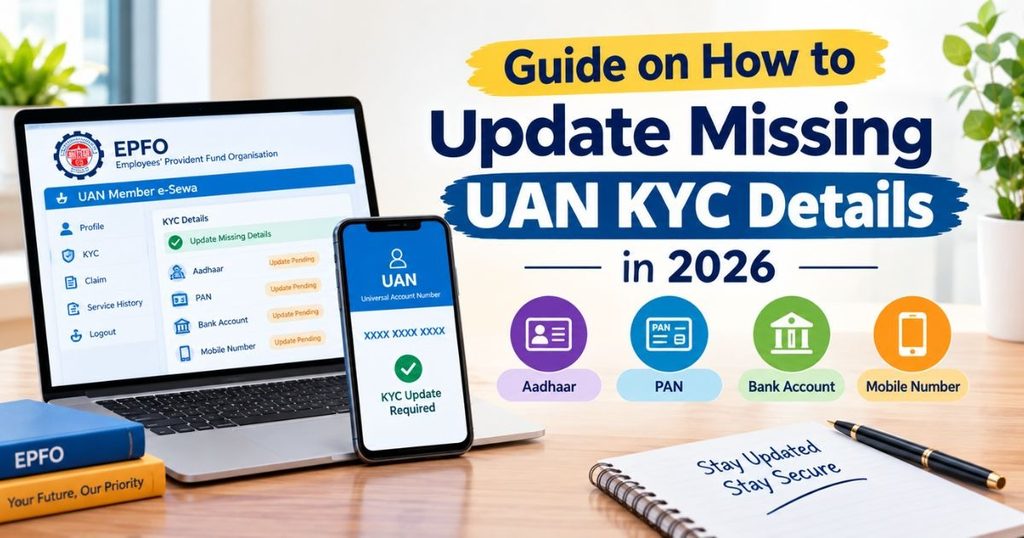
If your EPF account shows incomplete or missing KYC information, knowing how to Update Missing UAN KYC Details can help keep your provident fund records accurate. Proper KYC information connects your identity, bank details, and employment records with your UAN.
For many EPF members, Update Missing UAN KYC Details is important before using services such as PF claims, transfers, or account management. Aadhaar, PAN, and bank information may need to be added, verified, or corrected through the available EPFO services.
What Does Missing UAN KYC Details Mean?
Missing UAN KYC details generally means that one or more identity or financial details have not been added, verified, or approved in your EPF account. These records help establish accurate member information and support digital EPFO services.
🌟 Missing KYC information means an important identity or financial record has not been properly added to your EPF profile. Checking your UAN account can help you identify which information needs attention. 🔎
📋 KYC records can include Aadhaar, PAN, and bank information associated with your provident fund account. Keeping these details accurate helps reduce confusion when managing EPF services online. 💻
🔐 Your UAN connects multiple employment records under one account number. Accurate KYC information strengthens the connection between your identity and provident fund records. ✅
🪪 Aadhaar is commonly used as an identity document in EPFO-related processes. Members should make sure the personal information associated with their records is accurate before requesting verification.
🏦 Bank details are particularly important for certain EPF-related transactions. A wrong account number or IFSC code can create problems when financial information needs to be verified. 💰
📱 A registered mobile number can support OTP-based account access and verification. Keeping your contact information current makes it easier to use online EPFO services securely. 🔒
✍️ Missing information does not always mean your entire EPF account is incomplete. Sometimes only one specific KYC document or financial detail requires updating or approval.
🧾 PAN information may also appear as part of your UAN KYC records. Members should check spelling, date-related information, and other identity details carefully before submission.
🔍 Reviewing your KYC section regularly can reveal pending or incomplete information. Early identification gives you more time to correct details before starting an important PF-related process.
💡 KYC status can change after documents are submitted and reviewed. A pending record should not automatically be treated as rejected because the two statuses have different meanings.
🛡️ Accurate KYC information helps maintain consistency between your EPF profile and supporting documents. Consistent records can make future account-management activities easier to understand and complete.
📂 Supporting documents should contain information that matches the details entered into your UAN profile. Differences in names or numbers can lead to additional verification requirements. ⚠️
🌐 Online EPFO services allow members to manage several account-related activities without visiting an office for every basic request. Your KYC section is one part of that digital system.
👤 EPF members should review their own account information rather than relying entirely on old employment records. Personal verification can help identify outdated or missing details.
🔄 When employment information changes, certain account records may also require attention. Reviewing KYC after a job change can help maintain cleaner long-term EPF records.
📊 KYC status is separate from your PF balance. A member can have an active provident fund account while still having incomplete or pending KYC information.
🧠 Understanding the difference between missing, pending, approved, and rejected information makes troubleshooting easier. Each status can point to a different next step.
📌 If you notice missing information, record exactly which KYC field is incomplete. A clear understanding of the issue can prevent unnecessary changes to correctly recorded details.
⏳ Some verification steps may take time after submission. Avoid repeatedly submitting identical information without first checking whether an earlier request is still being processed.
🌱 Good EPF account management starts with accurate personal information. Reviewing KYC periodically can help you keep your provident fund records organized and easier to manage.
Which Documents Are Needed for UAN KYC?

The documents required for UAN KYC depend on the information you are adding or correcting. Common records include Aadhaar, PAN, and bank account information, while additional supporting documents may sometimes be relevant to a specific verification issue.
🪪 Aadhaar can serve as an important identity document for EPFO members. Before using it for KYC, check that the personal information matches the details associated with your EPF profile.
💳 PAN may be required for particular tax and provident fund-related purposes. Enter the PAN carefully because a single incorrect character can create verification difficulties later. 🔎
🏦 Bank account information is used when financial details need to be associated with an EPF member. Verify the account number and IFSC code before submitting the information.
🔢 The bank account number should be entered exactly as shown in your official banking records. Avoid relying on memory when entering lengthy numerical information. 📋
🏛️ The IFSC code identifies a specific bank branch for electronic transactions. If your banking information has changed, confirm the current details directly from reliable banking records.
📄 Supporting documents may become relevant when basic information does not match across records. The exact documentation depends on the issue and the verification requirements applicable to the account.
🪪 Identity documents should be clear and valid when they are required for verification. Blurry or inconsistent information can make document review more difficult. 🔍
📱 Your registered mobile number is also important for secure online interactions. Make sure you have access to the mobile number associated with your account when OTP verification is required.
🔐 Never share OTPs, passwords, or sensitive banking credentials with another person claiming to provide KYC assistance. Legitimate account security depends on protecting these details.
📑 Keep copies of important KYC information for your personal records. Having accurate documents available can make troubleshooting faster if a verification request encounters an issue.
🧾 Names should be checked carefully across identity and employment records. Differences in spelling, initials, or other personal information can sometimes require correction before successful verification.
🔍 Check your documents before uploading or entering information online. A few minutes of review can help prevent avoidable mistakes in numbers, names, and banking details.
💻 Digital KYC processes are designed to reduce paperwork for eligible services. However, members should still keep their original documents safely stored for future reference.
📂 If a document is requested as supporting evidence, use the document specifically relevant to the problem. Uploading unrelated records may not resolve the underlying discrepancy.
🛡️ Protect your identity documents when using online services. Use official EPFO channels and avoid sending personal documents to unknown websites or unofficial agents.
🏦 If you recently changed your bank account, review the information associated with your EPF profile. Old banking information should not be assumed to update automatically.
📅 Documents can remain useful for account verification long after employment changes. Maintaining an organized digital or physical record makes future EPF tasks easier.
✨ Accurate documentation supports smoother verification because reviewers can compare submitted information with existing records. Consistency is especially important when multiple databases contain your personal details.
📌 Do not enter information simply because a third party recommends it. KYC details should always reflect your genuine personal and financial records.
🌐 When requirements appear unclear, consult official EPFO guidance or authorized support channels. Requirements can change, so current instructions should take priority over old online advice.
How to Update Aadhaar KYC in UAN
Aadhaar-related KYC information can be managed through the available EPFO member services when the account is eligible for online updating. Members should carefully review their personal details and follow the current verification instructions shown on the official portal.
🪪 Start by accessing the official EPFO member service using your UAN credentials. Avoid entering sensitive information on websites that are not official or clearly authorized.
🔐 Keep your UAN login information private while completing KYC-related activities. Account security is just as important as submitting the correct identity information. 🛡️
📱 If OTP verification is required, use the mobile number connected with the relevant identity service. Make sure you can receive the verification message before beginning.
🔎 Review your existing personal information before attempting an Aadhaar-related update. Finding a mismatch first can help you understand whether the issue is KYC or basic profile information.
✍️ Enter your identity details carefully and compare them with your official records. Even small spelling differences may matter when automated systems compare information.
🧾 Aadhaar-related verification may depend on information matching across systems. If the details do not correspond, correcting the underlying information may be necessary before verification can proceed.
🌐 Use the current EPFO interface rather than relying on screenshots from older guides. Government portals can change their menus, labels, and processes over time.
⏳ A submitted request may show a pending status while verification is taking place. Avoid assuming that a pending request has failed simply because approval is not immediate.
📊 Check the KYC status after submission to understand whether the information is pending, approved, or requires attention. Status information can guide your next step.
🔒 Never disclose an Aadhaar OTP to another person. Verification codes are sensitive security information and should remain under your control.
🪪 If your Aadhaar information itself needs correction, the solution may involve the appropriate Aadhaar service rather than repeatedly changing your UAN KYC request.
💡 Take screenshots or keep a personal record of important submission details when appropriate. This can help you explain the issue if you later need support.
📌 Do not create multiple unnecessary requests for the same information. Check the current status first so you do not complicate an existing verification process.
👤 If your name differs between employment records and identity documents, investigate the mismatch before proceeding with repeated KYC submissions.
🧠 Understanding the difference between updating information and correcting identity records can save time. The correct solution depends on where the mismatch actually exists.
📲 Keep your contact details current because secure account services may rely on registered communication channels. A working mobile connection can simplify authentication.
🛡️ Always sign out after completing sensitive account activity on a shared computer. This simple step helps protect your UAN information from unauthorized access.
🔄 Recheck the KYC section after a reasonable processing period. A status change may appear after the submitted information has been reviewed.
📚 If the portal displays a specific error message, note the exact wording before seeking help. Precise information makes technical troubleshooting more effective.
🌟 Accurate Aadhaar-related information can help maintain consistency across your EPF records. Treat every KYC update as a record-management task, not simply a form submission.
How to Add or Update PAN KYC in UAN
PAN information can be added or updated through the appropriate UAN KYC facility when the member is eligible. Before submitting, carefully compare the PAN details with the official document and review any information already stored in the account.
💳 Begin by checking whether PAN information is already listed in your UAN KYC section. If it is present, verify its status before attempting another submission.
🔍 Carefully enter the PAN exactly as shown on your official PAN document. Avoid unnecessary spaces, incorrect characters, or accidental substitutions when entering the number.
📋 Review your personal information before submitting PAN details. Consistency between records can be important when identity information is electronically checked.
🧾 Keep your PAN document available while completing the process. Having the original information nearby reduces the chance of entering a remembered number incorrectly. 🔢
⏳ A PAN request may require verification before its final status appears. Check whether the request is pending rather than submitting it repeatedly.
🛡️ Do not share your PAN details publicly or with unknown individuals offering unofficial KYC services. Sensitive identification information should be handled carefully.
🌐 Use official EPFO services when accessing your UAN account. Search results can include third-party websites that explain the process but are not the official service itself.
📱 If the portal requires authentication, complete the requested verification using your own registered credentials. Avoid allowing another person to operate your account with your password.
🔎 If PAN verification fails, first check the information for simple entry errors. A mismatch may require correction rather than repeated attempts.
🧠 A rejected KYC entry does not necessarily mean the entire UAN account has a problem. Focus on the specific document or information that received the rejection.
📊 Save the status information for your own reference after submitting PAN details. Knowing when and what you submitted can be useful if you need support later.
✨ Accurate PAN information can help keep your employment and financial records consistent. Good recordkeeping is useful beyond one particular EPFO transaction.
📌 If your personal information has changed, determine which official record should be corrected first. Updating the wrong record may leave the underlying mismatch unresolved.
🔐 Protect your UAN password and OTP just as carefully as your PAN information. Account access can expose multiple sensitive employment and financial records.
📂 Keep a secure copy of important documents, but avoid storing them in publicly accessible folders or devices. Privacy matters throughout the KYC process.
🔄 Review your KYC status after allowing appropriate processing time. The displayed status should provide a clearer indication of whether further action is necessary.
🏢 Employer-related verification may apply to certain KYC situations. If the portal indicates employer action is required, follow the status shown instead of guessing.
💡 A clear understanding of the error message can prevent unnecessary changes. Read the portal message carefully before deciding what to correct.
📚 Online guides can become outdated when portal procedures change. Always compare older instructions with the current official EPFO interface before following them.
🌟 Good PAN record management means entering truthful, accurate information and monitoring its status. Careful verification at the beginning can reduce avoidable problems later.
How to Link a Bank Account With UAN
Bank KYC connects your EPF member profile with financial information used for applicable EPFO services. Before submitting bank details, verify the account number, account holder information, and IFSC code directly from reliable banking records.
🏦 Start by checking whether a bank account is already listed under your UAN KYC details. Review its status before making any new submission.
🔢 Enter your bank account number carefully because a single incorrect digit can identify a different account. Compare the number directly with your banking records.
🏛️ Verify the IFSC code before submitting bank information. Branch details can change, so use current information provided by your bank rather than an old document.
💰 Make sure the account information you provide belongs to you and matches the requirements shown by the EPFO service. Accurate ownership information is important for financial processing.
🔍 Check every digit before clicking submit. A quick second review can catch typing mistakes that might otherwise create unnecessary verification problems.
📱 Complete any authentication requested by the official portal using your own registered credentials. Never provide account passwords or OTPs to unofficial intermediaries.
⏳ Bank KYC may show as pending while verification is being processed. Give the system time to update before assuming that the submission was unsuccessful.
📊 Monitor the displayed status after submission. Approved, pending, or rejected information can require different next steps.
🧾 Keep a personal record of the bank information you submitted. This can help you compare the UAN record with your actual banking details later.
🔐 Banking information is sensitive financial data. Avoid sharing account numbers, login credentials, card PINs, or OTPs with people who offer unofficial assistance.
🏦 If you have changed banks, review your EPF KYC information instead of assuming your previous account remains suitable for future transactions.
🧠 Do not confuse your bank account number with your debit card number. They are different pieces of information and should not be substituted for one another.
📌 Use the exact IFSC code associated with the relevant bank branch when the portal asks for it. Guessing the code can result in incorrect financial information.
🔎 If bank KYC is rejected, read the displayed reason carefully. Correcting the specific problem is generally more useful than repeatedly submitting unchanged information.
🌐 Use official EPFO services for sensitive account actions. Third-party websites may explain procedures but should not be treated as substitutes for the official portal.
💡 Review your bank details periodically if your financial information has changed. Keeping old information can create confusion when you later need an EPF service.
🛡️ Never permit an unknown person to access your UAN account on your behalf. Your EPF profile contains personal employment and financial information that deserves careful protection.
🔄 If the status remains pending, record the date of submission and monitor the account. This creates a clear timeline if support becomes necessary.
📂 Keep your bank documents accessible but secure. Organized records make it easier to confirm account numbers and branch information when needed.
🌟 Accurate bank KYC is part of responsible EPF account management. Careful data entry, secure account practices, and status monitoring can make the process easier to manage.
How Employer KYC Approval Works
Some UAN KYC requests may involve employer verification or approval depending on the type of information and the applicable EPFO process. Members should monitor the status displayed in their account and contact the appropriate support channel when an issue remains unresolved.
🏢 Employer approval means the submitted information may require an employment-side verification step. The exact process can depend on the KYC item and current EPFO procedures.
📊 If your KYC status shows pending employer approval, first check whether the submission contains an obvious error. Correct information should be allowed to proceed through the applicable verification process.
📋 Keep your employment records available when investigating a KYC discrepancy. Salary records, appointment documents, or other official records may help explain inconsistent information.
🔎 Do not assume that a pending status means your request has been rejected. Pending generally indicates that the process has not reached a final status.
🧠 Employer-side verification can involve information already maintained in employment records. Differences between records may need to be investigated before approval can be completed.
📞 If the status remains unresolved for an unusually long period, use appropriate official support channels. Keep your UAN and relevant request information available when making an inquiry.
🛡️ Avoid giving your UAN password or OTP to an employer representative or outside agent. Verification should not require you to surrender control of your account credentials.
🧾 If an employer asks you to provide documentation, submit only what is legitimately required through an appropriate secure channel. Protect unnecessary personal information.
🏢 Former employers may be relevant when older employment records contain discrepancies. The appropriate solution depends on the specific record and current EPFO procedures.
📱 Keep your registered contact details accessible while resolving an employer-related issue. Important account communication may depend on your current contact information.
🔄 If a KYC request is rejected, review the reason before starting again. Understanding the original problem can prevent the same incorrect submission from being repeated.
📌 Record dates, status messages, and relevant communications during a prolonged issue. A simple timeline can make follow-up discussions much clearer.
💼 Payroll teams may maintain employment information that differs from what appears in a member’s personal records. Comparing the two can help identify where a mismatch originated.
🔍 A name mismatch, incorrect bank detail, or other inconsistency may require different corrective action. Avoid treating every KYC problem as the same type of issue.
🌐 The official EPFO portal should remain the primary reference for current status information. Third-party articles may not reflect the latest interface or procedure.
💡 When communicating with an employer, describe the exact KYC field and displayed status. Specific information is more useful than simply saying that “KYC is not working.”
📑 Keep copies of documents you submit for your own records. This can help you confirm exactly what information was provided if questions arise later.
⏳ Verification can involve multiple systems and people, so status updates may not always appear immediately. Monitor the account rather than making repeated submissions without checking.
🤝 Clear communication between the member and relevant payroll or HR personnel can help identify administrative discrepancies. Keep requests factual and focused on the specific record.
🌟 Employer verification is one part of maintaining accurate EPF information. Understanding the status, preserving records, and using official channels can make troubleshooting more organized.
What to Do When UAN KYC Is Pending
A pending KYC status means the submitted information has not reached a final approved or rejected state. The appropriate response is usually to review the submission, monitor the status, and investigate further if the delay continues.
⏳ A pending KYC status does not automatically mean something is wrong. It can simply indicate that the submitted information is still moving through the relevant verification process.
🔎 First review the details you submitted. Confirm that names, numbers, bank information, and document details were entered accurately.
📊 Check the UAN KYC section regularly for status changes. Monitoring is generally more useful than submitting the same information repeatedly.
📱 Make sure your registered mobile number remains accessible if authentication or account notifications are required. Secure access is important during troubleshooting.
🧾 Keep the submission date and relevant details in your records. This gives you a clear reference point if you later need to ask for assistance.
🏢 If the portal specifically indicates employer action, contact the appropriate HR or payroll team. Provide the exact status rather than a general complaint.
🛡️ Do not respond to unofficial messages requesting passwords, OTPs, or banking credentials. A KYC problem should never require you to compromise account security.
🔄 Avoid deleting or repeatedly recreating information without understanding the problem. Unnecessary changes can make it harder to identify the original issue.
💡 Read any portal message carefully because it may identify the exact reason for a delay. A specific message is often more useful than assumptions about the status.
🌐 Use official EPFO support resources when the status remains unresolved. Current instructions should take priority over older tutorials found online.
📌 If a document is pending verification, keep the original document available. You may need to confirm information if additional assistance is required.
🔍 Check whether another KYC item has a separate status. Aadhaar, PAN, and bank information can have different verification states.
📋 Make a simple list of all KYC items and their displayed statuses. This can help you focus only on the information that actually needs attention.
🧠 Remember that pending and rejected are different. Pending indicates an unfinished process, while rejection means the submitted information did not receive approval.
🏦 For bank-related KYC, verify that the account details remain correct. Changes in banking information may require additional attention.
📂 Keep supporting documents organized while waiting. Being prepared can reduce delays if you discover that a document or clarification is needed.
🔐 Continue protecting your login information throughout the process. Delays can make people vulnerable to unofficial “fast approval” offers, which should be treated cautiously.
📅 If the status remains unchanged, note how long it has been pending and consult official support guidance for the current process.
✨ Avoid panic when a status does not change immediately. A calm review of the exact status and submitted information can help identify the correct next action.
🌱 Good troubleshooting starts with accurate information. Review, record, monitor, and escalate through official channels when necessary instead of repeatedly guessing at solutions.
What to Do When UAN KYC Is Rejected

A rejected KYC entry means the submitted information did not receive approval through the relevant verification process. Members should review the displayed reason, identify the affected information, correct genuine errors, and follow current official instructions.
⚠️ A rejected KYC entry should be examined carefully rather than immediately resubmitted. The rejection message may provide an important clue about what needs correction.
🔍 Start with the exact document or information that was rejected. Focusing on the affected field can prevent unnecessary changes to other correctly recorded details.
📝 Compare the submitted information with the original document. Look for spelling differences, incorrect numbers, outdated information, or other inconsistencies.
🪪 If an identity document contains incorrect personal information, correcting the source record may be necessary. Repeatedly changing your UAN entry may not solve the underlying issue.
🏦 For bank KYC rejection, carefully review the account number and IFSC code. Banking information should be checked against current records from your bank.
💳 For PAN-related rejection, compare every character with the official PAN document. One typing mistake can prevent successful verification.
📊 After identifying the problem, check the current EPFO instructions before submitting corrected information. Procedures and portal screens can change over time.
🛡️ Avoid unofficial agents promising instant approval. Protect your UAN credentials, OTPs, and financial information throughout the correction process.
🏢 If employer verification is involved, the displayed status may indicate that employment-side information requires attention. Contact the relevant authorized team when appropriate.
📱 Keep access to your registered mobile number during troubleshooting. Secure authentication may be required when you use the online account.
📋 Write down the rejection reason before making changes. A clear record helps you compare the original problem with the corrected submission.
🔄 Do not change unrelated personal information simply because one KYC item was rejected. Make only genuine corrections supported by your official records.
🧾 Keep supporting documentation ready if the issue requires additional evidence. Use legitimate documents that directly relate to the discrepancy.
🌐 Official EPFO information should be the primary reference for current requirements. Older blogs and videos may describe procedures that no longer match the portal.
⏳ After resubmission, monitor the new status rather than assuming approval is immediate. Verification can require processing time.
💡 A rejection can sometimes reveal a broader record mismatch. Use the information provided by the system to determine whether another record needs correction.
🔐 Never share your password to make the process “faster.” Account security remains important even when a KYC issue is urgent.
📞 If the rejection reason is unclear, use an official EPFO support or grievance channel. Provide precise details rather than sending repeated unexplained requests.
📂 Maintain a record of documents and dates connected with the correction. Organized information can make future follow-up easier.
🌟 Treat rejection as a signal to investigate the specific record rather than as a failure of the entire EPF account. Careful correction and official guidance can clarify the next step.
How to Check UAN KYC Approval Status
Checking KYC status helps members understand whether their submitted information is still pending, has been approved, or requires correction. Regular status checks are useful when preparing for EPF account services or resolving an existing verification issue.
🔎 Sign in to the official UAN member service and locate the KYC-related account information. Use your own credentials and avoid sharing them with anyone else.
📊 Review each KYC item separately because different documents may have different statuses. One approved record does not necessarily mean every KYC item is approved.
✅ An approved status generally indicates that the relevant information has passed the applicable verification process. Keep your own record of the status for future reference.
⏳ A pending status means the process has not reached a final result. Continue monitoring rather than assuming that the request has been rejected.
❌ A rejected status indicates that the submitted information did not receive approval. Read the reason carefully before deciding what correction is necessary.
🧾 Save relevant dates and status information when troubleshooting. A simple record can make communication with support or payroll teams more precise.
📱 Make sure you can access the registered mobile number when using account services that require OTP authentication. Secure verification helps protect your account.
🔐 Never share an OTP with another person, even if they claim to be helping with your KYC approval. Verification codes should remain private.
🏦 If bank KYC is the concern, compare the status with your actual bank information. This can help identify whether the issue is approval or incorrect data.
🪪 For Aadhaar or PAN information, compare the displayed details with your official documents. Matching information can help you identify discrepancies before they become larger problems.
🏢 If employer approval is shown, understand that the status may require an employment-side step. Follow the instructions shown through the official system.
💻 Portal interfaces can change, so avoid relying exclusively on old screenshots. Current labels and menus should guide your navigation.
📌 Check the status before submitting a new request. This simple habit can prevent duplicate submissions and unnecessary confusion.
🧠 Learn the meaning of common statuses so you can respond appropriately. Pending, approved, and rejected each describe different stages of the process.
🔄 If an approved detail later becomes outdated, review the account again when your circumstances change. Accurate records should reflect genuine current information.
📂 Keep copies of important documents even after approval. Future account services may require you to verify information again.
🌐 Use official EPFO services whenever you are checking sensitive account information. Avoid entering UAN credentials into unfamiliar websites.
💡 If the displayed status seems inconsistent with your records, document what you see before contacting support. Screenshots may help you explain the issue when appropriate.
📞 Official support channels can help when an account status cannot be understood from the available information. Provide your exact status and relevant details.
🌟 Regular status checks turn KYC management into a simple recordkeeping habit. Staying informed can help you identify missing, pending, or rejected information before it becomes urgent.
How UAN KYC Helps With PF Claims and Transfers

Accurate KYC information can support the broader management of an EPF account, including applicable withdrawal and transfer services. Members should review KYC before starting an important claim or transfer and resolve relevant issues through official channels.
💰 Before starting a PF claim, review your UAN profile and KYC information. Identifying incomplete records early can help you understand whether additional account work is needed.
🔄 PF transfers involve employment-related records connected with your provident fund account. Accurate personal and KYC information can help maintain consistency across those records.
📋 A complete account review should include personal information, employment details, and relevant KYC statuses. This provides a clearer picture before beginning an online service.
🏦 Bank information can be particularly important for applicable financial transactions. Always confirm that the account information stored in your profile is accurate.
🪪 Identity information also matters when account records are compared. Make sure your relevant identification details are consistent with your official documents.
📊 Check KYC approval status before submitting a claim if your circumstances make verification relevant. Knowing the current status helps you plan the next step.
⏳ Do not wait until an urgent financial need to discover that an important KYC item is incomplete. Periodic account reviews can reduce last-minute surprises.
🔎 If a claim-related issue appears, identify whether it is actually caused by KYC. Not every PF service problem is a KYC problem.
🧠 Understanding the difference between KYC and claim processing helps avoid confusion. KYC concerns verification of information, while a claim involves a separate EPF service process.
🛡️ Protect your account credentials while managing PF services. Financial needs can attract unofficial intermediaries who may request sensitive information.
📱 Keep your registered mobile number available for online account authentication. Secure access can be important when using digital EPFO services.
🧾 Keep supporting records from previous employers where appropriate. Employment documentation can help when investigating discrepancies across multiple PF records.
🏢 If an employer-related issue affects your EPF record, contact the appropriate HR or payroll team with specific information about the discrepancy.
💻 Online services can make account management more convenient, but convenience does not replace careful verification. Review every field before submitting an important request.
🔄 If a transfer or claim does not proceed as expected, review the status messages before changing your KYC information unnecessarily.
📌 Keep a record of submissions, dates, and status messages. Organized information can make follow-up much easier if a service takes longer than expected.
🌐 Current EPFO instructions should guide your process because digital services can change. Avoid treating older online tutorials as permanent official instructions.
🔐 Never provide OTPs to someone promising to complete your claim faster. Secure account access should remain under your control.
✨ Accurate KYC is one part of good EPF account management. It works alongside correct employment records, secure access, and careful use of official services.
🌱 Preparing your UAN before you need a PF service can make account management less stressful. Regular reviews help you discover potential issues while there is still time to address them.
Tips for Keeping Your UAN KYC Updated in 2026
Maintaining accurate UAN KYC information is an ongoing account-management task rather than a one-time activity. Review your records when personal, employment, banking, or identification information changes and use current official EPFO guidance.
📅 Review your UAN KYC information periodically instead of waiting until you need a PF service. Regular checks can help identify missing or outdated records early.
🔍 Compare important UAN details with your current documents. Look for differences in names, numbers, banking information, and other identity-related records.
🏦 Review bank information whenever you change your account or banking arrangements. Do not assume that old financial information will automatically become current.
🪪 Check Aadhaar-related information against your official identity records. Consistent information can make digital verification easier to understand and manage.
💳 Review PAN details carefully and keep the original document accessible. Accurate identification information is important for responsible EPF account management.
📱 Keep your registered mobile number active and accessible. Online services may rely on secure OTP verification, making current contact information valuable.
🔐 Use strong account-security habits when accessing UAN services. Never disclose passwords, OTPs, or other confidential authentication information.
🌐 Bookmark or directly access official EPFO services rather than relying on unfamiliar links. This reduces the risk of entering personal information on fraudulent websites.
🧾 Keep important EPF documents organized in a secure location. Good records can help you resolve discrepancies without searching for paperwork at the last minute.
🏢 When changing jobs, review your EPF records after the transition. Multiple employment records can make accurate account information especially useful.
📊 Check KYC statuses after making a submission. Knowing whether information is pending, approved, or rejected tells you whether further attention may be necessary.
🔄 Do not repeatedly submit the same KYC request without checking its existing status. Duplicate actions can create unnecessary confusion.
💡 Read error messages carefully. The exact wording may identify whether the issue involves a document, personal information, employer verification, or another account requirement.
📌 Keep a personal timeline of significant KYC updates. Dates and status changes can be useful when following up on unresolved account issues.
🛡️ Be cautious about unsolicited messages claiming to provide EPFO assistance. Official account services should not require you to surrender private security information.
📚 Check current official guidance when procedures change. Online articles and videos can become outdated as government portals are redesigned or requirements are revised.
🤝 Communicate clearly with HR or payroll teams when employer verification is involved. Share the specific issue rather than general account credentials or unnecessary documents.
📞 Use official support channels when a problem cannot be resolved through the available account information. Keep your relevant records ready for a more focused inquiry.
🌟 Treat KYC as part of routine financial recordkeeping. Small reviews throughout the year can be easier than trying to correct several problems at once.
🌱 A well-maintained UAN profile can make EPF account management more organized. Accurate information, secure access, and regular status checks are practical habits for 2026 and beyond.
FAQs
What is the easiest way to Update Missing UAN KYC Details online?
You can use the official EPFO member portal to submit eligible KYC information. Keep your Aadhaar, PAN, and bank details ready before starting.
Why are my KYC details missing when I Update Missing UAN KYC Details?
Missing information may mean that a particular document has not been added or verified yet. Check your KYC section to identify the specific incomplete details.
Can I Update Missing UAN KYC Details without visiting an EPFO office?
Many eligible KYC services are available online through the official EPFO portal. The available options may depend on your account and the type of information involved.
Which documents are needed to Update Missing UAN KYC Details?
Common information includes Aadhaar, PAN, and bank account details. Always enter information exactly as shown on your official documents.
How long does it take to Update Missing UAN KYC Details?
Processing time can vary depending on the information submitted and the verification process. You can check your account later to see whether the status has changed.
What should I do if I cannot Update Missing UAN KYC Details?
Check the information you entered for spelling, numbers, and other details. If the problem continues, review the current EPFO instructions or contact official support.
Can I Update Missing UAN KYC Details if my bank account has changed?
You may be able to update applicable bank information through the KYC section. Check your current account number and IFSC code carefully before submitting the details.
Does employer approval affect Update Missing UAN KYC Details?
Some KYC requests may require verification or approval from the employer. If the status shows employer approval is pending, contact the relevant HR or payroll team.
How can I check the status after I Update Missing UAN KYC Details?
Log in to the official UAN member portal and open the KYC section. You can review whether individual documents are pending, approved, or rejected.
Can I Update Missing UAN KYC Details before applying for PF withdrawal?
It is useful to review your KYC information before starting an important EPF service. Resolving relevant issues beforehand can help you understand whether your account is ready for the intended process.
Conclusion
Keeping your EPF information accurate makes your UAN account easier to manage.
Update Missing UAN KYC Details by checking your identity and banking information carefully.
Make sure the details match your official documents before submitting them.
Regularly review your KYC status for pending or rejected entries.
Using official EPFO services can also help protect your personal information.
A well-maintained KYC record can make future EPF activities more organized.
When you Update Missing UAN KYC Details, focus on accuracy rather than speed.
Keep your Aadhaar, PAN, and bank information current when circumstances change.
If a request is rejected, review the reason before trying again.
For unresolved issues, use official EPFO support and grievance channels.